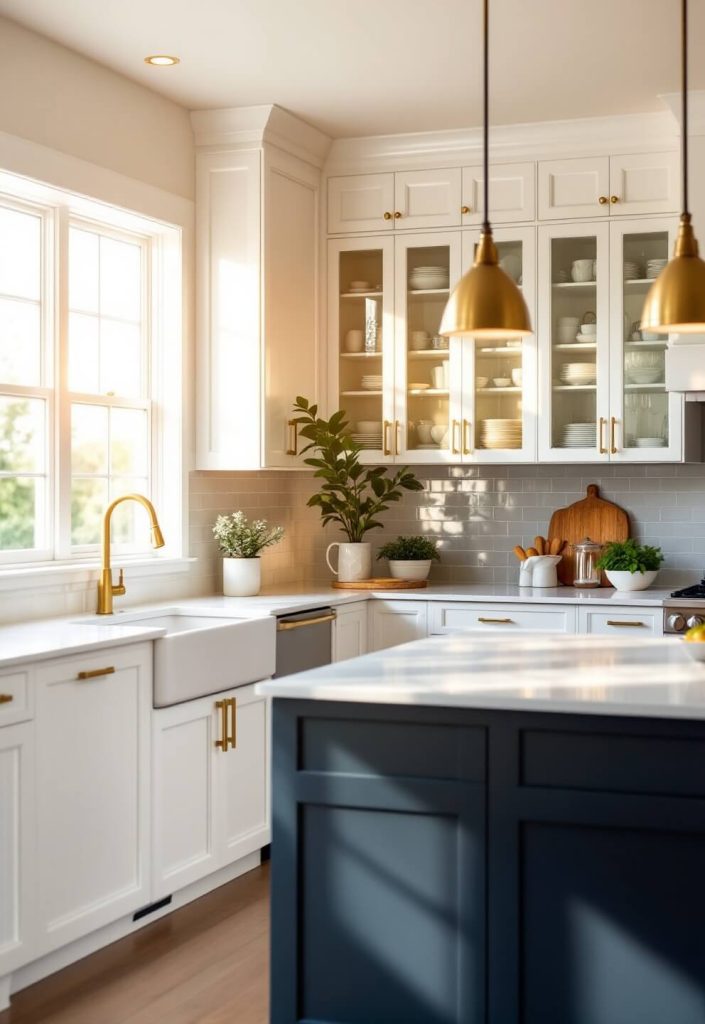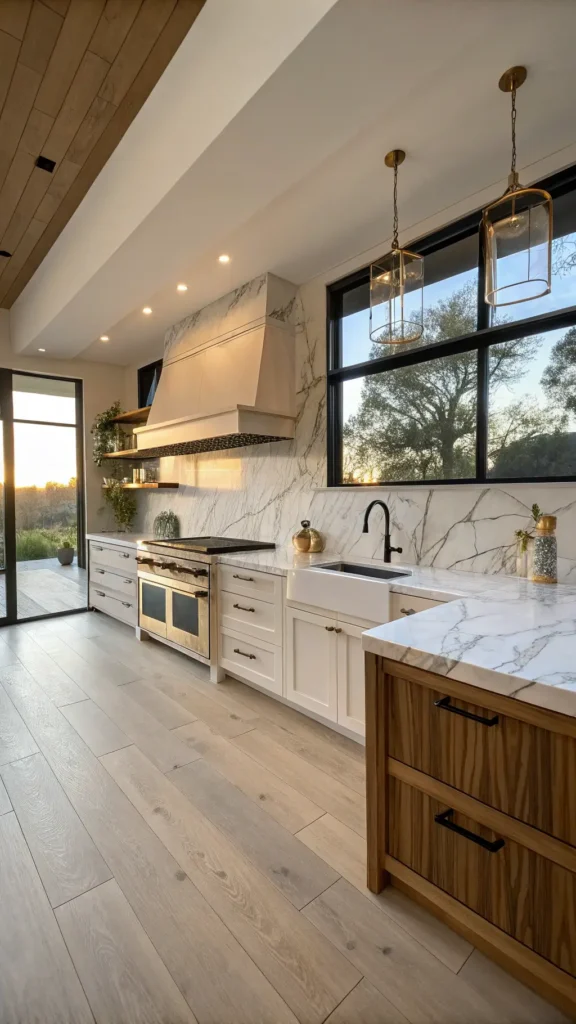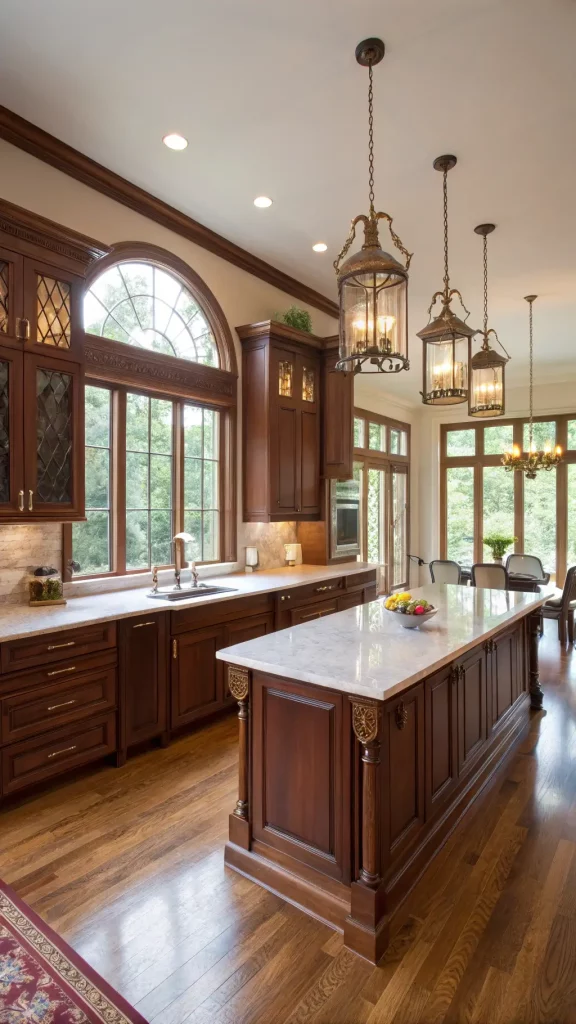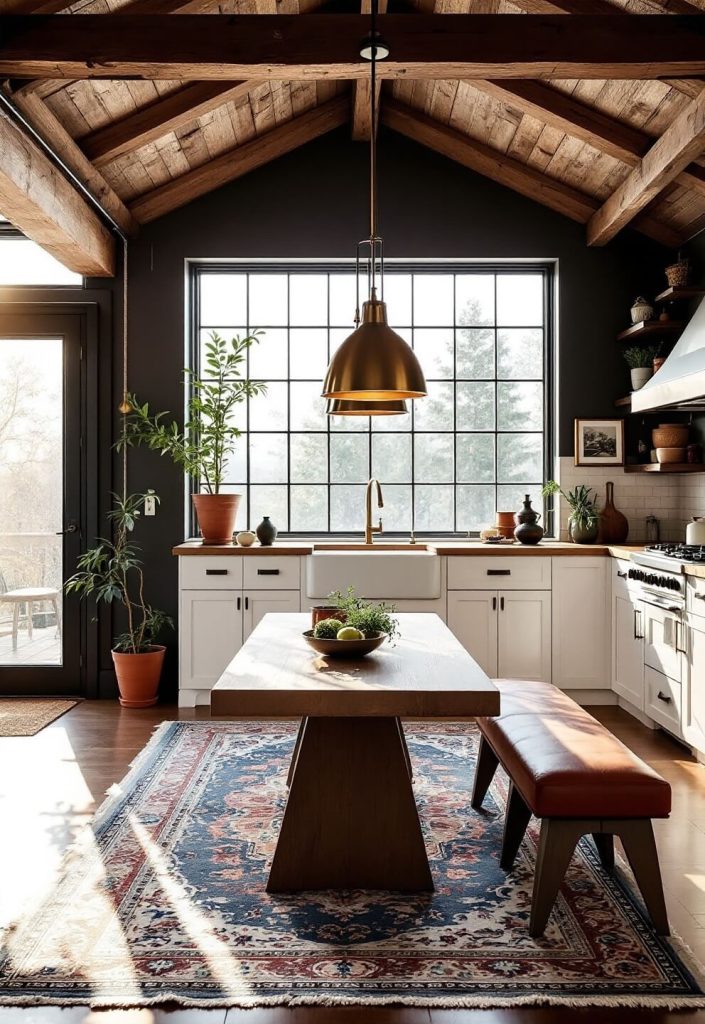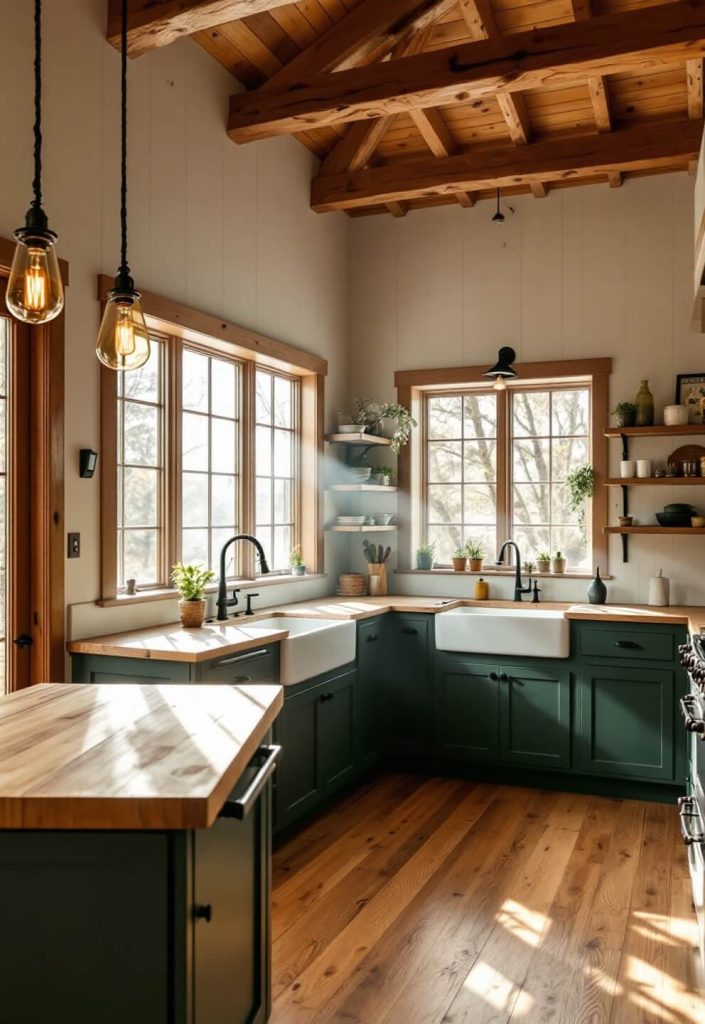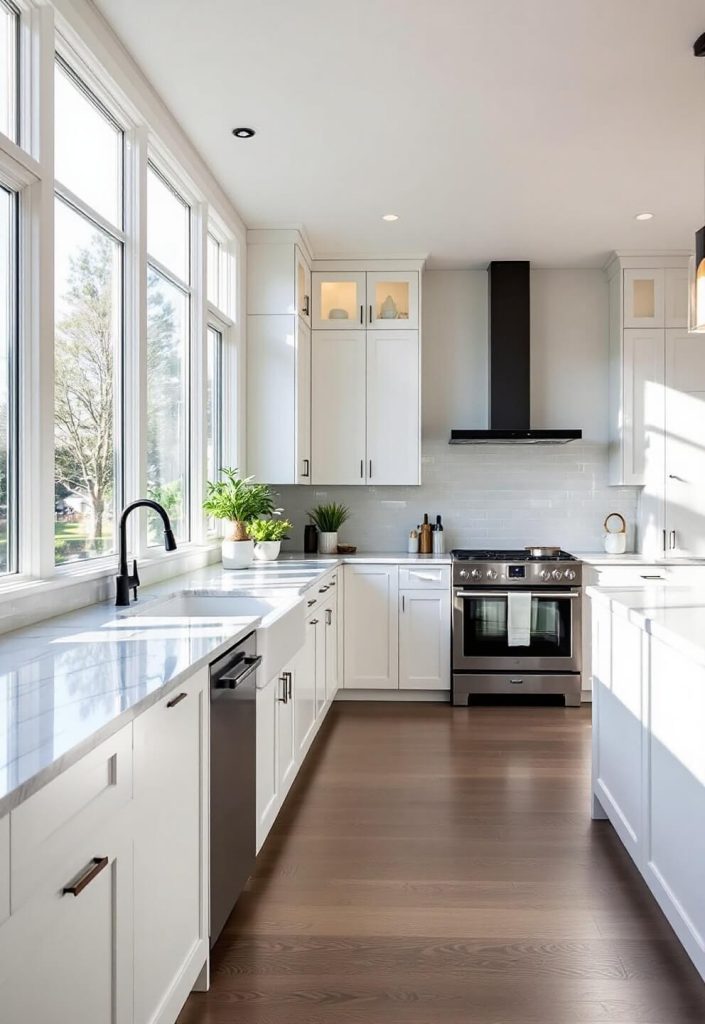
Cabin kitchens are small by nature, so I plan them like a boat – everything has a slot. Warm wood and a single good light make the tight space feel like a retreat.
Let me tell you something about designing small cabin kitchens – it’s like solving a delicious puzzle!
I’ve spent years helping homeowners transform tight spaces into dreamy cabin kitchens, and I’m excited to share my tried-and-true secrets.
🎨 Steal This Look
- Paint Color: Sherwin-Williams Urbane Bronze SW 7048
- Furniture: Compact kitchen island with butcher block top (36-48 inches wide), open shelving with recessed brackets, rustic cabin-style cabinetry with shaker doors
- Lighting: Vintage Edison bulb pendant lights (2-3 fixtures) suspended over island or sink area
- Materials: Warm wood tones (pine, cedar, or reclaimed timber), butcher block or live-edge countertops, stone or brick accents, oil-rubbed bronze hardware
Small cabin kitchens are where charm meets necessity. There’s something magical about cooking in a tight, well-designed space where everything feels intentional and within arm’s reach – it brings back that nostalgic cabin-gathering feeling.
The Cozy Cabin Kitchen Foundation
First things first – your cabin kitchen needs to feel like a warm hug.
I always start with natural materials that scream “cabin comfort”:
- Raw wood elements (think exposed beams and butcher block counters)
- Stone or brick accents
- Warm metal fixtures in copper or bronze
- Natural fiber textiles
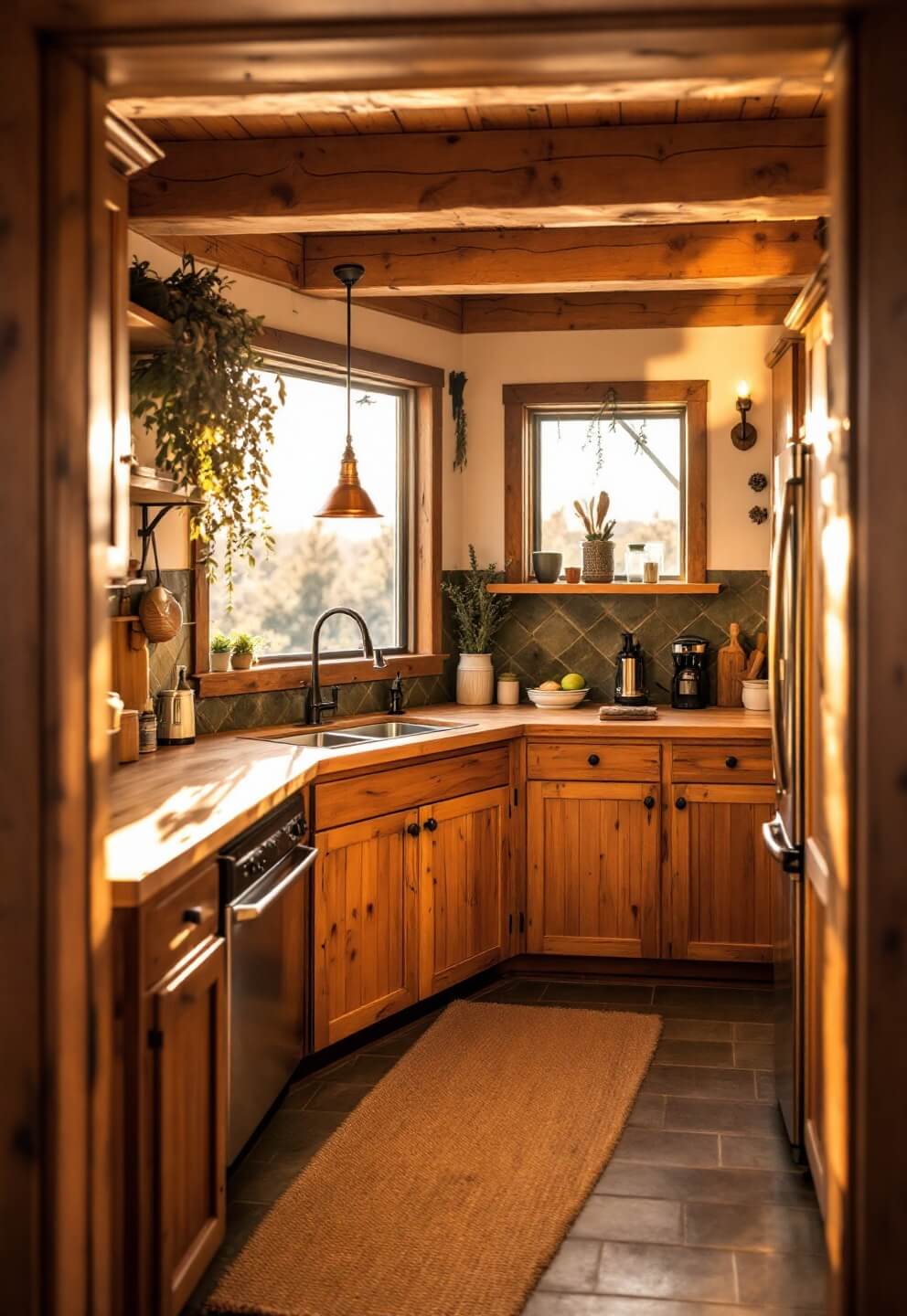
💡 Steal This Look
- Paint Color: Benjamin Moore HC-84 Autumn Leaf
- Furniture: Rustic wooden dining table with bench seating, open shelving with reclaimed wood, vintage-style kitchen island with butcher block top
- Lighting: Pendant lights with copper or bronze fixtures, edison bulb chandeliers, lantern-style sconces over counters
- Materials: Exposed wooden beams, butcher block countertops, stone or brick backsplash, copper hardware, linen or burlap textiles, cast iron accents
A cabin kitchen foundation is about inviting people to linger over coffee and conversation. Raw wood and warm metals aren’t just aesthetically cabin—they’re functional choices that develop character as they age, telling the story of your space.
Smart Storage Solutions (Because Size Matters!)
Listen up – this is where most people go wrong.
Don’t just stuff things in wherever they fit! Here’s my strategic approach:
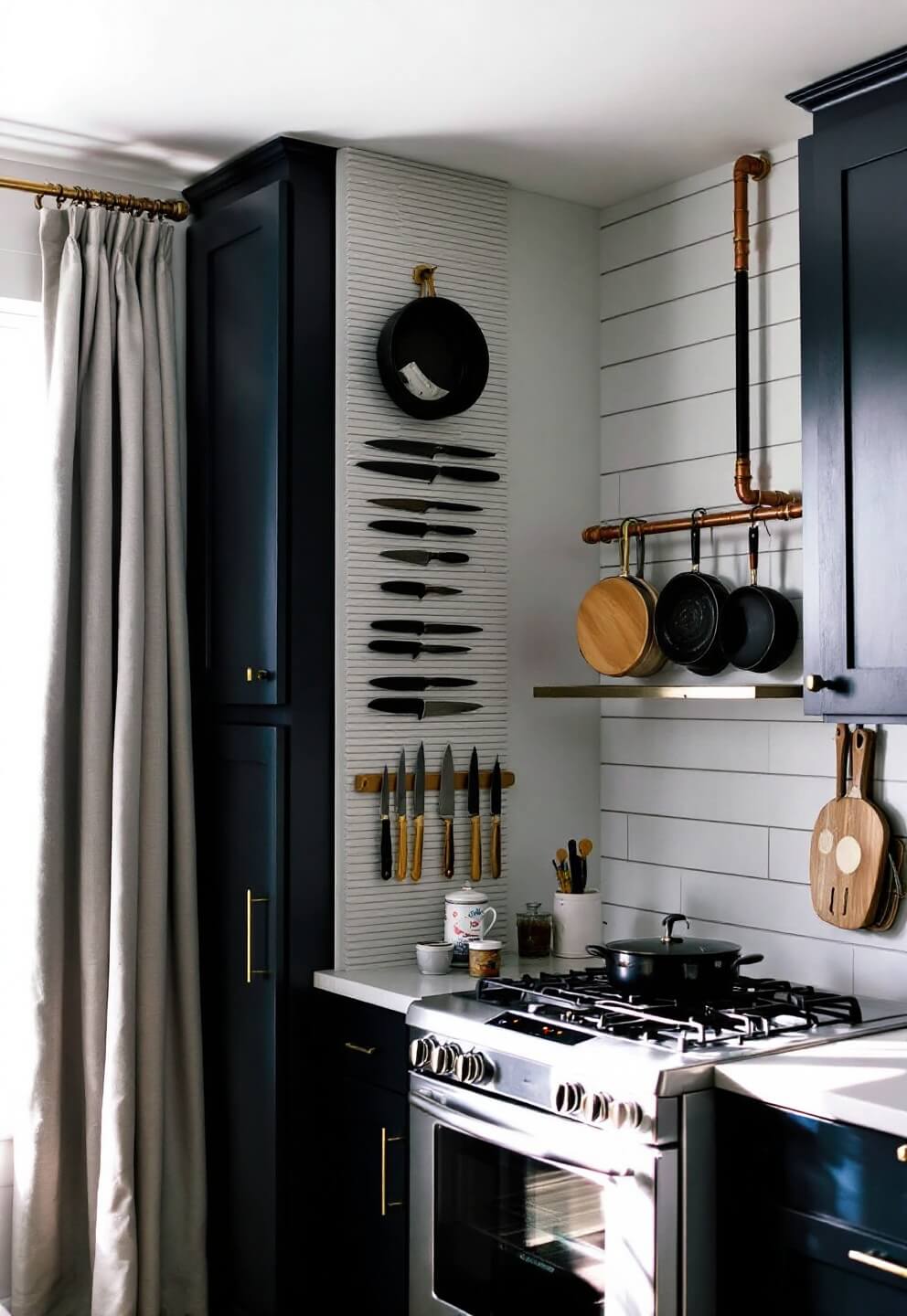
1. Vertical Magic:
- Install ceiling-height cabinets
- Use magnetic knife strips
- Add hooks under cabinets
- Implement pull-out pantry systems
2. Corner Champions:
- Lazy Susan corners
- Pull-out corner drawers
- Corner open shelving
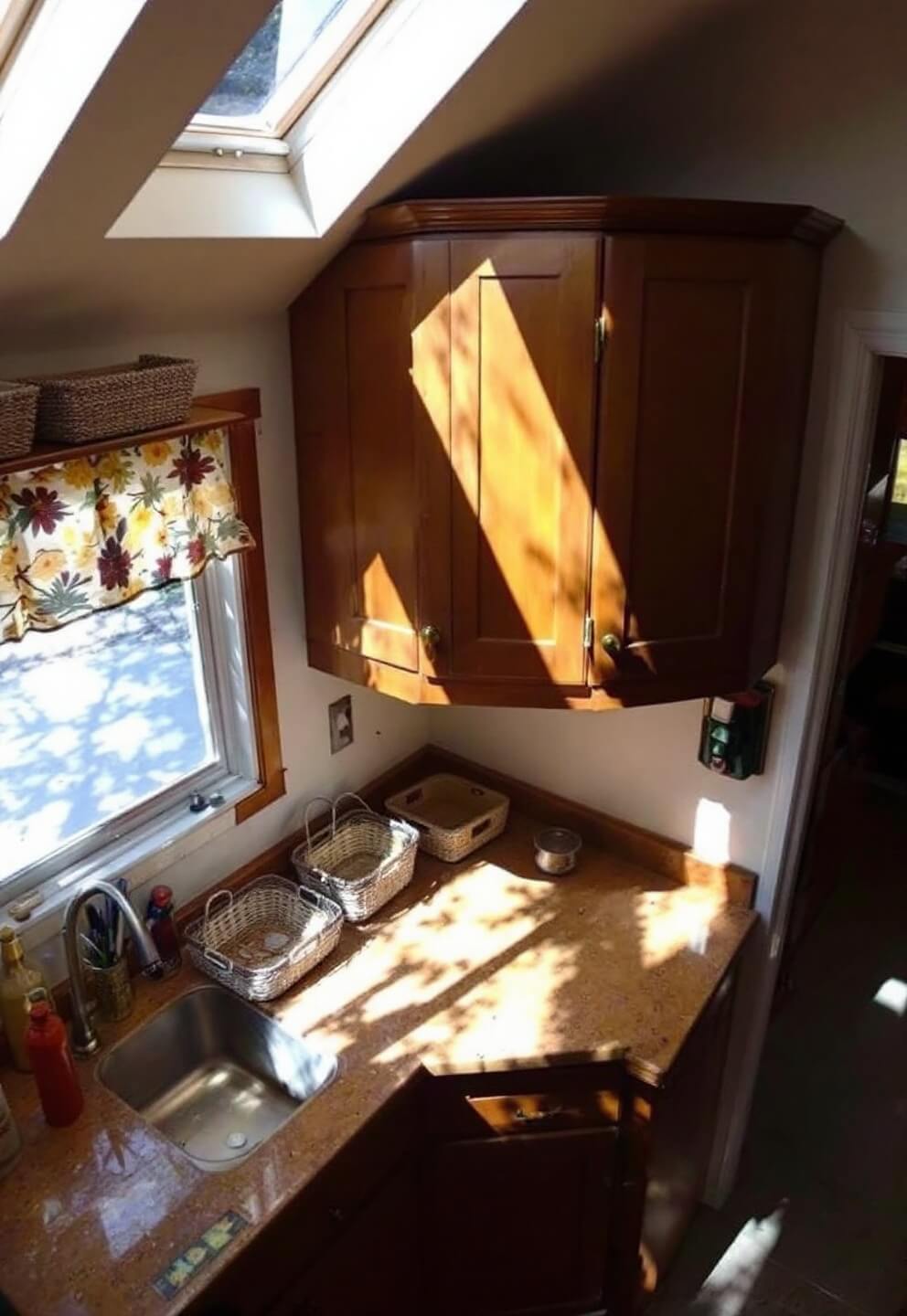
🎨 Steal This Look
- Paint Color: Farrow & Ball Pointing UP10 – a warm, subtle greige that maximizes light reflection in compact spaces and provides neutral backdrop for open shelving
- Furniture: Floor-to-ceiling cabinetry with soft-close hinges, pull-out pantry drawers, and corner carousel systems; open floating shelves at eye level for frequently used items
- Lighting: Under-cabinet LED strip lighting (warm 2700K) to brighten work zones and illuminate interior storage; pendant lights positioned to avoid shadowing open shelving
- Materials: Shaker-style cabinetry with natural wood or painted finishes, stainless steel hardware, magnetic metal strips, pull-out wire baskets, and polished concrete or light wood flooring to reflect light upward
Small cabin kitchens thrive on system-thinking rather than aesthetics-first design. Strategic storage isn’t boring – it’s what lets you actually cook and move freely, which is the whole point of retreating to a cabin.
Lighting That Works Hard
I cannot stress this enough – lighting makes or breaks a small kitchen!
My triple-threat lighting approach:
- Task lighting under cabinets
- Ambient overhead lighting
- Natural light maximization
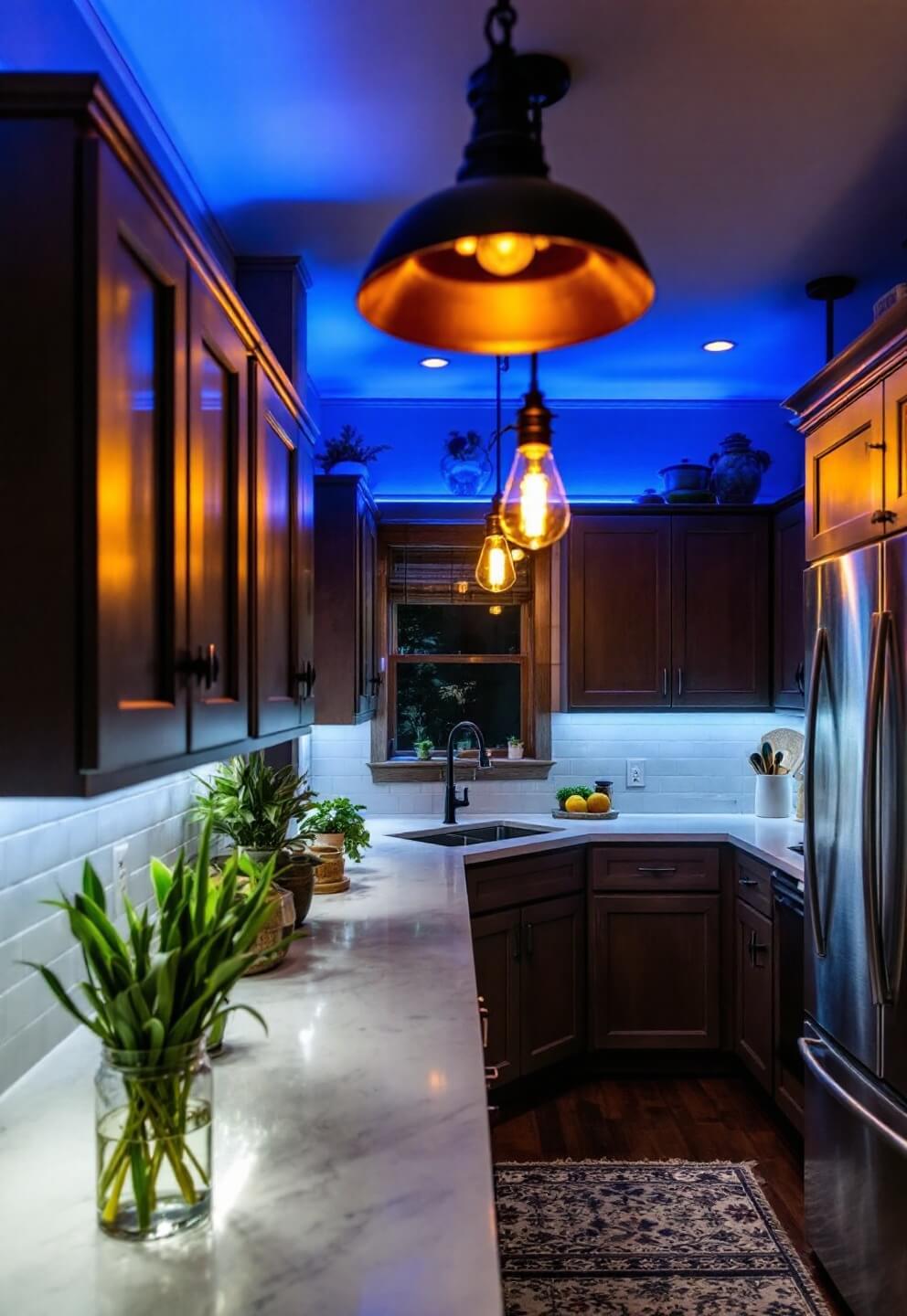
🎨 Steal This Look
- Paint Color: Behr Swiss Coffee N340-1
- Furniture: Compact kitchen island with integrated storage and seating for 2-3, open shelving units for visual lightness
- Lighting: Recessed LED downlights (4000K) for ambient overhead + LED under-cabinet strip lights (3000K warm) + maximized window treatments with sheer panels
- Materials: Matte cabinet finishes, brushed stainless steel hardware, natural wood or light laminate countertops, soft-touch cabinet pulls
A well-lit small cabin kitchen transforms from feeling like a dark galley into an efficient, inviting workspace. The right lighting strategy opens up the room psychologically while solving the real challenge of prepping meals in a compact footprint.
The Layout Logic
Here’s the secret sauce to making a small space work:
- Work Triangle: Keep your sink, stove, and fridge within easy reach
- Island Options: Consider a rolling island for flexibility
- Counter Space: Prioritize unbroken stretches of counter space
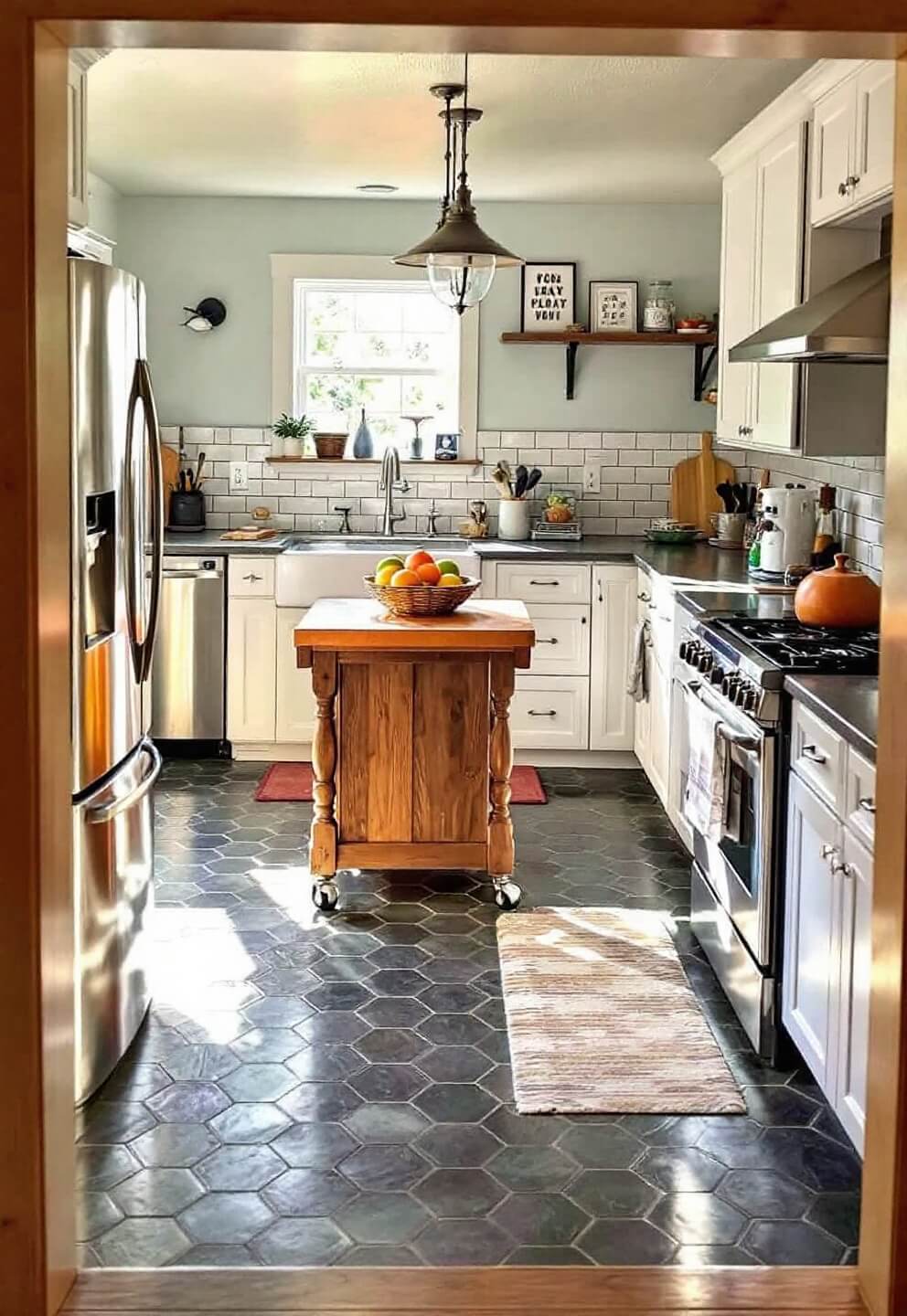
🏠 Steal This Look
- Paint Color: Valspar Woodsmoke 7015K
- Furniture: Rolling kitchen island with butcher block top and open shelving; wall-mounted open shelving above counters to maximize vertical storage
- Lighting: Recessed overhead lighting with warm 2700K color temperature; pendant lights centered over island work zone
- Materials: Butcher block countertops, stainless steel hardware, natural wood cabinetry, open metal shelving for visibility
Cabin kitchens succeed when every element earns its keep. The beauty of thoughtful layout logic is that it makes cooking feel effortless, not cramped—your guests will feel the breathing room even if the footprint is modest.
Color Psychology for Small Spaces
Trust me on this one:
- Light colors for cabinets and walls
- Dark accents for grounding
- One bold color as a statement
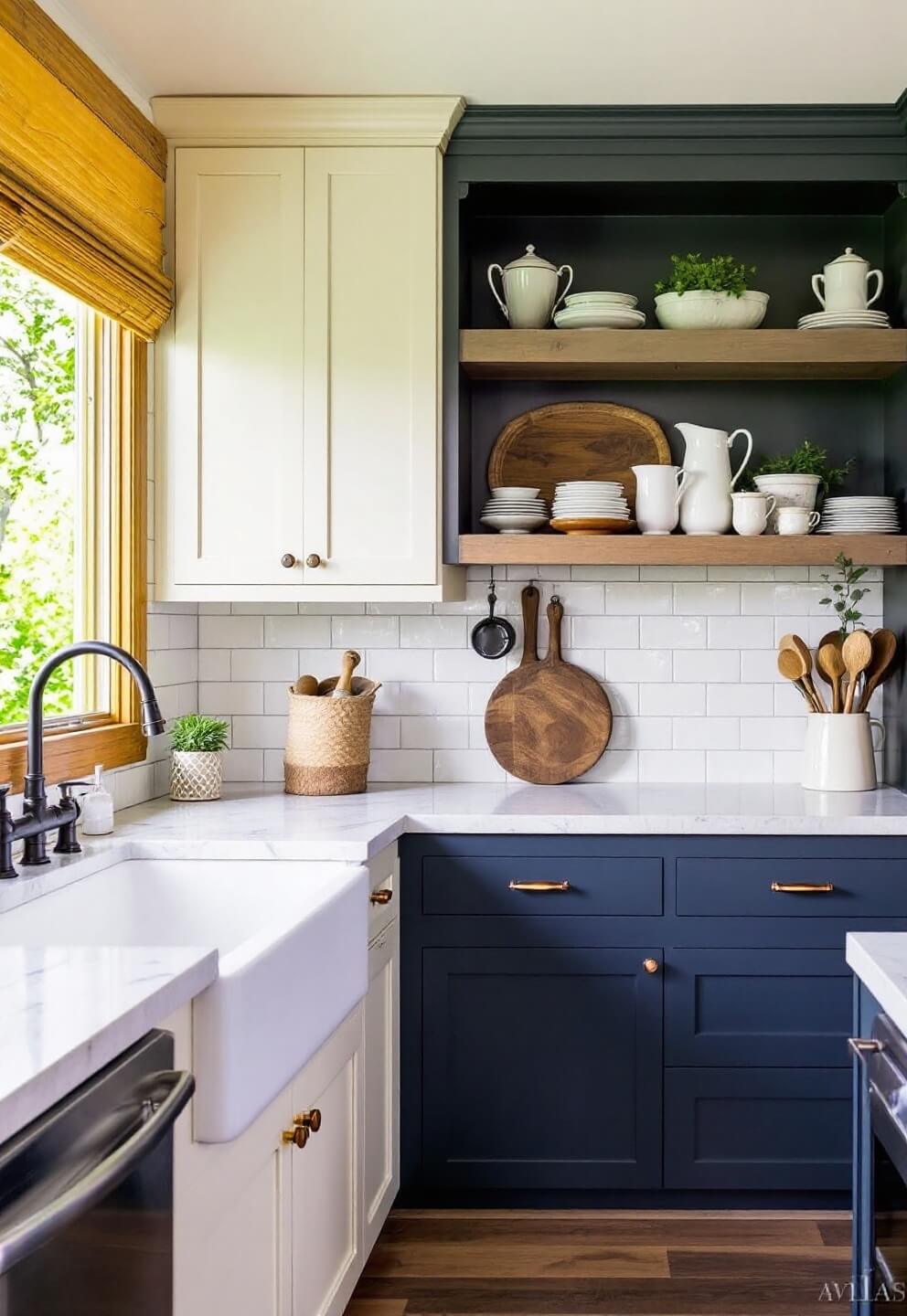
💡 Steal This Look
- Paint Color: PPG Alabaster PPG1001-1 for walls and PPG Urbane Bronze PPG1175-7 for accent wall or lower cabinetry
- Furniture: Light maple or whitewashed wood cabinetry with dark hardware knobs; small-scale open shelving in natural wood
- Lighting: Pendant lights with brushed brass or matte black fixtures over island or sink area
- Materials: Matte finishes on cabinetry, natural wood open shelving, dark granite or slate countertops, white subway tile or shiplap backsplash
Small cabin kitchens thrive when they feel intentional rather than cramped. Light walls paired with dark accents create drama and depth without overwhelming the square footage, while a single bold color (perhaps a warm rustic red or forest green on open shelving) becomes the storytelling element that makes the space feel like *yours*.
My Top Space-Saving Hacks:
- Fold-down table
- Slim appliances
- Wall-mounted dish drying rack
- Built-in cutting boards
- Over-sink colanders
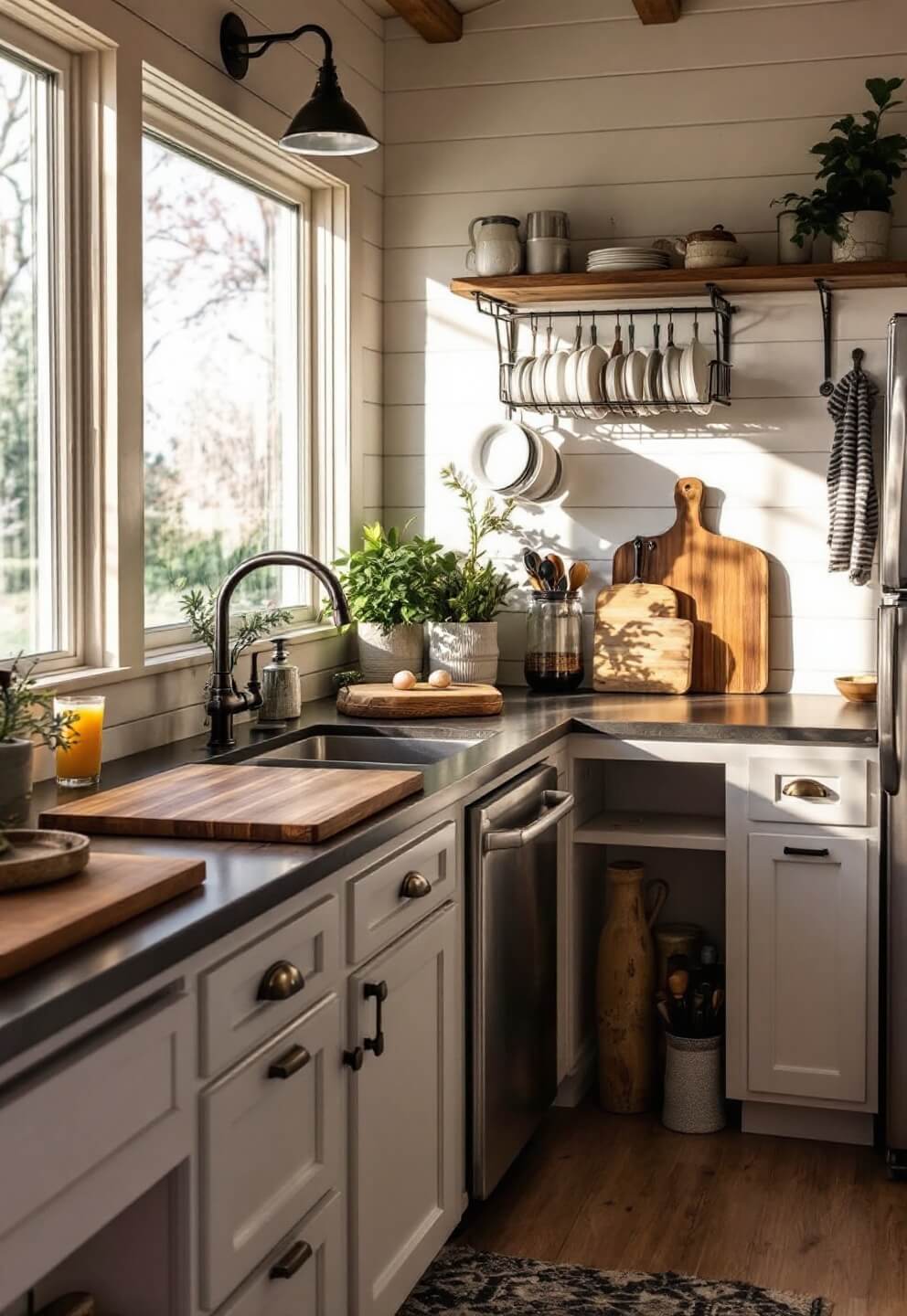
Remember, a small cabin kitchen isn’t a limitation – it’s an opportunity to create something incredibly special and efficient.
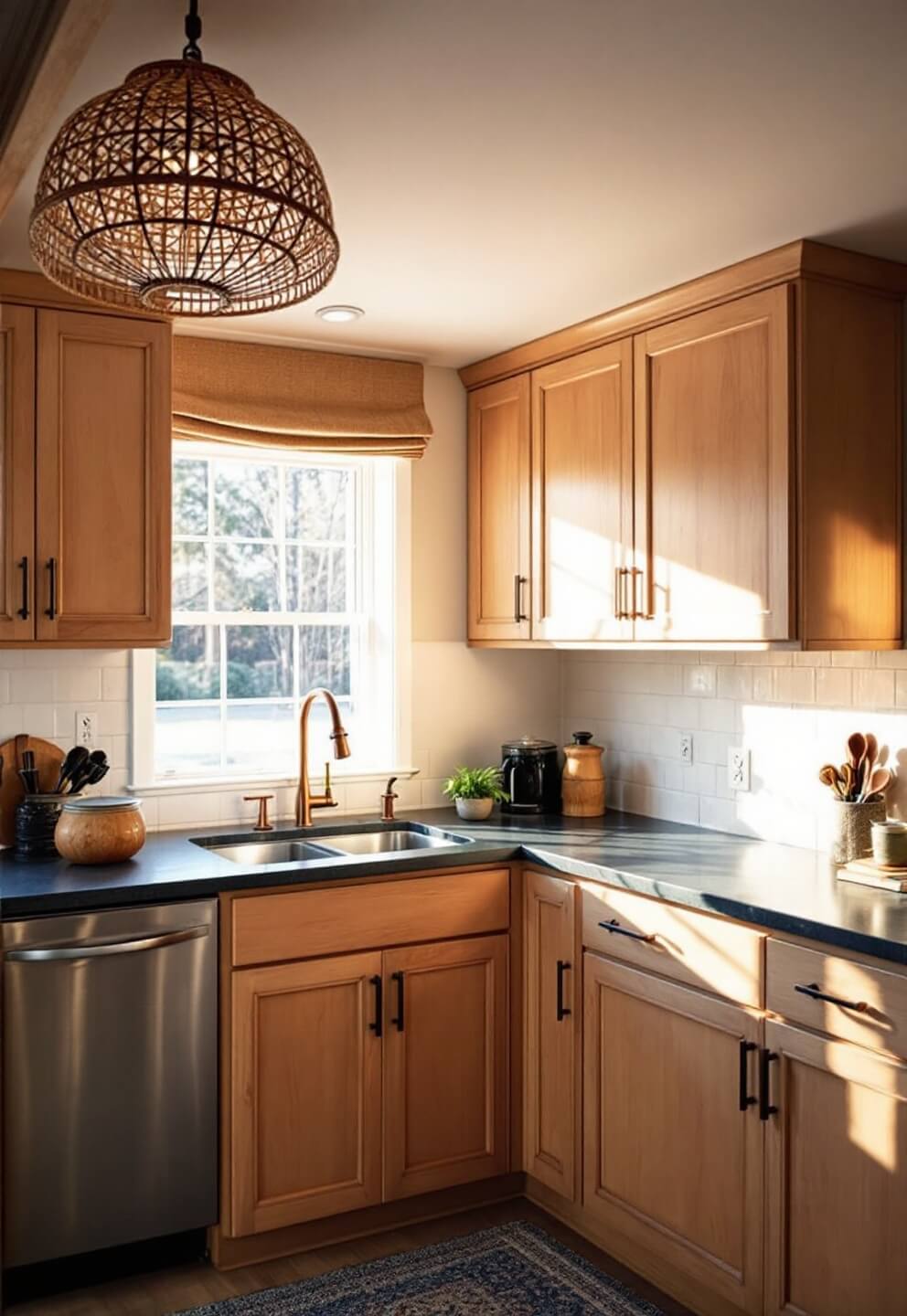
Want to know my number one tip? Keep only what you truly need and use. Everything else is just taking up precious space in your cozy cabin kitchen.
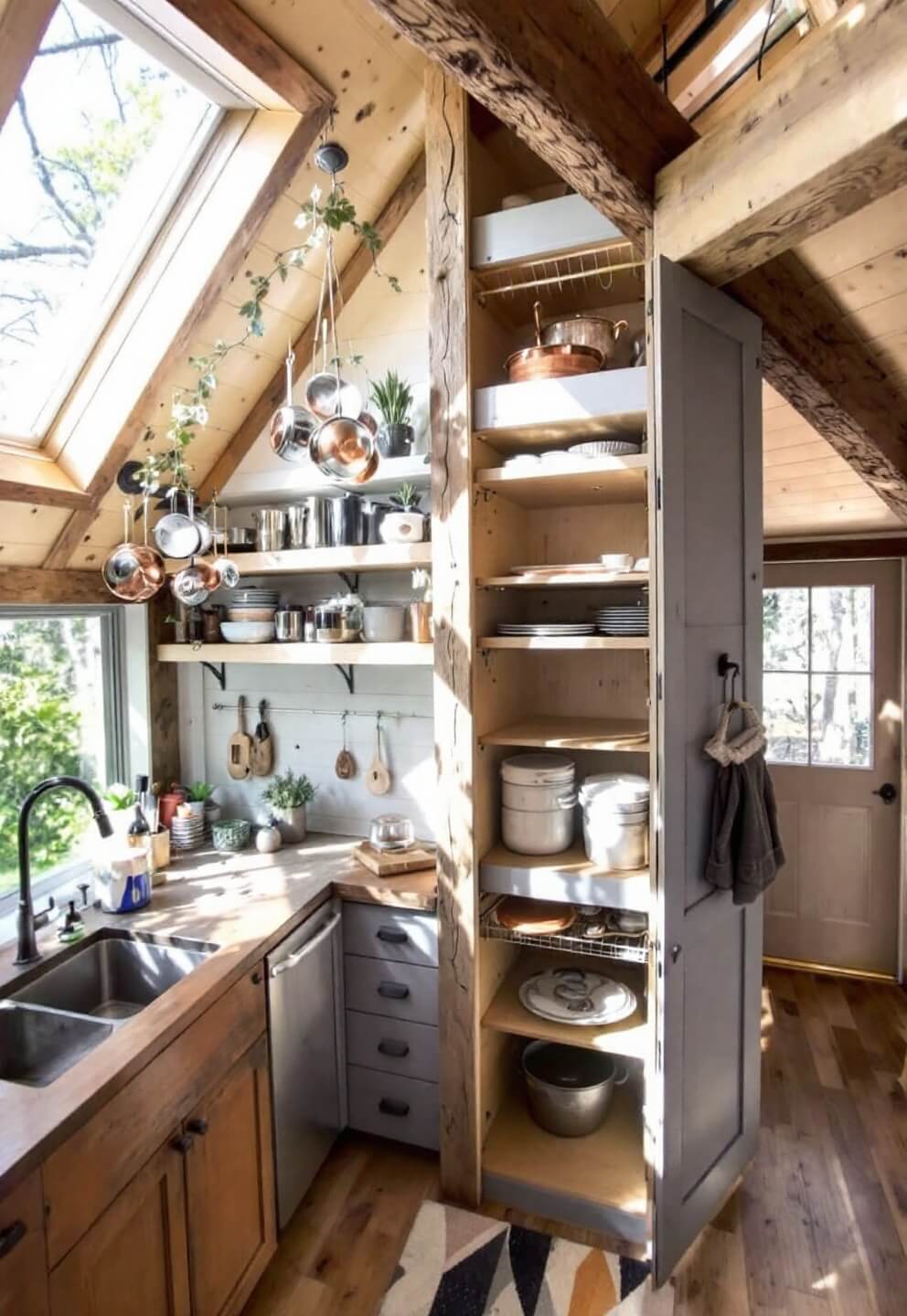
Cabin kitchens work like a small boat – everything in its place. Warm wood and one good light turn the tight space into a retreat.
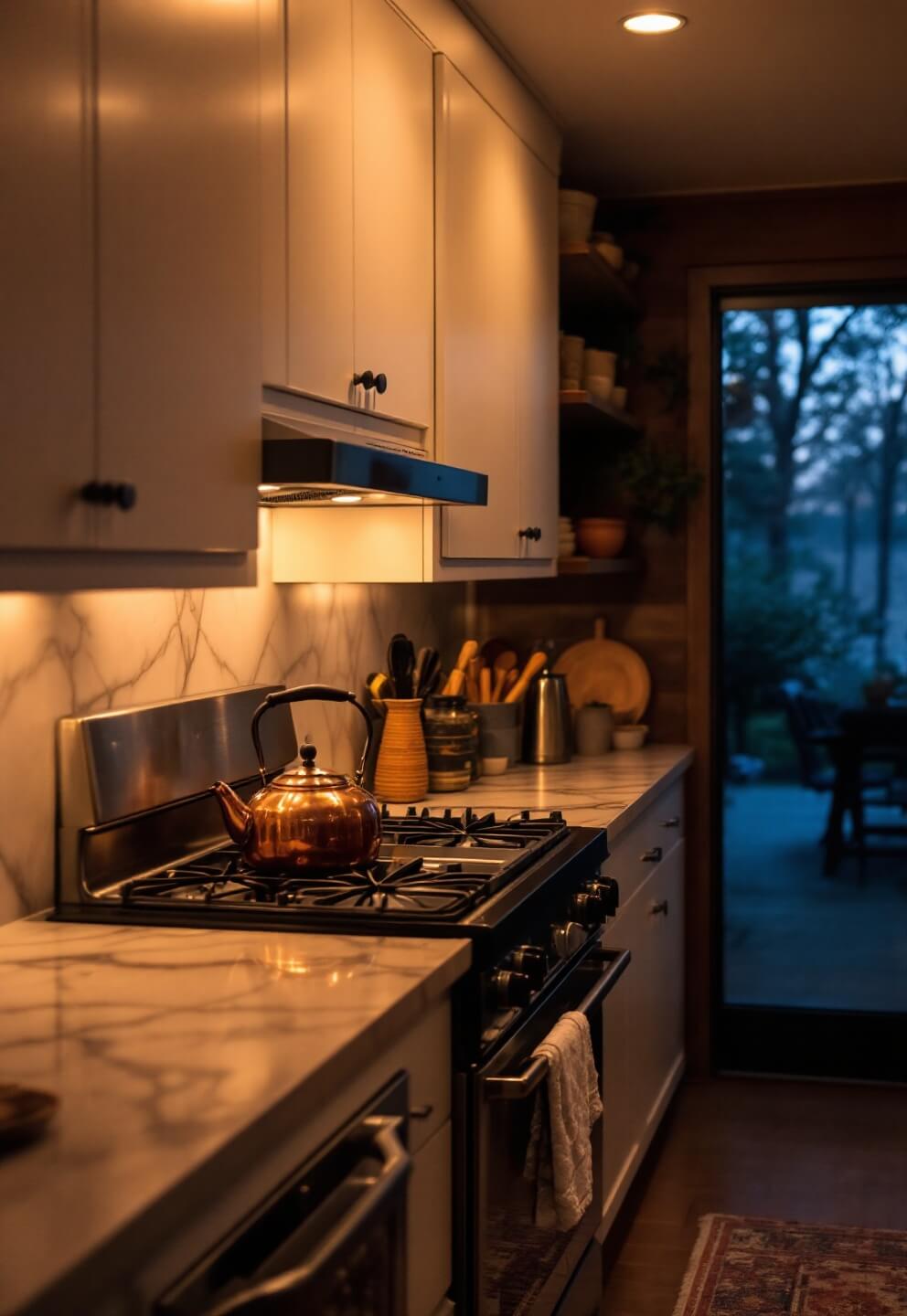
🖼 Steal This Look
- Paint Color: Dunn-Edwards Glacier White DE 6701 — a crisp, clean white that maximizes light reflection in compact spaces and creates an airy backdrop for functional cabin kitchens
- Furniture: Wall-mounted fold-down table with sturdy hinges (saves 60+ sq ft when folded); slim-profile stainless steel appliances; floating shelves above counters for vertical storage
- Lighting: Recessed LED ceiling lights with task lighting under cabinets — maximizes brightness without taking up counter or wall space
- Materials: Light-reflecting laminate or Corian countertops; stainless steel for durability and light bounce; polished or matte finishes (no gloss) to reduce visual clutter
Space-saving in a cabin kitchen isn’t about deprivation — it’s about intentional design that lets you move freely while cooking. When every tool earns its place, your small kitchen becomes a masterclass in efficiency.