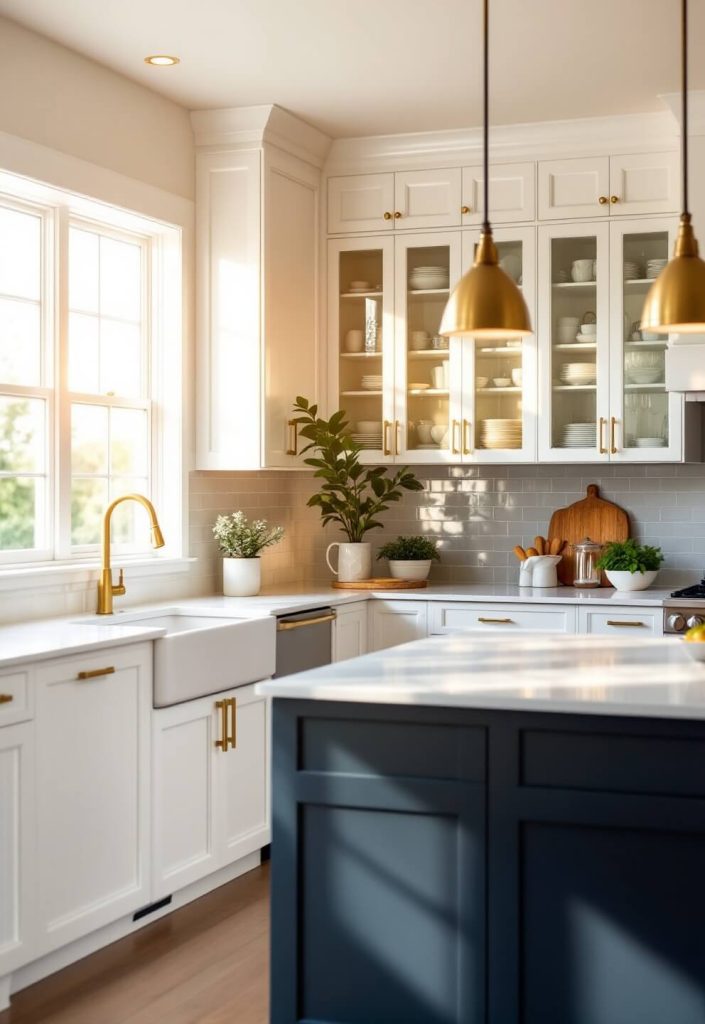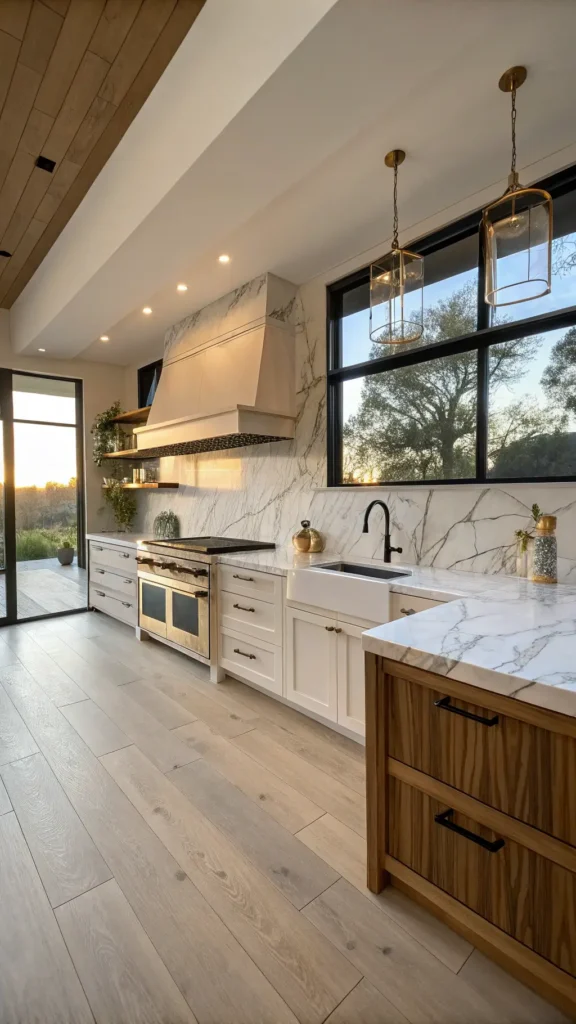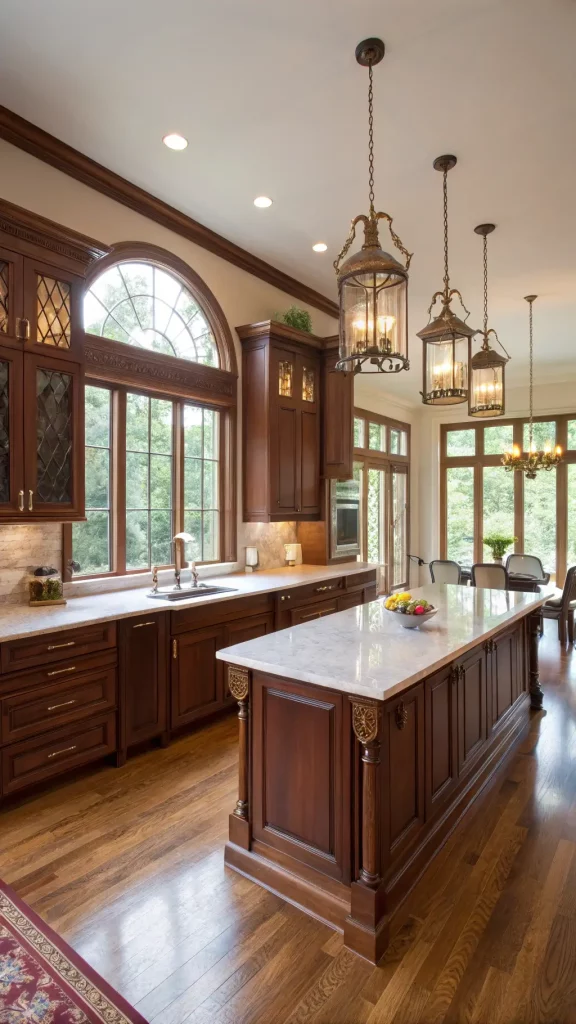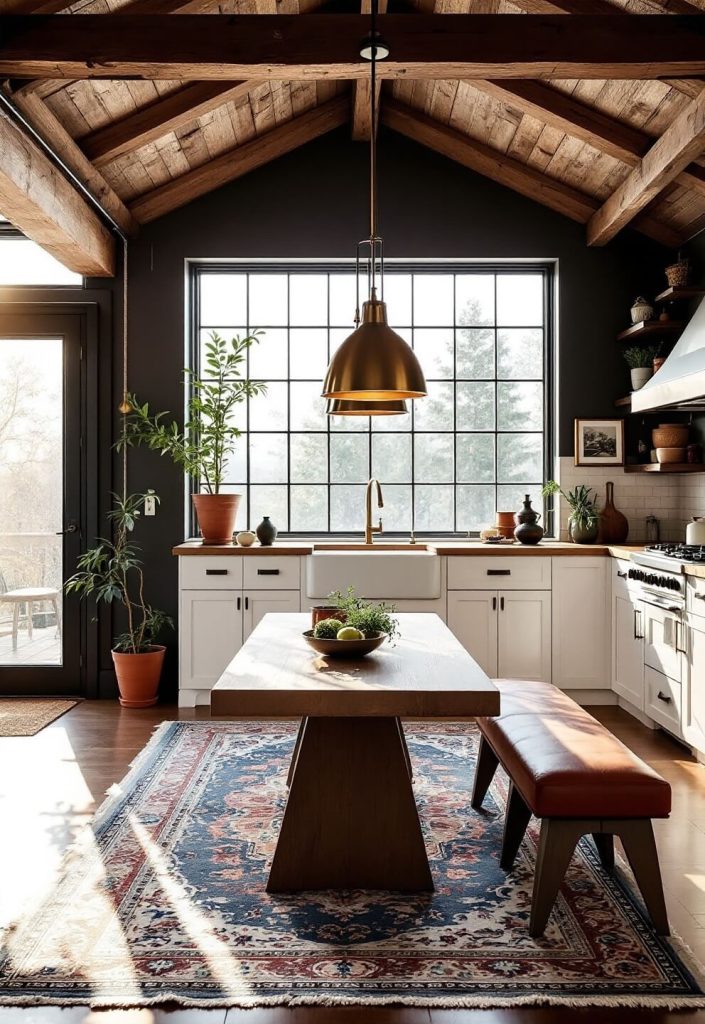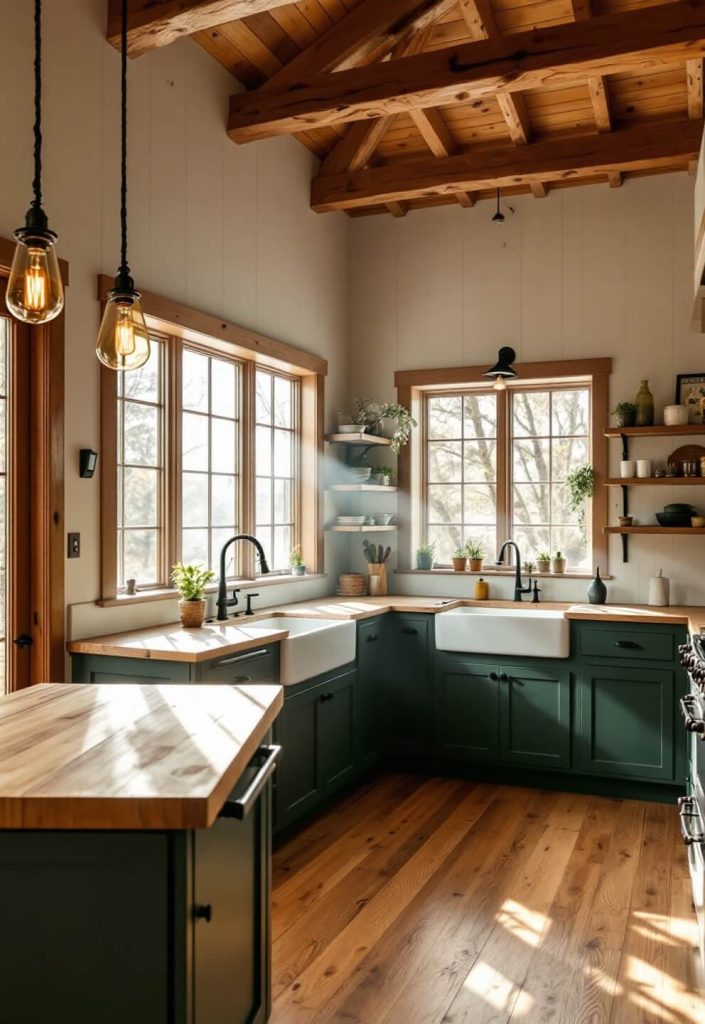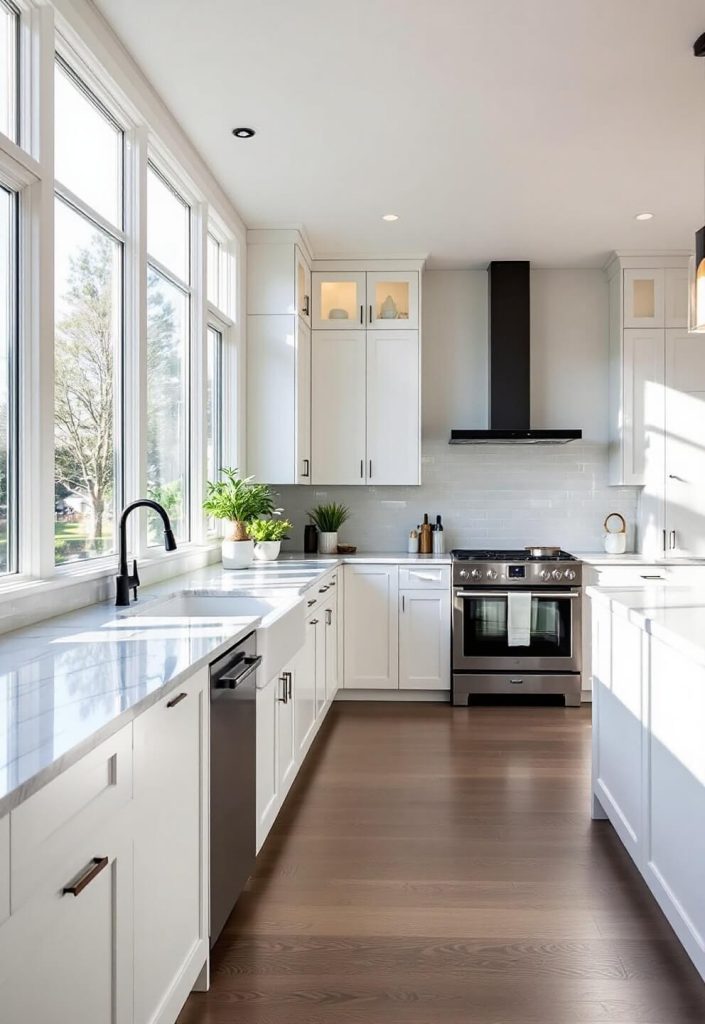
Industrial farmhouse pairs raw metal with weathered wood, and the mix only works with restraint. I let one element lead and keep the other quiet so the room feels intentional.
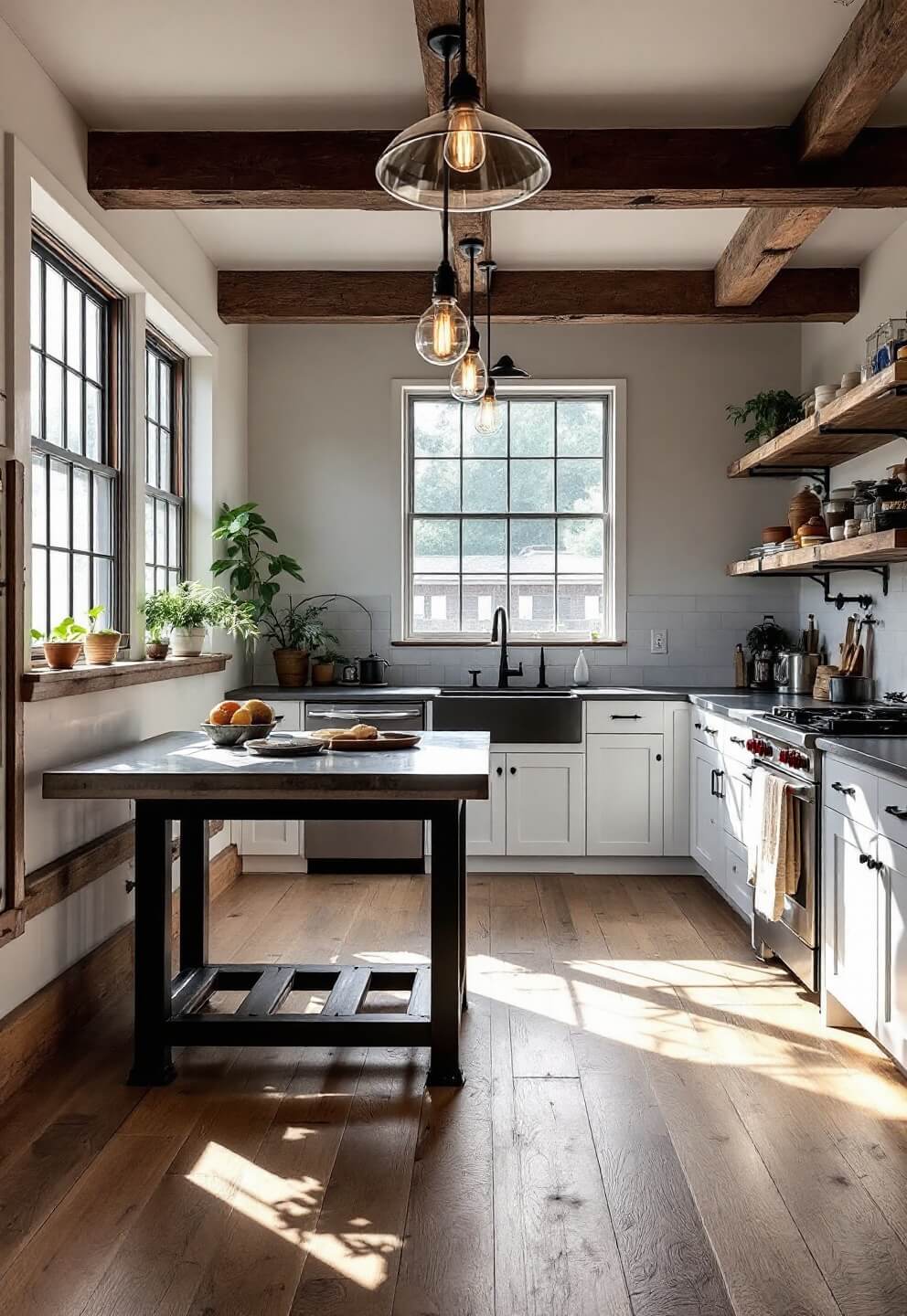
🌟 Steal This Look
- Paint Color: Sherwin-Williams Tricorn Black SW 6258
- Furniture: Reclaimed wood farmhouse dining table with black metal frame, open shelving with wrought iron brackets, shaker-style cabinetry in cream or soft white
- Lighting: Industrial pendant lights with metal cages and Edison bulbs over kitchen island
- Materials: Exposed brick, galvanized metal, reclaimed wood, matte black hardware, butcher block countertops
Industrial farmhouse kitchens are about celebrating imperfection and history. This style says you value craftsmanship and authenticity — whether that’s genuine vintage pieces or thoughtful reproductions that honor that spirit.
The Magic Mix: Getting Started
Let me tell you – combining industrial edge with farmhouse charm isn’t as tricky as it sounds. Here’s what you need to know:
The Industrial Must-Haves:
- Exposed metal beams or ductwork
- Stainless steel appliances
- Metal light fixtures
- Concrete or polished floors
- Raw brick accents
The Farmhouse Essentials:
- Classic apron-front sink
- Warm wooden elements
- Vintage-inspired hardware
- Open shelving
- Cozy textiles

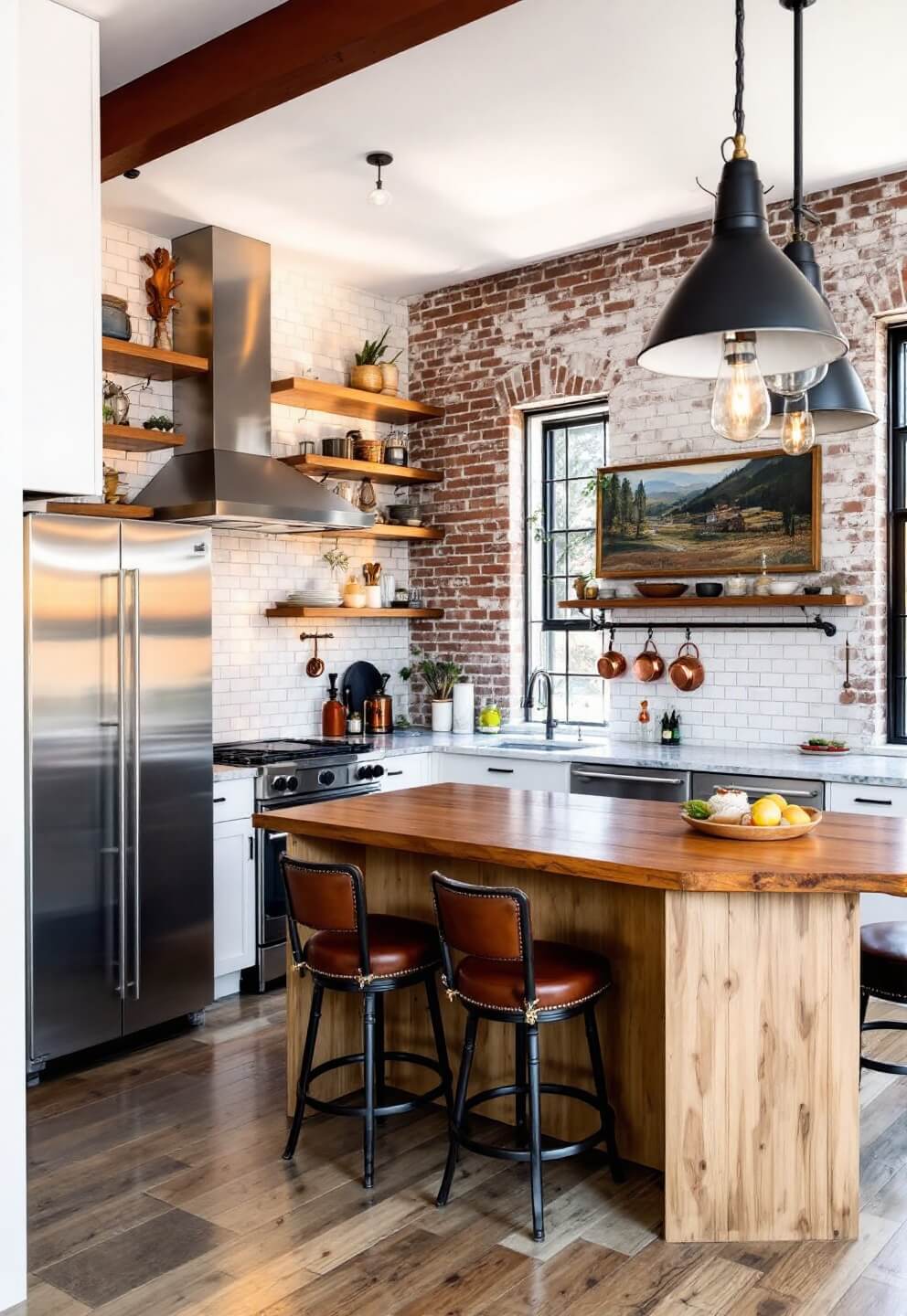
💡 Steal This Look
- Paint Color: Benjamin Moore Chalkboard Black HC-185
- Furniture: Reclaimed wood open shelving with black metal brackets, stainless steel farmhouse apron-front sink, vintage-style wooden dining table with metal frame base
- Lighting: Industrial pendant lights with Edison bulbs and black metal shades
- Materials: Exposed brick, polished concrete flooring, raw wood, brushed stainless steel, wrought iron hardware
Industrial farmhouse is about marrying two seemingly opposite aesthetics into something unexpectedly warm and livable. It celebrates both the raw, honest bones of a workspace and the inviting, lived-in comfort of a country kitchen.
Color Magic
I always tell my clients to stick to this foolproof palette:
- Warm whites
- Deep grays
- Rich browns
- Matte blacks
- Natural wood tones
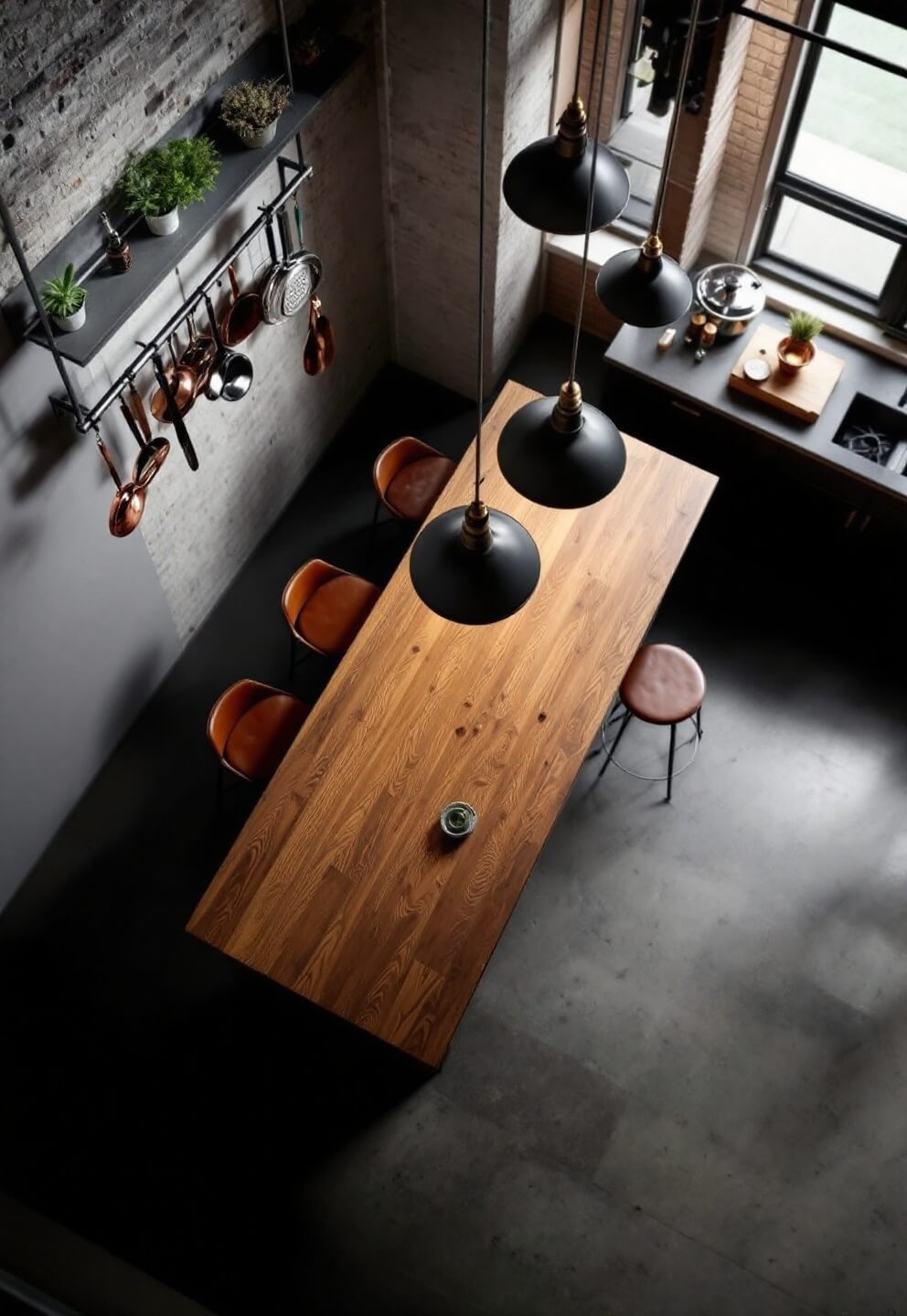
🌟 Steal This Look
- Paint Color: Farrow & Ball Pointing 2003 for warm whites, Farrow & Ball Down Pipe 26 for deep grays, or Farrow & Ball Blackened 2011 for matte blacks
- Furniture: Reclaimed wood kitchen island with black metal base, open shelving with deep gray painted backs, black iron pipe shelving brackets, weathered wood dining table
- Lighting: Industrial pendant lights with matte black metal shades and brass or copper accents, Edison bulb vintage fixtures
- Materials: Reclaimed barn wood, cast iron, blackened steel, natural leather, exposed brick, raw concrete countertops
This palette is the backbone of industrial farmhouse because it bridges two worlds: the clean, modern industrial edge with warm, inviting farmhouse charm. It’s timeless because it mirrors natural building materials—aged metal, old wood, stone.
Smart Storage Solutions
Here’s what’s working for my clients:
- Metal pipe shelving
- Industrial-style pot racks
- Vintage crates for organization
- Open metal shelving units
- Built-in pantry with sliding barn door
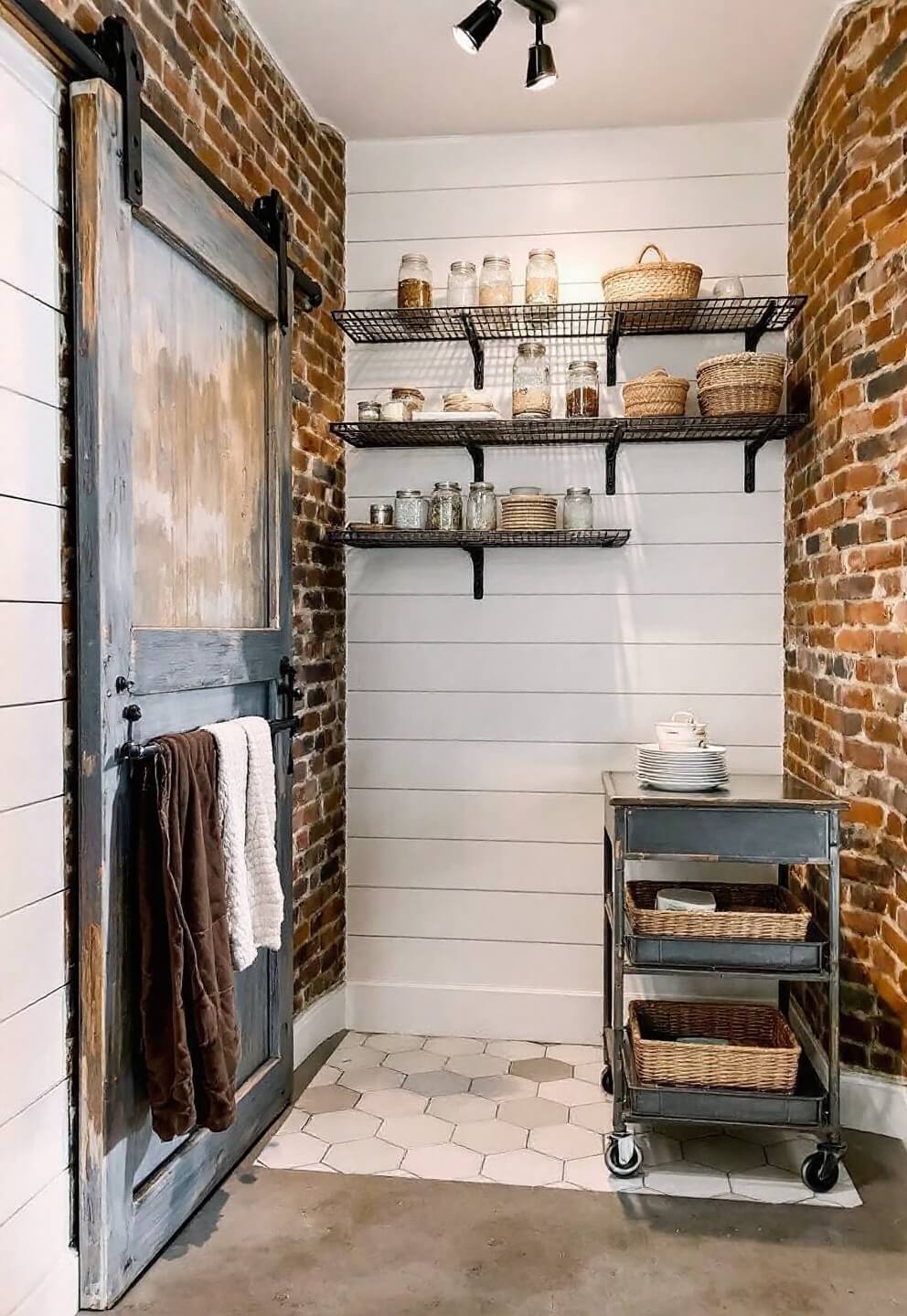
🎨 Steal This Look
- Paint Color: Behr Castlerock Gray N510-7 — a warm, muted gray that complements industrial metal fixtures and farmhouse aesthetics without feeling cold
- Furniture: Open metal pipe shelving with reclaimed wood shelves, vintage wooden crates on wheels for produce/pantry storage, industrial pot rack with S-hooks mounted above island or range
- Lighting: Pendant lights with metal cages or Edison bulbs suspended above open shelving to highlight stored items
- Materials: Raw steel, wrought iron, reclaimed wood, galvanized metal, weathered finishes, exposed hardware
Smart storage in industrial farmhouse kitchens isn’t about hiding everything away — it’s about making practical storage *the* statement. When your pots, pans, and ingredients are organized on vintage metal racks and open shelving, they become part of your kitchen’s personality.
Lighting That Wows
The right lighting makes all the difference:
- Edison bulb pendants
- Metal cage fixtures
- Oversized industrial chandeliers
- Under-cabinet LED strips
- Task lighting with vintage flair
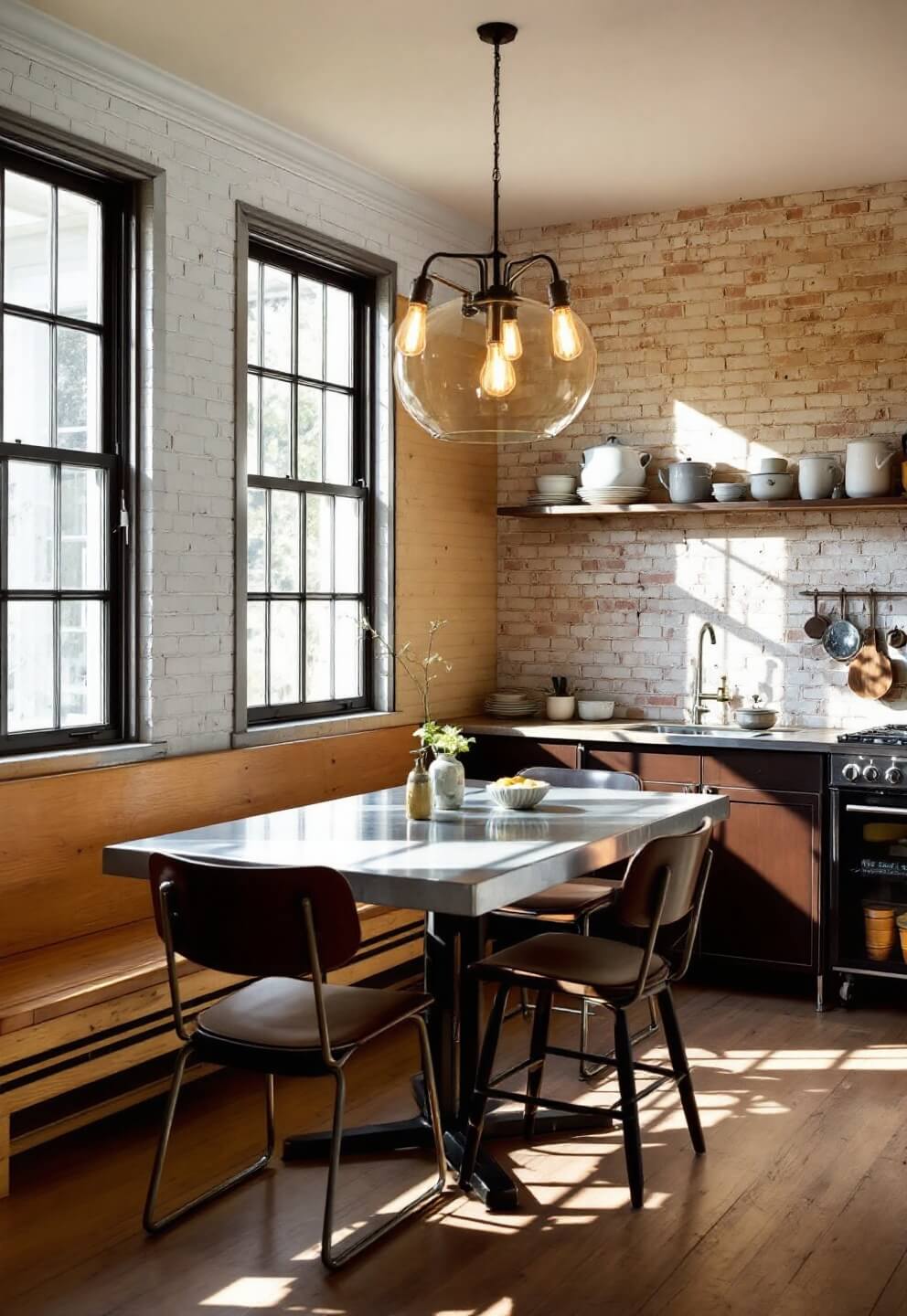
🏠 Steal This Look
- Paint Color: Valspar Urbane Bronze VB-30H
- Furniture: Industrial farmhouse kitchen island with reclaimed wood top and black metal base
- Lighting: Edison bulb pendant lights with brushed bronze or matte black canopy fixtures
- Materials: Exposed brick or shiplap walls, black wrought iron, warm brass accents, weathered wood beams
Industrial farmhouse kitchens are all about drama paired with warmth. Lighting is where you achieve that magic—those Edison bulbs aren’t just functional; they’re the soul of the space, casting that golden, nostalgic glow while black metal cages keep things grounded and authentic.
Pro Tips From My Experience:
- Don’t go overboard with either style – balance is key
- Mix materials: wood + metal + concrete = perfection
- Keep some elements soft and welcoming
- Add personality with vintage finds
- Focus on functionality first
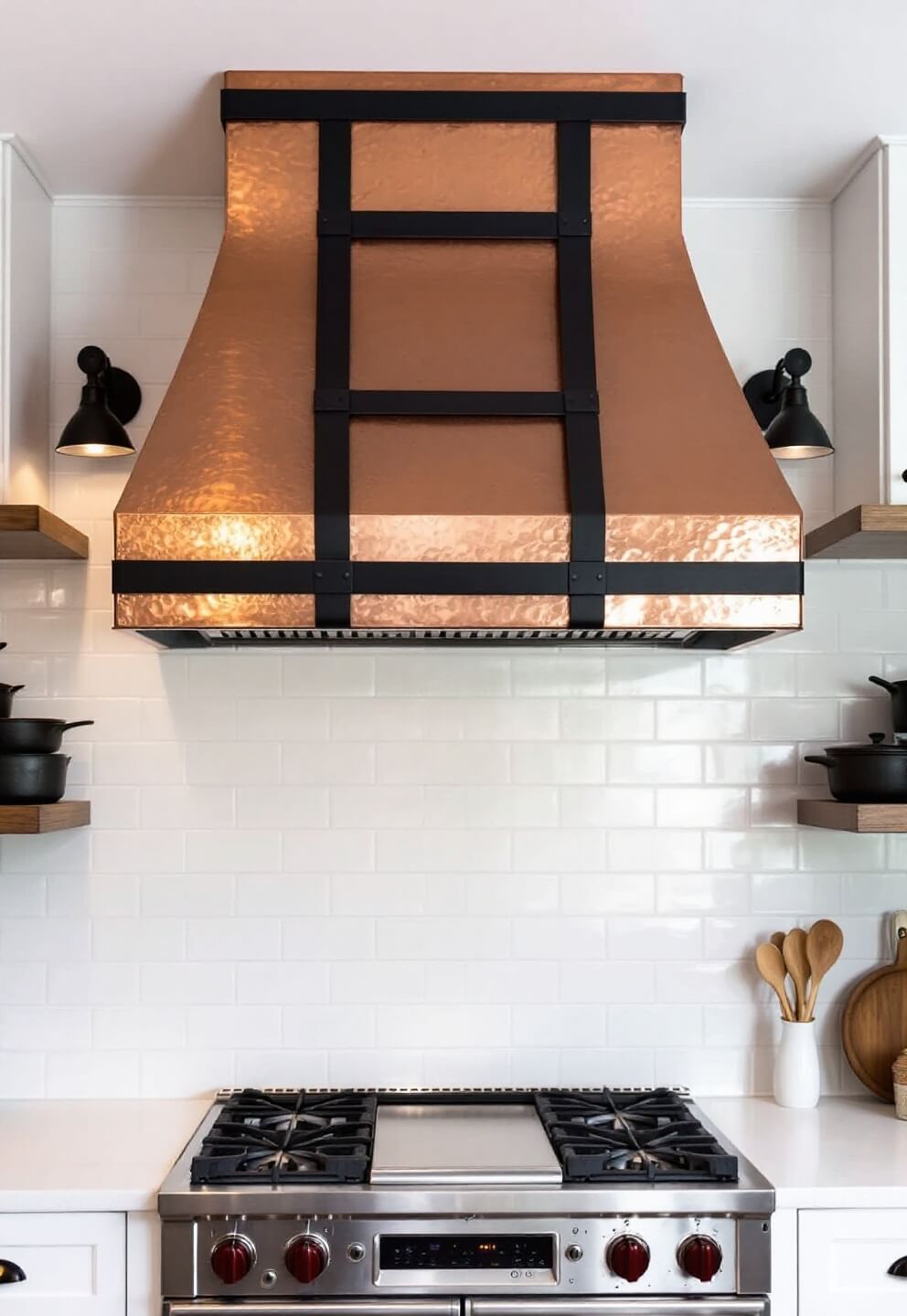
🏠 Steal This Look
- Paint Color: PPG Manor Red HC-72 or PPG Urbane Bronze PPG1002-7 — industrial farmhouse kitchens work best with either warm, muted reds for an authentic farmhouse base or deep charcoal-grays for industrial contrast
- Furniture: Reclaimed wood dining table paired with metal-frame chairs; open shelving with wrought iron brackets; a mix of vintage and industrial stools at the kitchen island
- Lighting: Edison-style pendant lights with exposed filament bulbs in oil-rubbed bronze fixtures suspended over the island; paired with vintage-style cage pendants
- Materials: Shiplap or reclaimed wood for accent walls; concrete countertops or butcher block; black iron hardware; brick or exposed metal beam details; soft linen or canvas for balance
The best industrial farmhouse kitchens feel like they’ve evolved over time — a mix of intentional design choices and treasured vintage finds that genuinely work. This style celebrates both authenticity and function, making your kitchen a place where you actually want to spend time.
Common Mistakes to Avoid:
- × Using too many industrial elements
- × Forgetting about comfort
- × Matching everything perfectly
- × Skipping proper lighting
- × Overlooking practical workspace needs
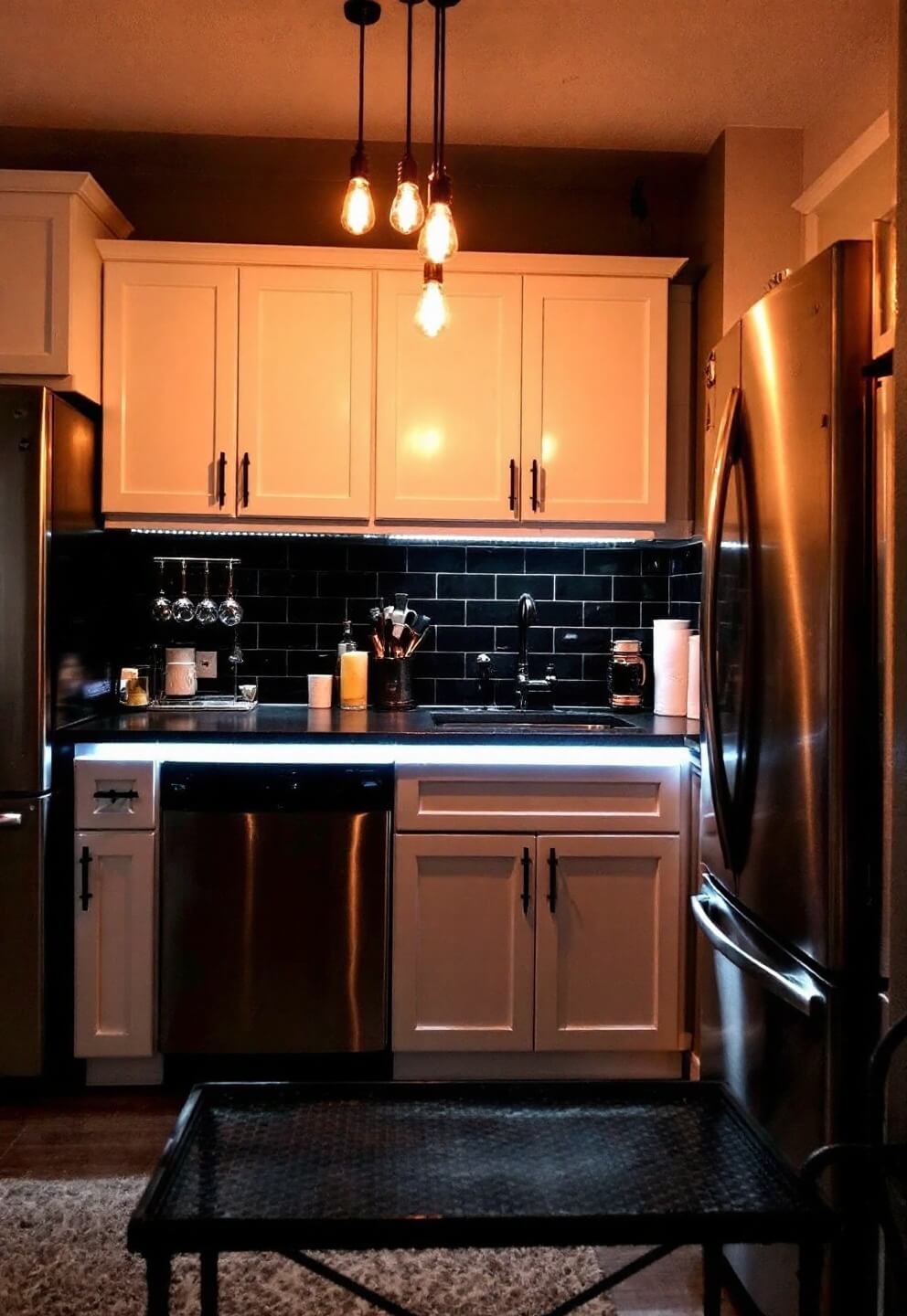
🖼 Steal This Look
- Paint Color: Dunn-Edwards Warm Putty DE6235
- Furniture: Mixed wood and metal dining table with upholstered seating, open shelving with bracket supports
- Lighting: Vintage Edison bulb pendant lights over kitchen island with mixed metal finishes
- Materials: Reclaimed wood, blackened steel, exposed brick, butcher block countertops, matte hardware
Industrial farmhouse kitchens thrive on seeming effortless, but they actually require thoughtful restraint. The best ones feel lived-in and functional first, styled second—where your family actually wants to cook dinner, not where they’re afraid to touch anything.
Budget-Friendly Tips:
- Hunt flea markets for vintage pieces
- DIY open shelving with pipes and wood
- Refinish existing cabinets instead of replacing
- Shop salvage yards for unique fixtures
- Paint existing hardware for an industrial look
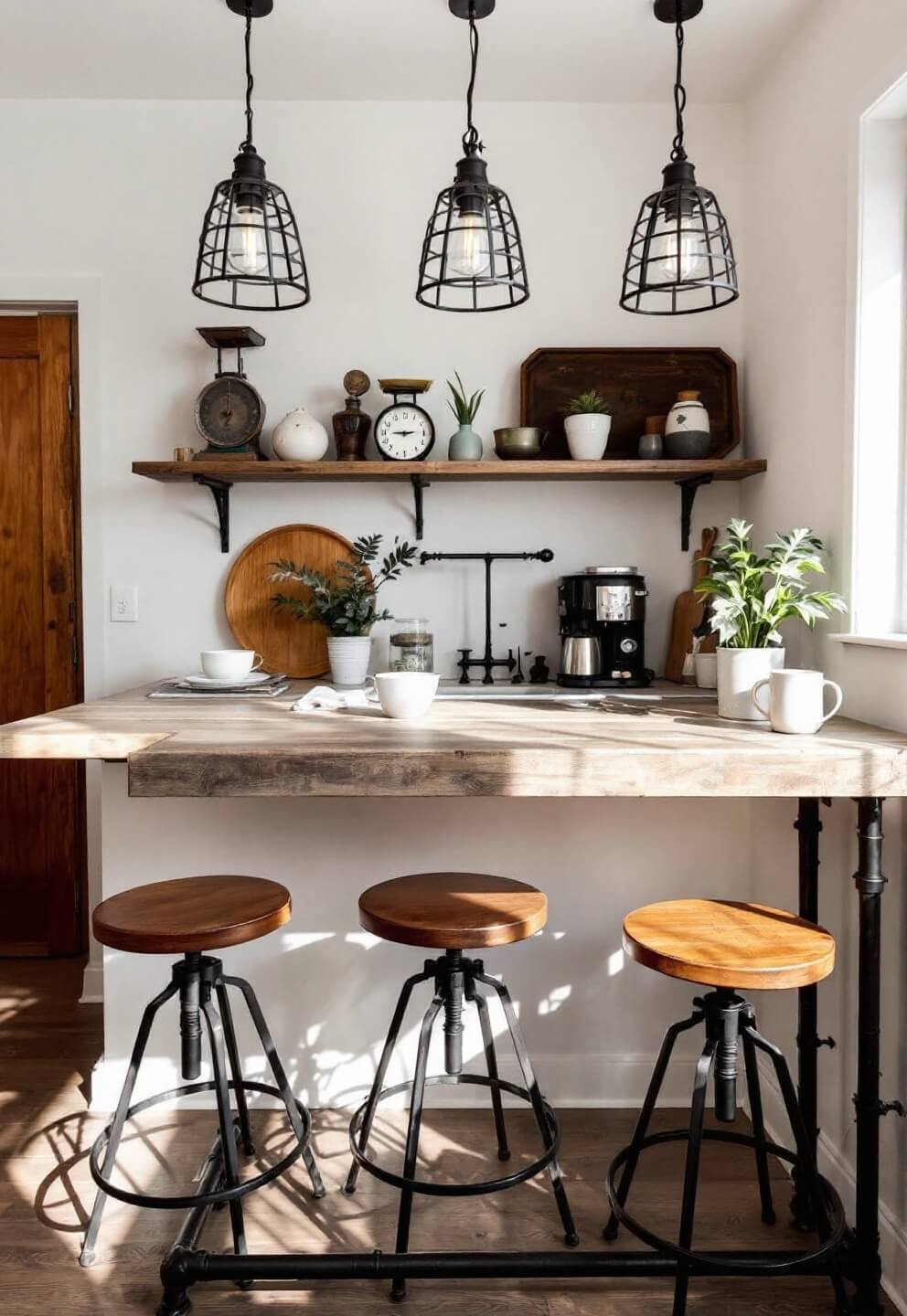
Remember, your kitchen should feel like home while looking Instagram-worthy. Start with these basics and add your personal touch – that’s what makes a space truly special.
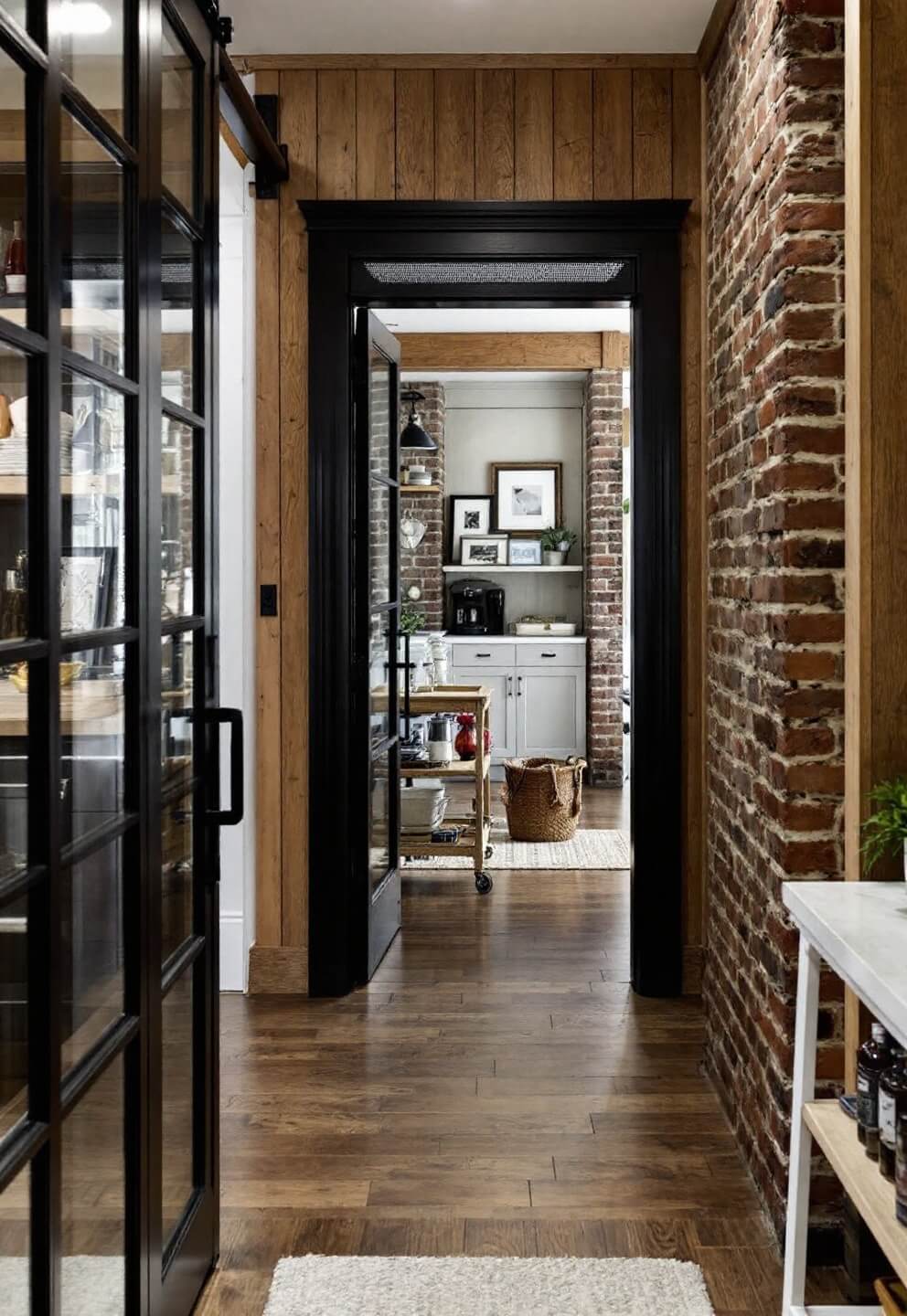
Need help? Drop your questions below, and I’ll guide you through your kitchen transformation journey!
Industrial farmhouse needs one element to lead. Pick the metal or the wood, quiet the other, and the mix feels deliberate.
🌟 Steal This Look
- Paint Color: Clare Paint Urbane Bronze CODE: UB-243 (for industrial accents) or Clare Paint Natural Linen CODE: NL-100 (for warm farmhouse base)
- Furniture: Reclaimed wood open shelving with black iron pipe brackets, refinished vintage cabinet doors with industrial hardware, salvage-yard wood countertops or concrete surfaces
- Lighting: Vintage Edison bulb pendant lights with black metal fixtures, repurposed industrial cage lights or salvage-yard factory fixtures
- Materials: Reclaimed wood, black iron pipe, worn metal hardware, exposed wood grain, vintage patina finishes, concrete or butcher-block counters
Industrial farmhouse thrives on the imperfect and handmade—budget constraints actually work in your favor here. The DIY refinishing, pipe shelving, and layered thrifted pieces are exactly what makes this style feel authentic rather than sterile.