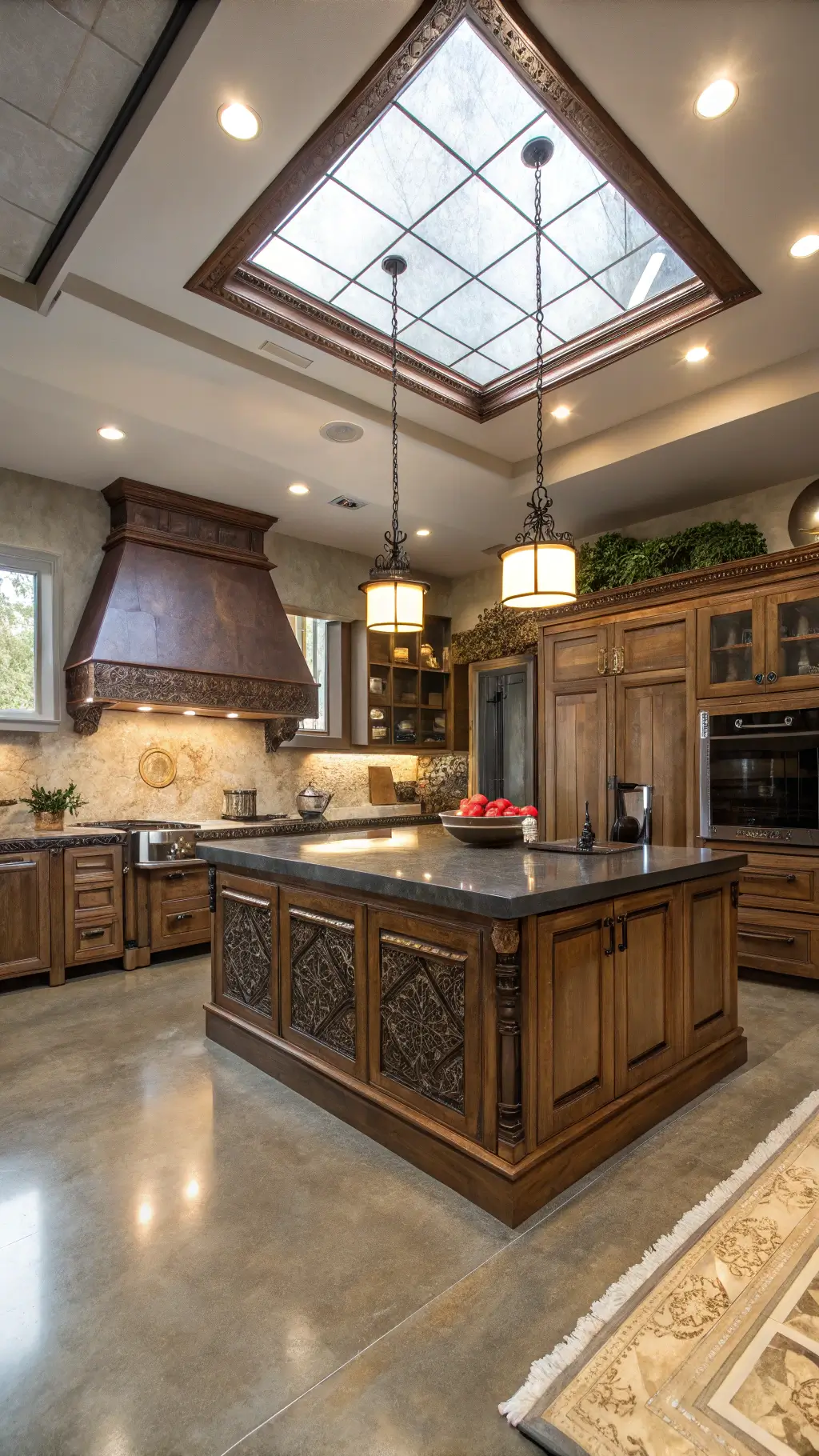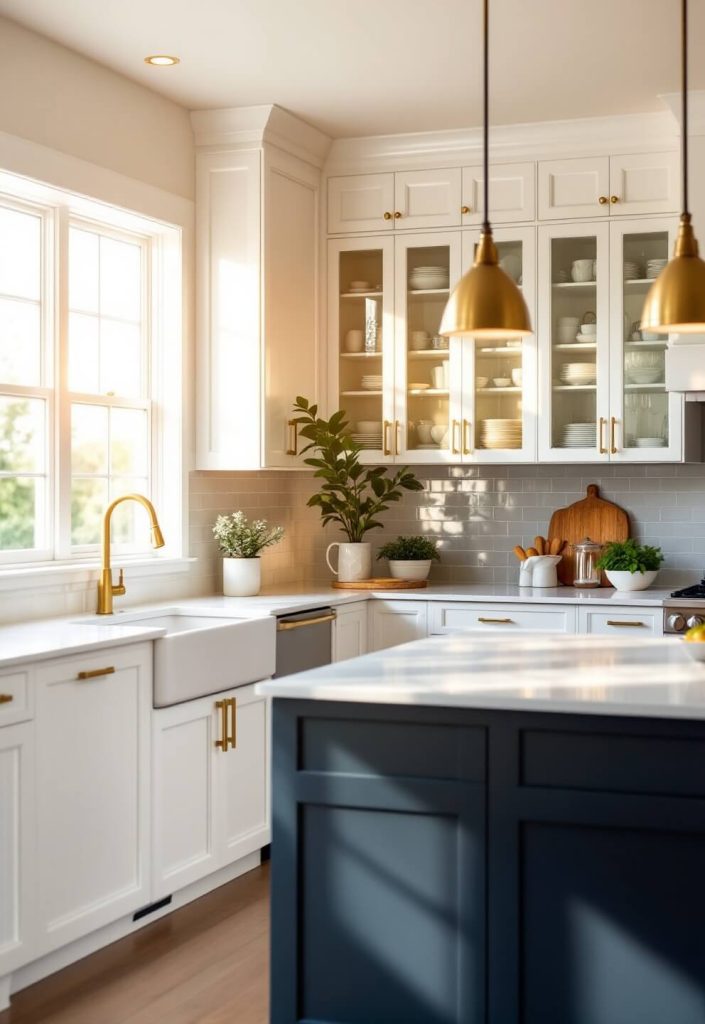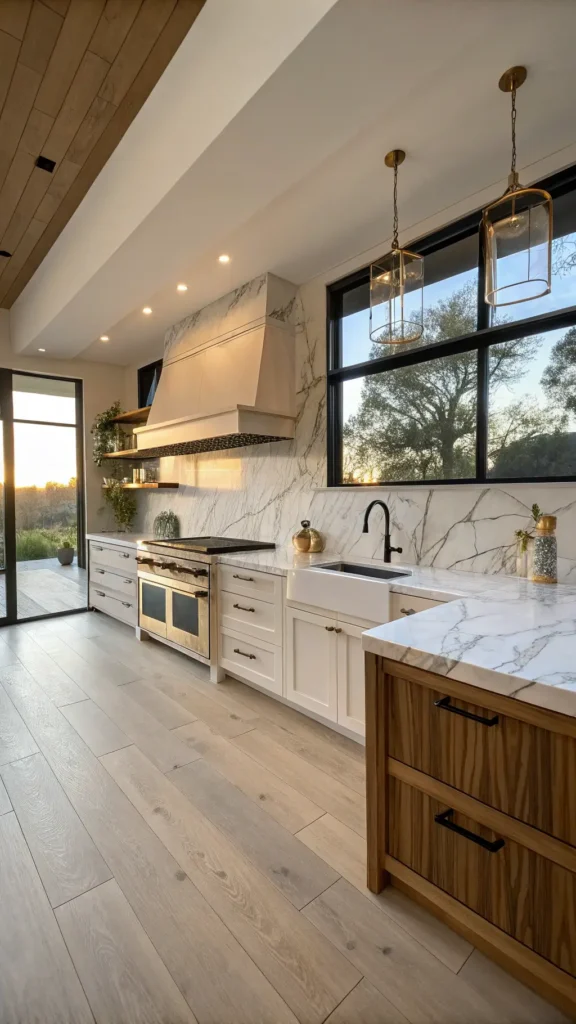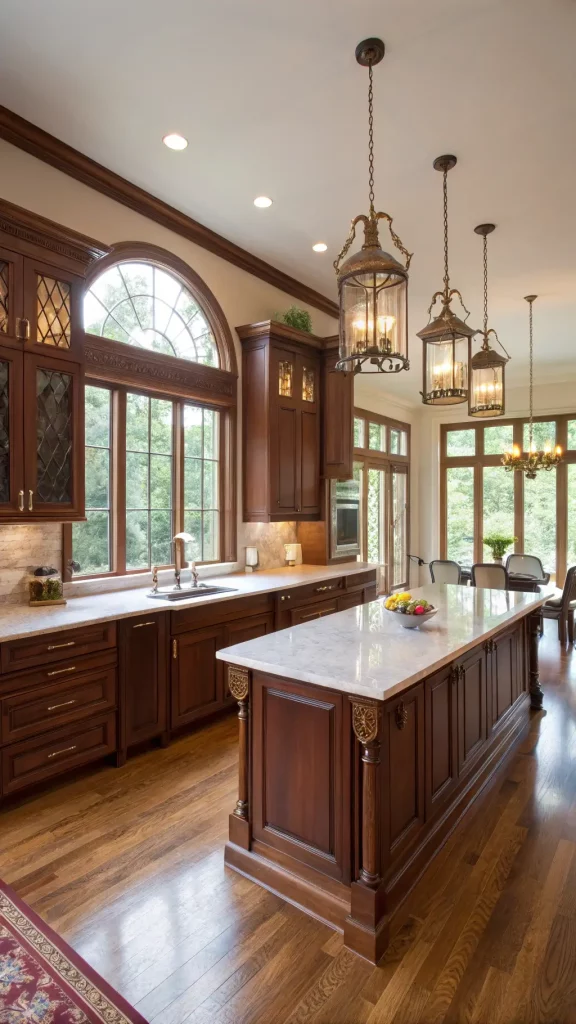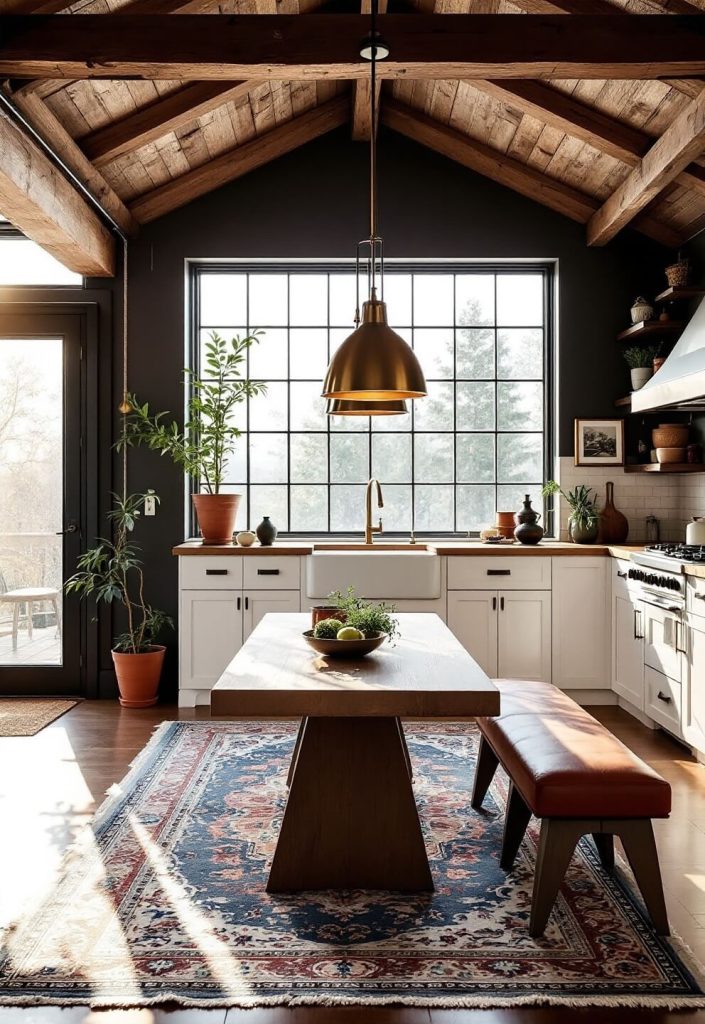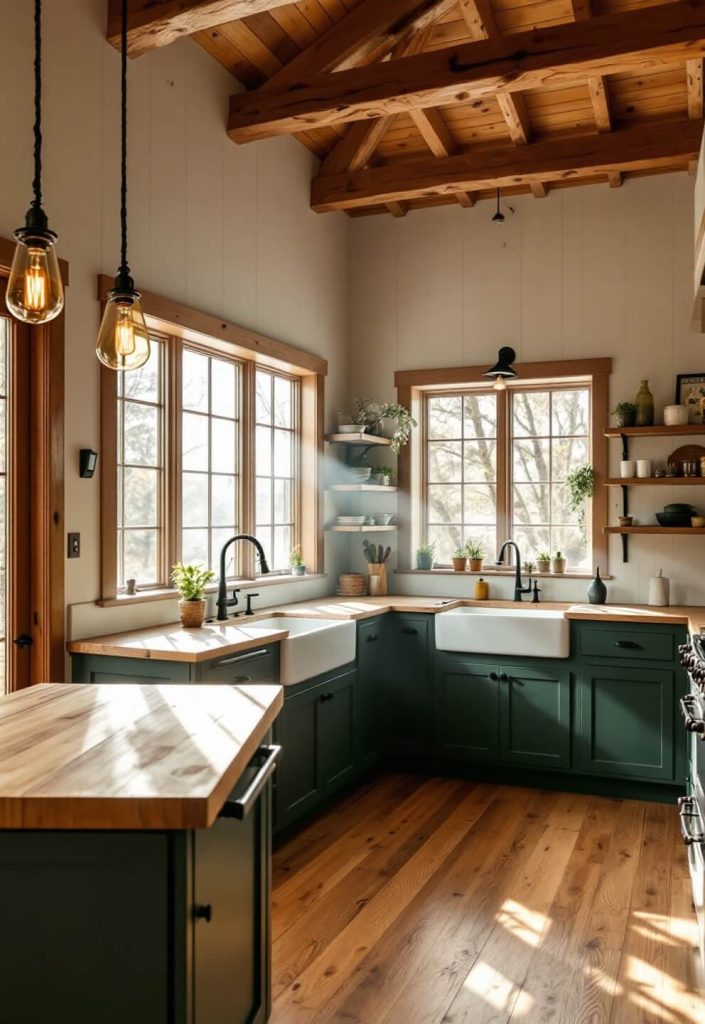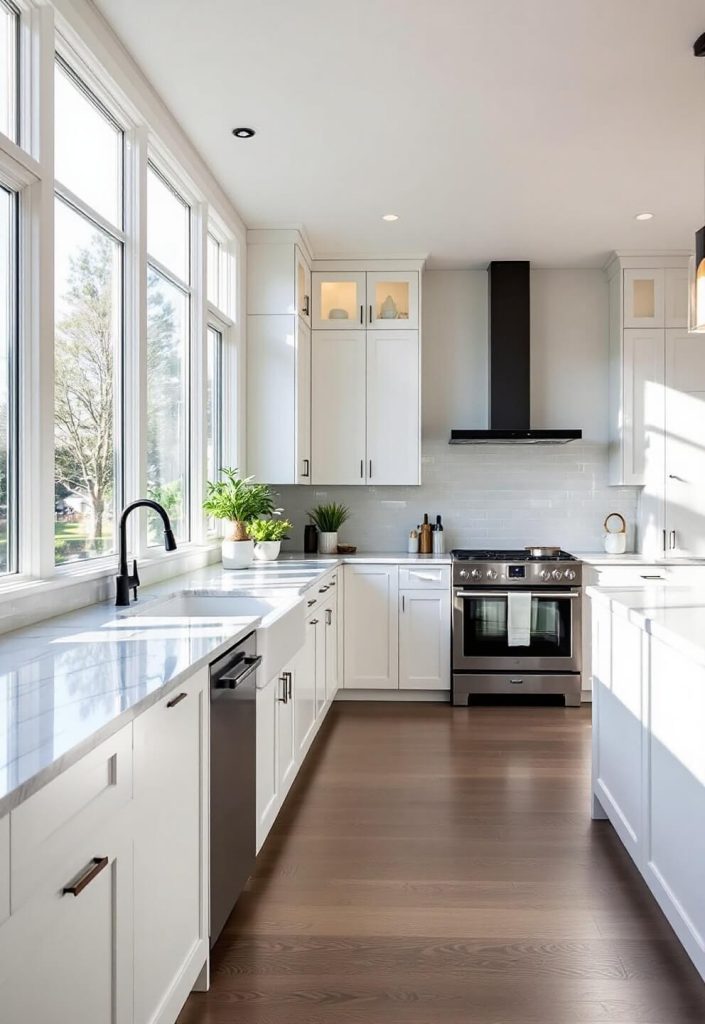
Hickory cabinets set the tone for the whole kitchen, so the shade and finish decide everything. I read the color in the room’s actual light before committing, because the same tone shifts from morning to evening.
Are you tired of bland, lifeless kitchen cabinets that feel like they belong in a generic showroom? Hickory kitchen cabinets might just be the game-changer your cooking sanctuary needs.
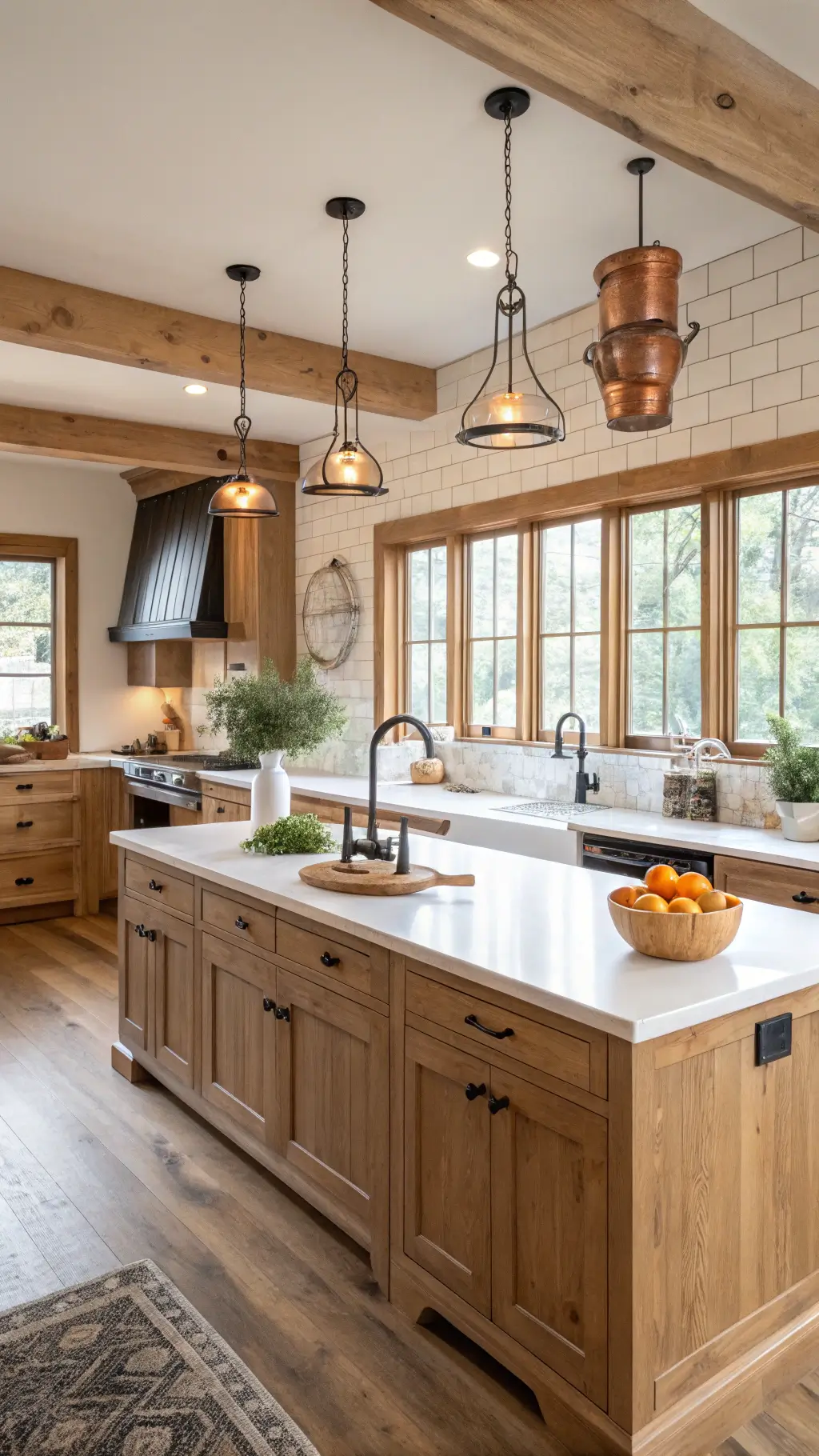
✎ Steal This Look
- Paint Color: Sherwin-Williams Urbane Bronze SW 7048
- Furniture: Open shelving with hickory wood to complement cabinet wood grain; a kitchen island with hickory cabinetry and butcher block or granite countertop; wooden bar stools with warm honey or cognac-toned upholstery
- Lighting: Pendant lights with bronze or oil-rubbed bronze fixtures suspended over kitchen island; warm 2700K color temperature to enhance hickory’s natural grain
- Materials: Hickory wood with natural grain variation, matte or satin cabinet finishes, warm metals (bronze, copper, brushed gold hardware), granite or butcher block countertops, shiplap or warm neutral backsplash
Hickory cabinets bring authentic craftsmanship and lived-in warmth to a kitchen—they’re the opposite of sterile. This natural wood choice transforms your culinary space into something that feels collected and intentional rather than builder-grade.
Why Hickory Wood Wins in Kitchen Design
Hickory isn’t just another wood – it’s a statement. Here’s why:
Nature’s Masterpiece
- Dramatic grain patterns that tell a story
- Unique color variations that make each cabinet unique
- Natural “imperfections” that add character
Built to Survive Kitchen Chaos
- Incredibly tough wood that laughs at scratches
- Resists dents and dings like a kitchen superhero
- Perfect for families with active cooking lifestyles
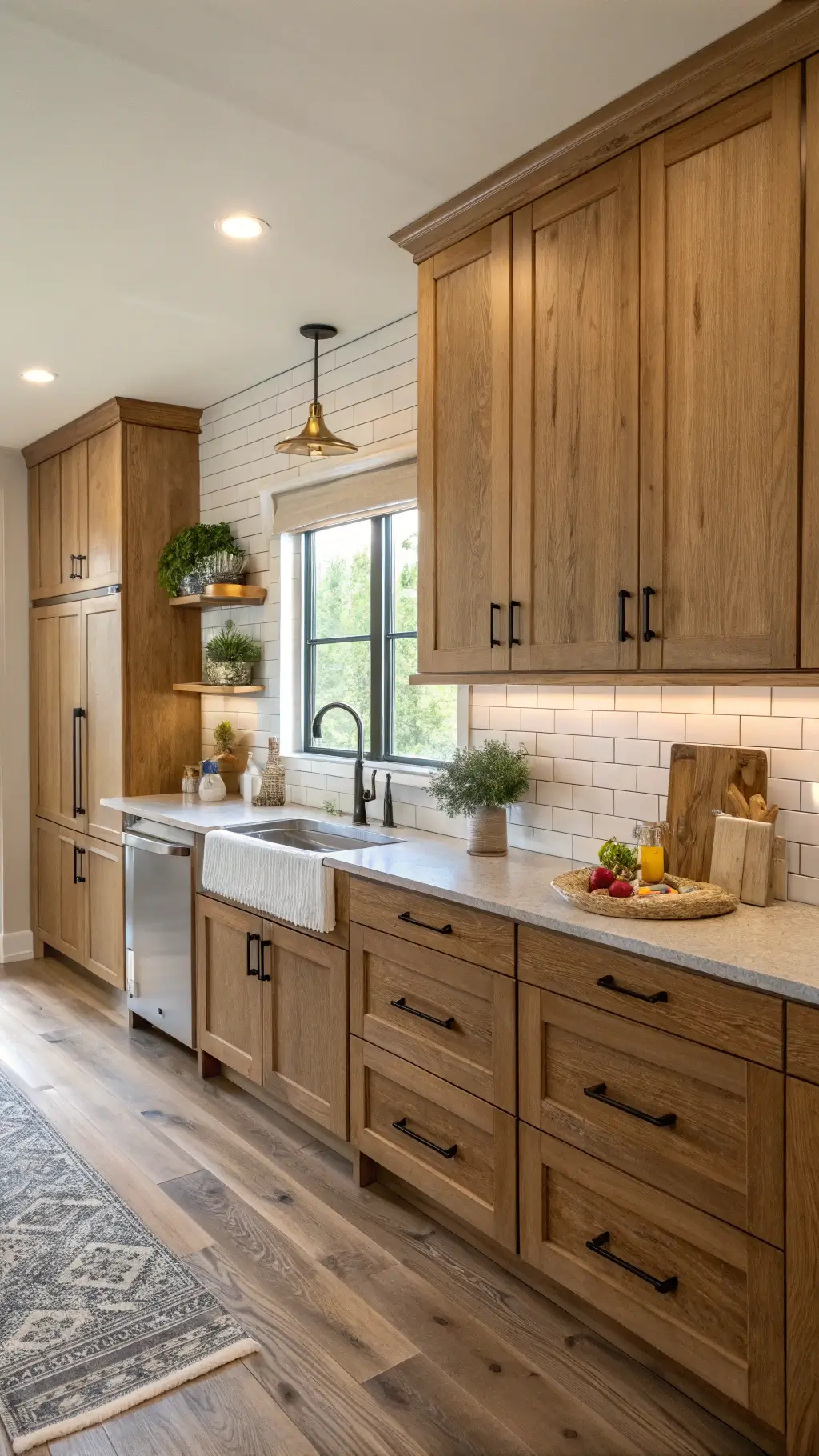
🖼 Steal This Look
- Paint Color: Benjamin Moore HC-172 Newburyport Blue
- Furniture: Open shelving in matching hickory wood, large kitchen island with hickory cabinetry and contrasting countertop (granite or quartz), wooden bar stools with upholstered seats
- Lighting: Pendant lights with warm brass or oil-rubbed bronze fixtures suspended over kitchen island to highlight hickory grain patterns
- Materials: Hickory wood with natural grain variation, matte or satin cabinet finish to showcase wood character, butcher block or stone countertops, natural fiber bar stool cushions
Hickory kitchens work beautifully for homeowners who want their cabinetry to be a focal point rather than a backdrop. The bold wood grain and character tell a story of quality and durability – you’re not just choosing cabinets, you’re investing in a kitchen that ages gracefully and handles real family life.
Styles That Make Hickory Shine
1. Knotty Hickory Shaker: Rustic Charm Personified
Imagine a cabinet that whispers countryside stories. Clean lines meet wild wood grain – it’s like your kitchen got a personality upgrade.
2. Natural Hickory: Warmth Meets Elegance
- Showcases wood’s authentic character
- Contrasting grains that draw the eye
- Feels like bringing a piece of the forest into your home
3. Tawny Hickory: Modern Meets Cozy
- Warm tones that create instant welcome
- Pairs beautifully with sleek black hardware
- Bridges traditional and contemporary design
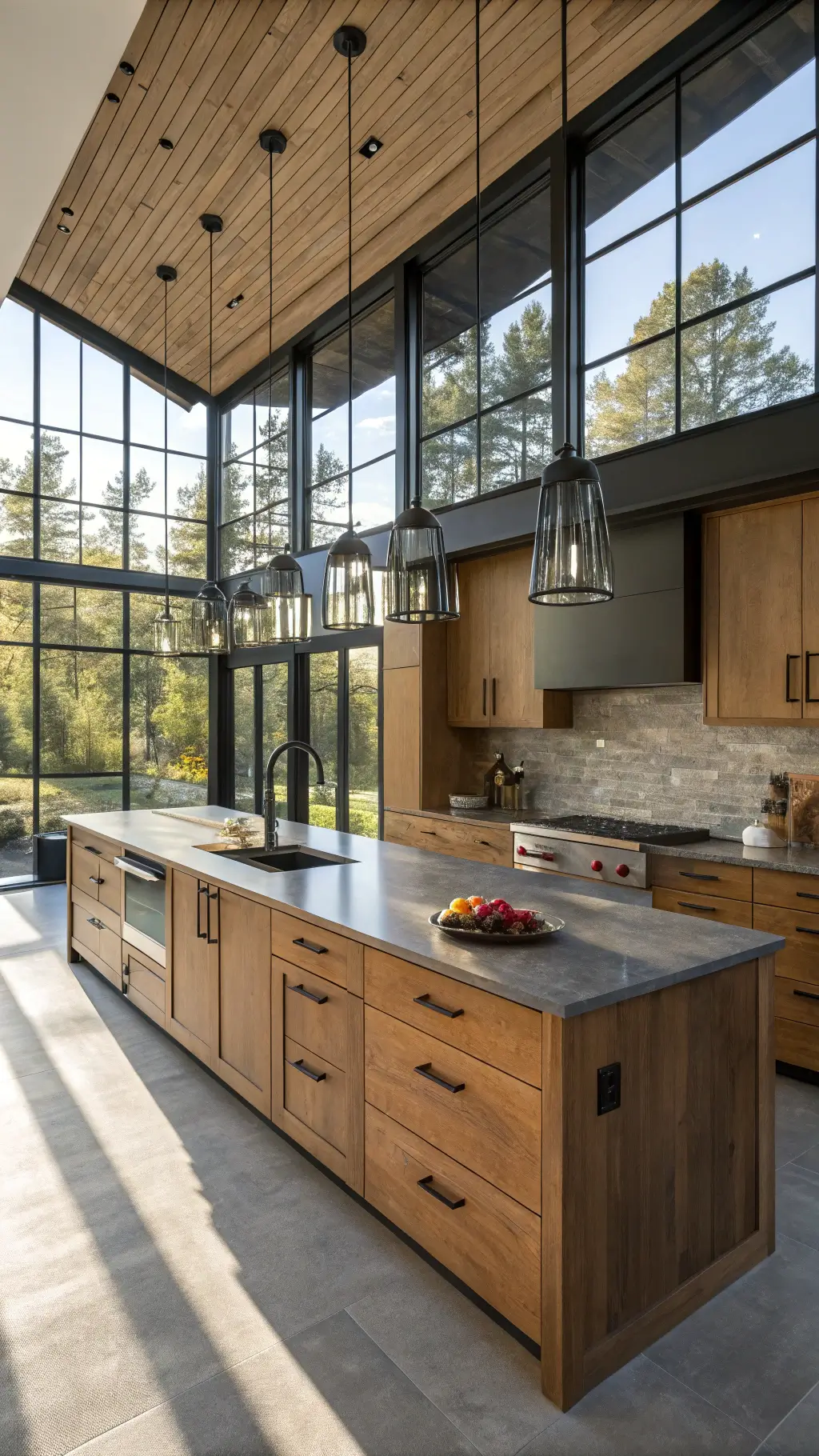
★ Steal This Look
- Paint Color: Farrow & Ball Pointing PE 297
- Furniture: Open shelving with black metal frames to complement hickory grain; a kitchen island with butcher block or matching wood top
- Lighting: Pendant lights with oil-rubbed bronze or matte black fixtures to echo the hardware and contrast warm wood tones
- Materials: Hickory wood with visible knots and grain variation; matte black hardware; natural wood countertops or light stone; warm-toned grout or backsplash in cream or soft taupe
Hickory cabinets are storytellers—every knot and grain variation speaks to authenticity and craftsmanship. This wood style works beautifully when you commit to letting its character shine rather than trying to tone it down with sterile surroundings.
Design Pro Tips
Hardware Matters
- Black finger pulls for a modern twist
- Traditional knobs for classic vibes
- Match hardware to your kitchen’s personality
Complementary Design Strategies
- Use hickory as a focal point
- Balance wood tones with neutral elements
- Consider your overall kitchen color palette
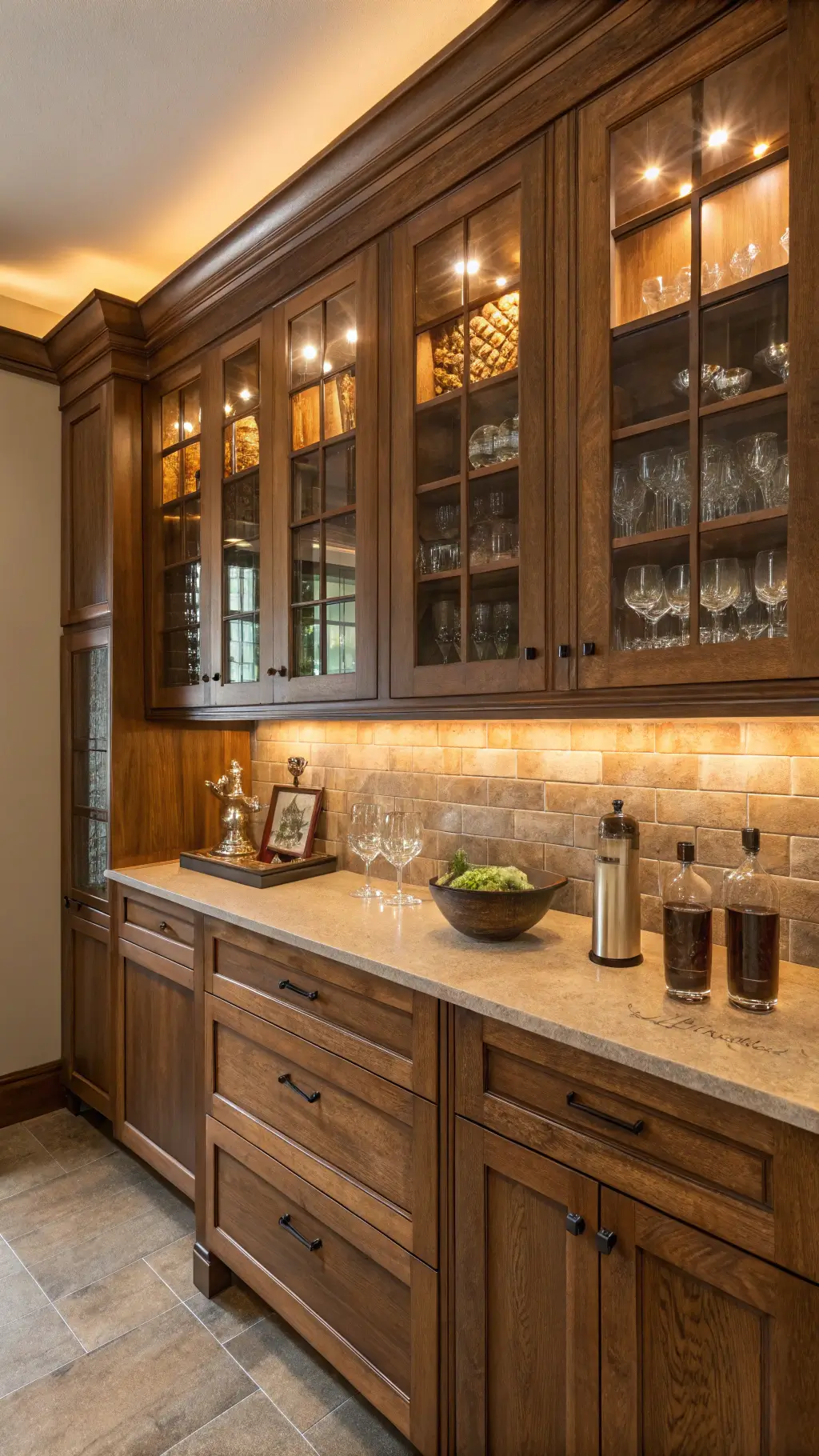
🏠 Steal This Look
- Paint Color: Behr Accessible Beige N310-2 — a warm neutral that lets hickory wood grain be the star without competing for attention
- Furniture: Open shelving in matching hickory or complementary light oak to echo cabinet lines; a hickory-top kitchen island with contrasting base for balance
- Lighting: Pendant lights with oil-rubbed bronze or matte black fixtures to echo hardware choices; warm 2700K color temperature to enhance wood warmth
- Materials: Brushed metal or matte black hardware; natural hickory grain textures; warm metals like bronze or copper for accents; polished or honed stone countertops in neutral tones
Hickory cabinets have inherent character with their dramatic grain patterns and warm honey tones — your hardware choice either amplifies that personality or modernizes it. The right pull or knob transforms hickory from rustic-leaning to contemporary without replacing a single cabinet.
Configuration Flexibility
Hickory doesn’t compromise on functionality:
Cost Considerations
Hickory is an investment. Expect to pay more than standard woods, but you’re buying durability and timeless beauty.
Quick Budget Tip: Mix hickory accent cabinets with more affordable options to get the look without breaking the bank.
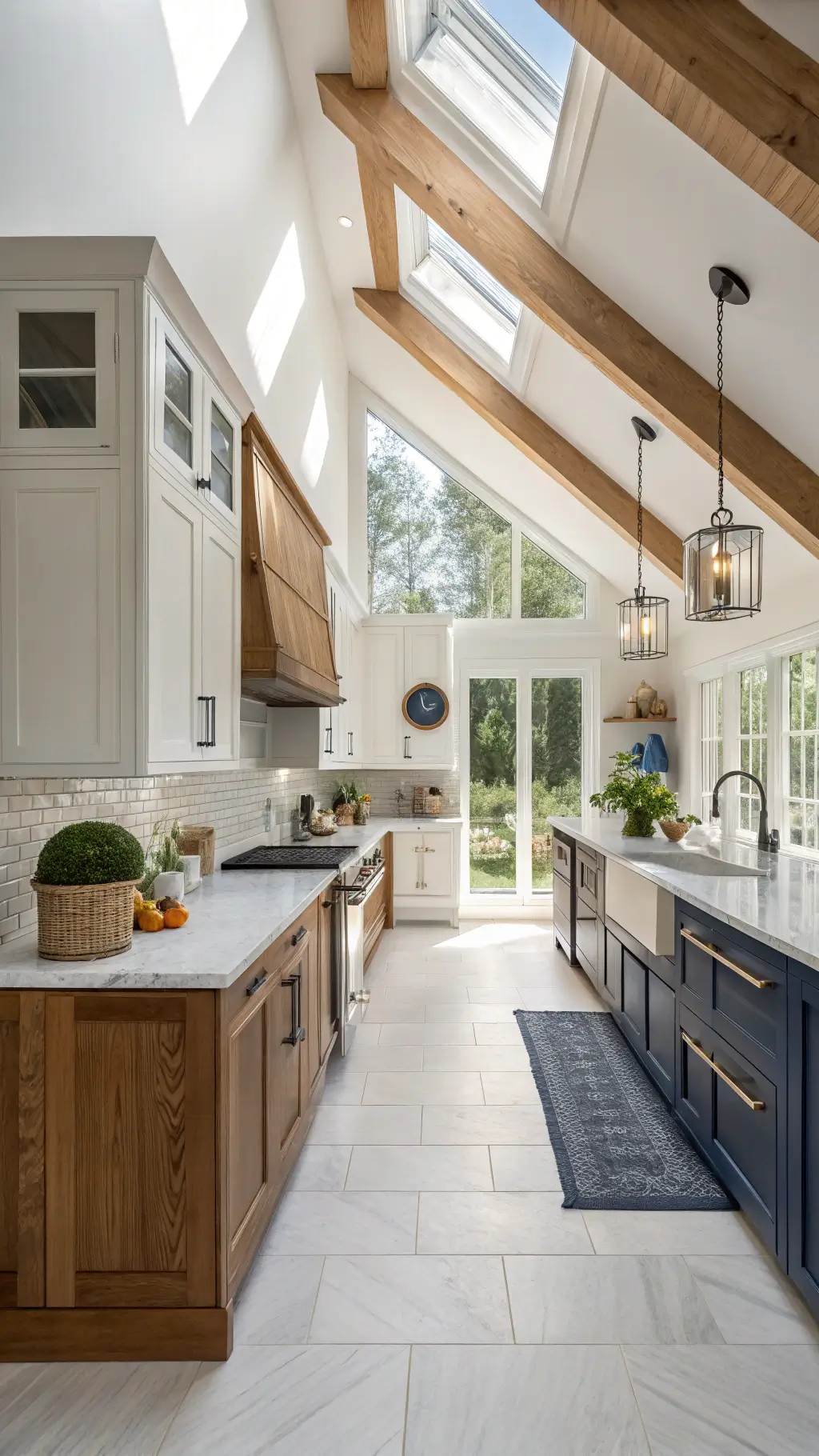
🏠 Steal This Look
- Paint Color: Valspar Woodrow Wilson Beige 7504 — a warm neutral that complements hickory’s natural grain and knots without competing for attention
- Furniture: Open shelving in matching hickory or complementary wood tones to echo cabinet configuration; kitchen island with hickory base and neutral countertop to extend the cabinetry theme
- Lighting: Recessed can lighting with warm 2700K color temperature positioned above work zones, paired with under-cabinet task lighting to highlight hickory grain detail
- Materials: Hickory wood with visible grain and knots as primary; matte or satin cabinet finish; neutral stone or butcher block countertops; brushed nickel or oil-rubbed bronze hardware
Hickory’s distinctive grain pattern and natural color variation mean every cabinet tells its own story—it’s the perfect choice for kitchens that prioritize authentic, lived-in character over mass-produced uniformity. Investing in even partial hickory cabinetry pays dividends in durability and timeless appeal.
Maintenance: Keeping Your Hickory Cabinets Gorgeous
Care Routine
- Regular dusting
- Gentle wood cleaner
- Avoid harsh chemicals
- Periodic conditioning
Pro Recommendation: Treat your hickory cabinets like a fine piece of furniture – with respect and occasional pampering.
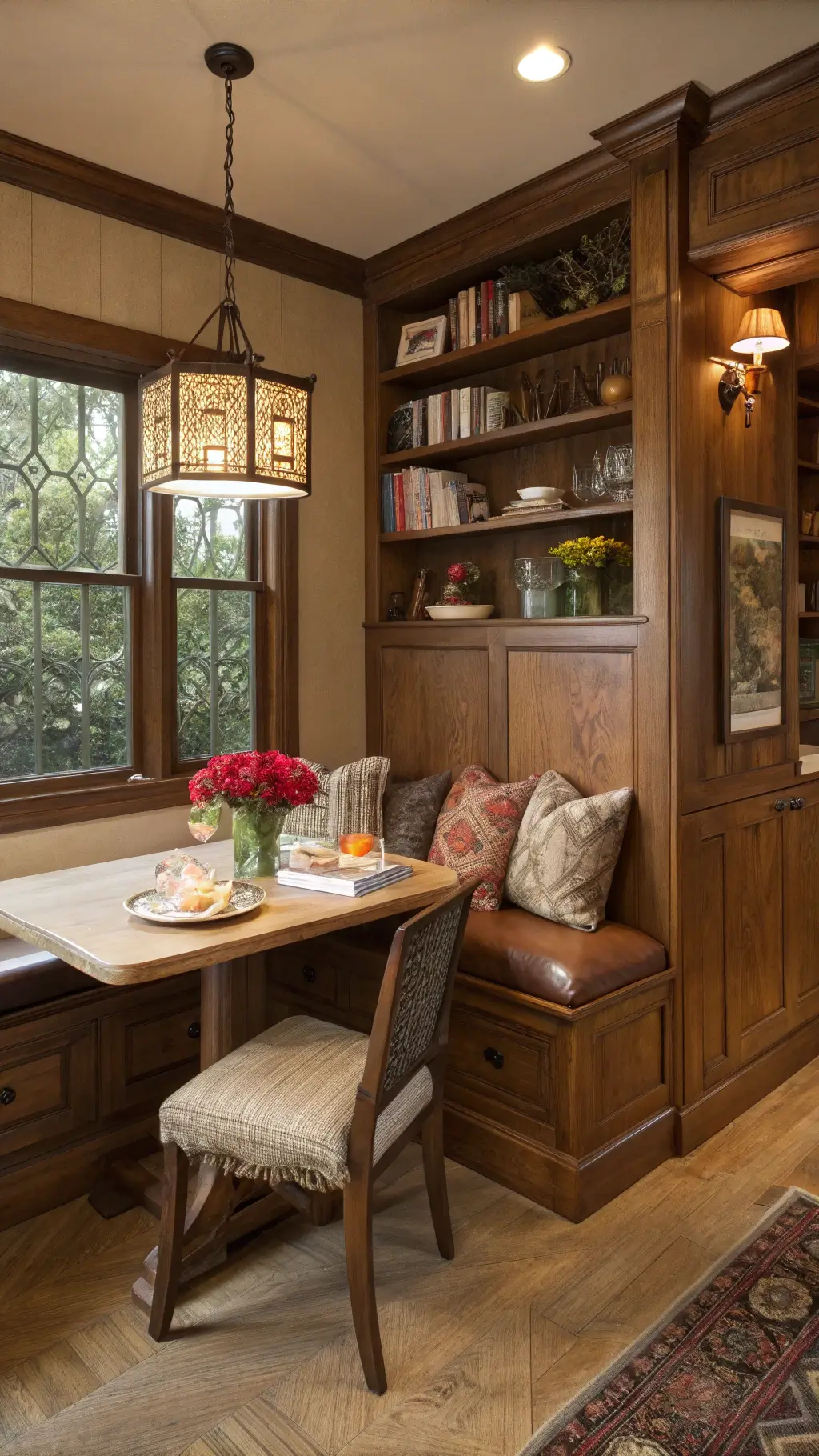
🏠 Steal This Look
- Paint Color: PPG Urbane Bronze PPG1002-7 – a sophisticated neutral that complements hickory’s warm grain without competing with cabinet character
- Furniture: Open shelving or glass-door upper cabinets to showcase hickory’s natural beauty; sturdy wooden prep table or kitchen island in complementary wood tone
- Lighting: Warm-toned pendant lights (2700K LED) positioned above countertops to enhance hickory’s amber and chocolate undertones
- Materials: Natural hickory wood with oil-based finish, matte hardware (oil-rubbed bronze or antique brass), stone or butcher block countertops that don’t overshadow the cabinet wood
Hickory cabinets age beautifully when properly maintained, developing a rich patina that actually enhances their character over time. Treating them with the same care you’d give a handcrafted heirloom ensures they’ll be a kitchen centerpiece for decades.
Final Thoughts
Hickory kitchen cabinets aren’t just furniture; they’re a lifestyle choice. They bring durability, character, and a connection to nature right into the heart of your home.
Whether you’re a cooking enthusiast or someone who loves design that tells a story, hickory cabinets offer something truly special.
Hickory cabinets feel right when the finish and light agree. Choose the shade for the room you have and the wood does the rest.