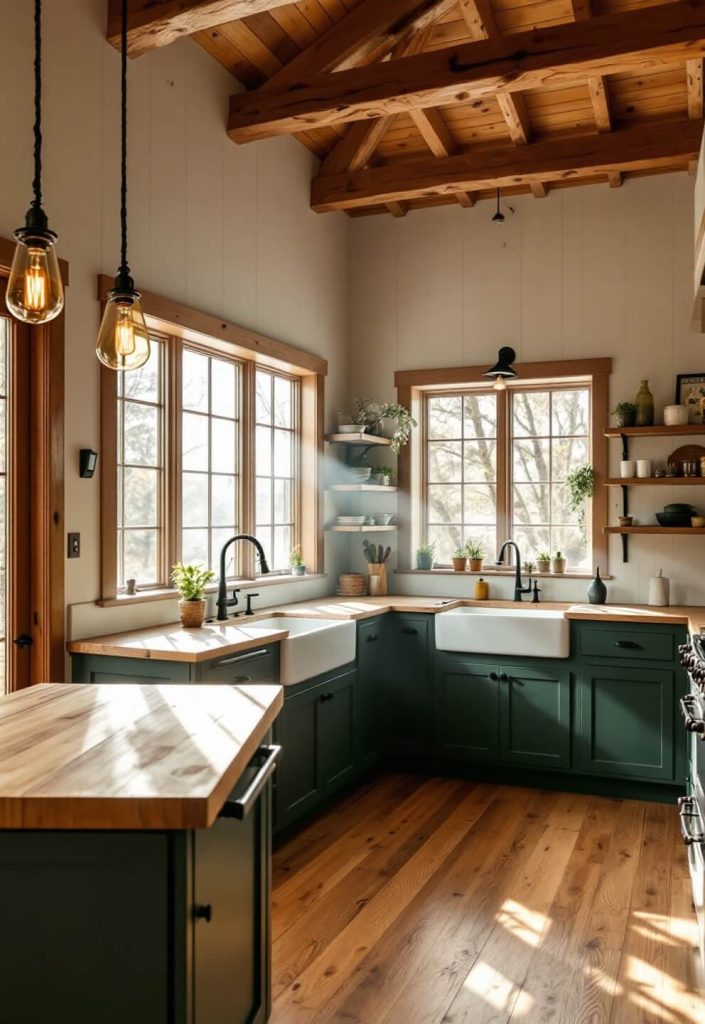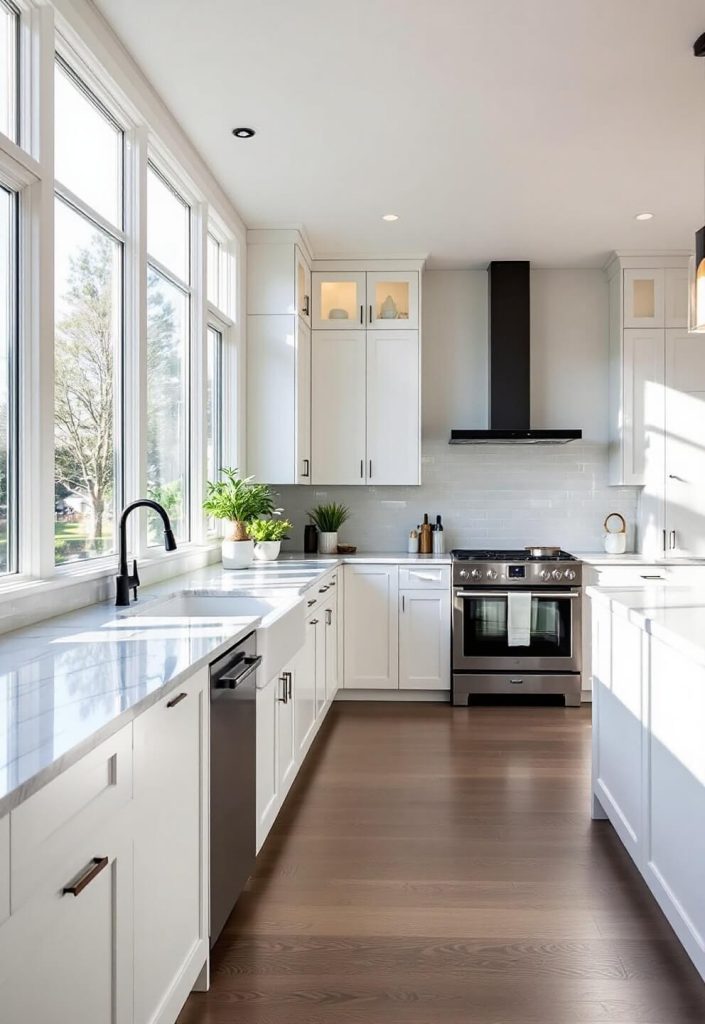
Creating Your Dream Kitchen: A Sage Green and Cream Color Story
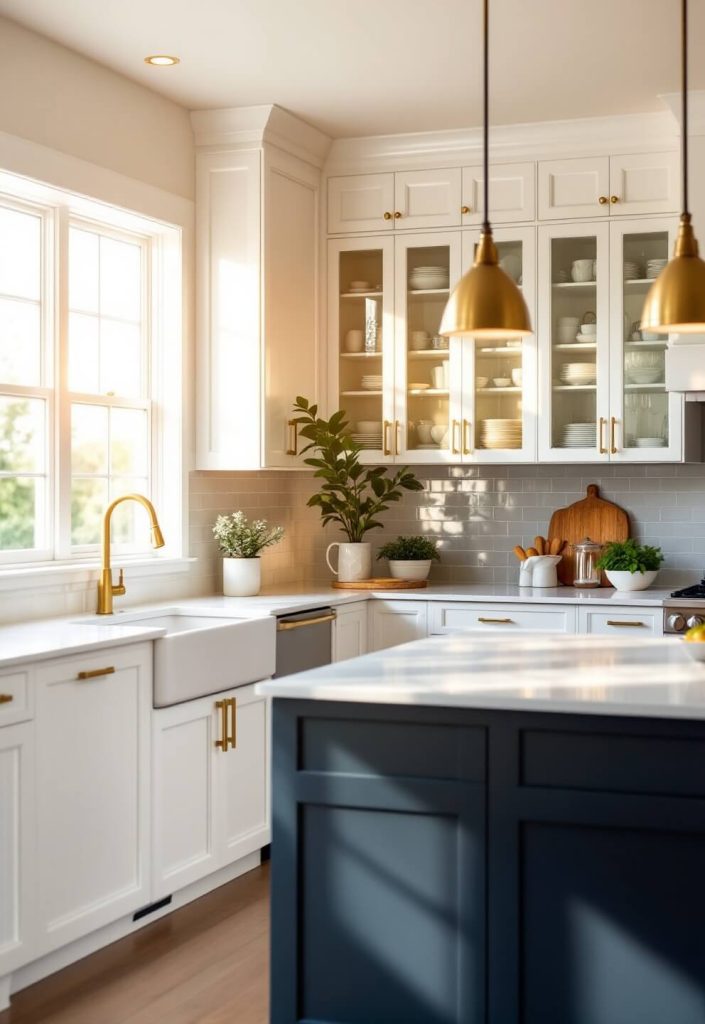
Cream and sage is a forgiving pair because both sit in the soft middle of the palette. I use sage on the lower cabinets and cream above, which keeps the room light without feeling blank.
I’ve designed dozens of kitchens, and this color combo never fails to impress. Trust me, it’s like the perfect marriage of earthy and elegant.
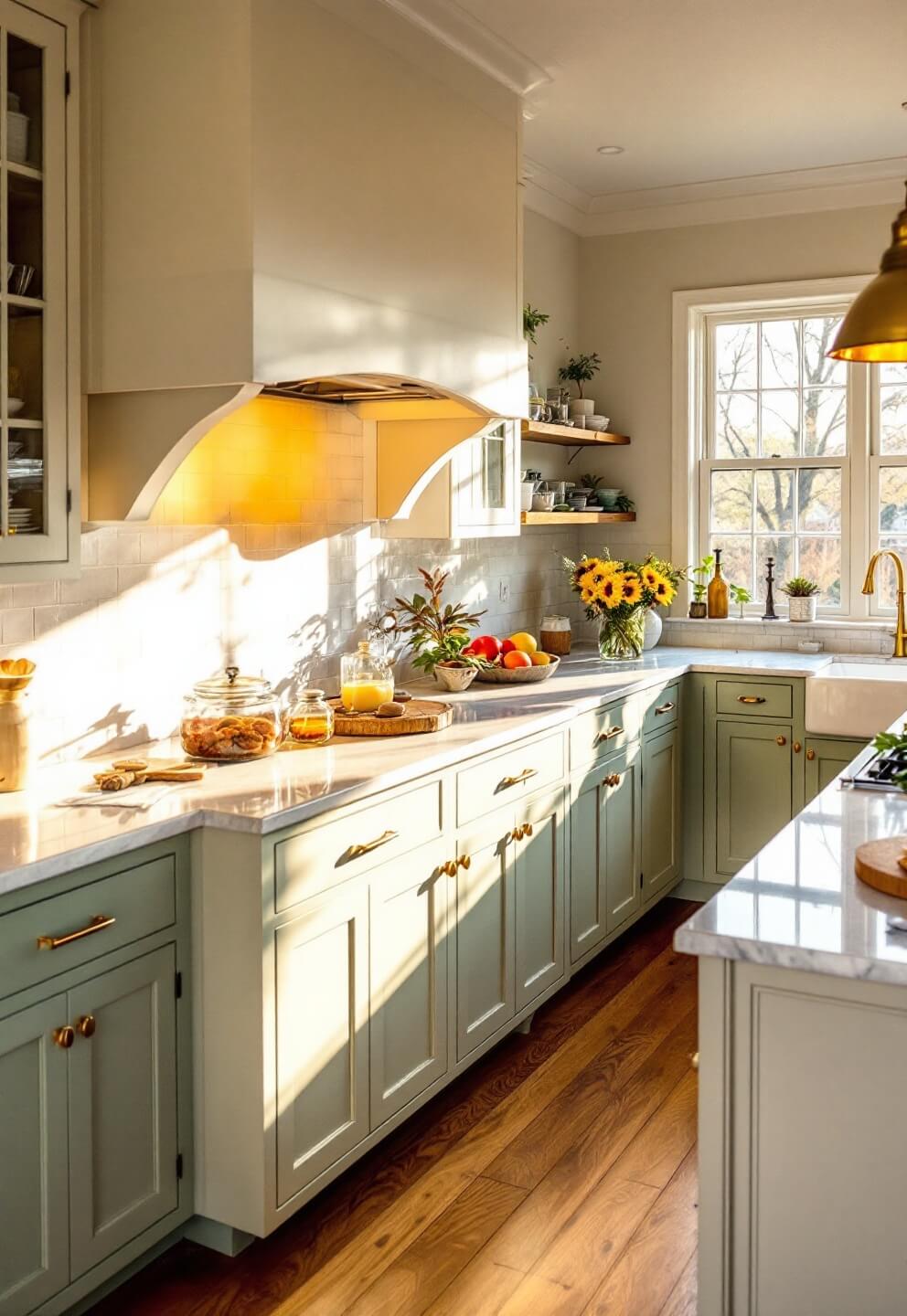
★ Steal This Look
- Paint Color: Sherwin-Williams Evergreen Fog SW 9130 for sage green walls; Sherwin-Williams Alabaster SW 7008 for cream cabinetry and trim
- Furniture: Light wood kitchen island with cream-colored base and sage green upholstered bar stools; open shelving with cream-painted frames displaying sage green dishware
- Lighting: Pendant lights with warm brass or bronze fixtures suspended over kitchen island; under-cabinet warm white LED strip lighting to highlight sage green lower cabinets
- Materials: Matte finish on sage green cabinetry; soft-touch cream-colored quartz or marble countertop; natural wood open shelving; brushed metal hardware in warm bronze or oil-rubbed bronze
Sage green and cream together create a kitchen that feels both grounded and refined – it’s the color story that says you appreciate nature without sacrificing sophistication. This palette works beautifully in both modern minimalist and farmhouse-inspired kitchens.
Why This Color Combo Works Like Magic
The secret sauce? It’s all about balance:
- Sage green brings that calming, natural vibe
- Cream adds warmth without being too stark like pure white
- Together, they create this incredibly welcoming space
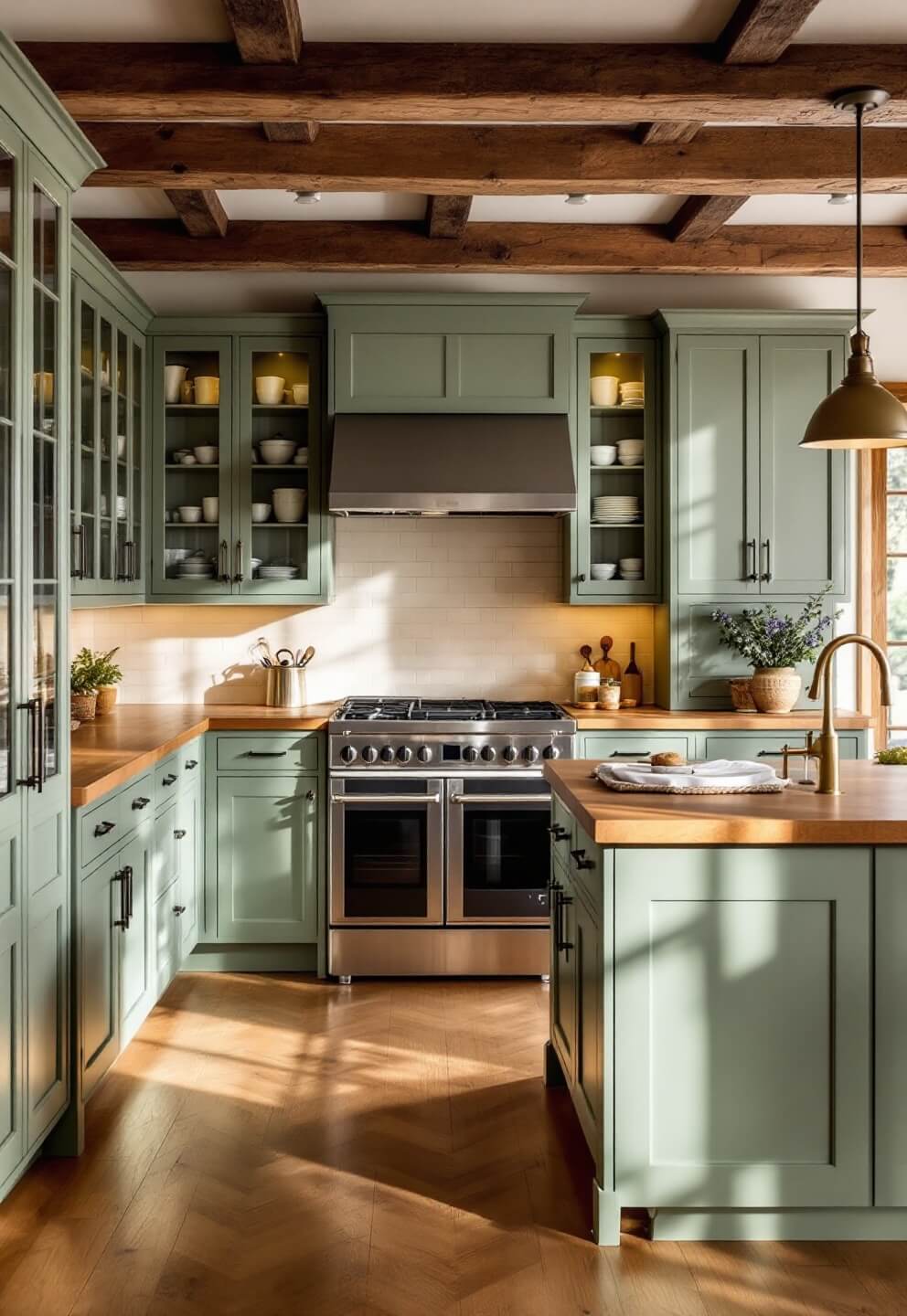
🎨 Steal This Look
- Paint Color: Benjamin Moore Healing Aloe 2037-40 for sage green walls, Benjamin Moore Cloud White OC-130 for cream cabinetry and trim
- Furniture: Light wood kitchen island with cream-painted base, sage green bar stools with turned legs, white shaker-style cabinetry
- Lighting: Warm brass or brushed gold pendant lights with frosted glass shades over kitchen island
- Materials: Soft matte finishes on cabinetry, natural wood countertops or light marble, linen-textured backsplash tile in cream
This pairing feels like a warm embrace rather than a design statement. It’s the kitchen equivalent of listening to someone who really listens back—calming but never boring, natural but intentional.
Let’s Talk Cabinets (The Game-Changer)
Here’s my favorite trick – mix it up:
- Paint upper cabinets cream
- Go sage green on the lower ones
- Or flip it around – both ways work beautifully!
Pro Tip: If you’re nervous about going all-in, start with just the island in sage green. It’s like dipping your toe in the water before the full plunge.
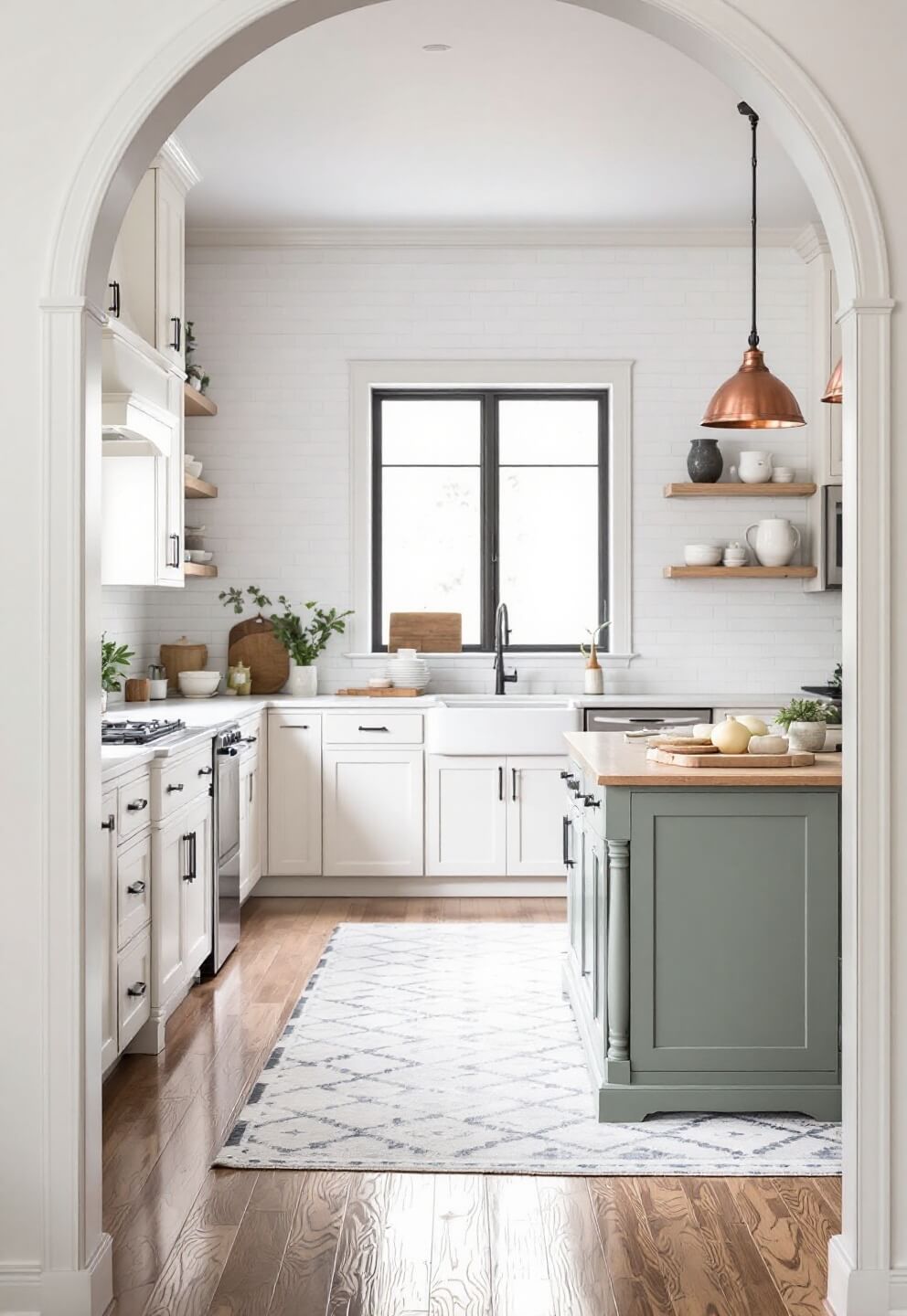
🎨 Steal This Look
- Paint Color: Farrow & Ball Pointing 2003 (cream uppers) and Farrow & Ball Mizzle 266 (sage green lowers)
- Furniture: Shaker-style or transitional cabinetry with recessed panel doors, cream lacquer finish for uppers, soft sage green finish for lowers
- Lighting: Pendant lights with brass or brushed gold hardware suspended above island, warm 2700K color temperature
- Materials: Matte or satin cabinet finish (low-sheen lacquer), natural wood countertops or light marble, soft-close hinges and handles
This two-tone cabinet strategy is the ultimate safe bet for cream and sage: you get visual interest and depth without the commitment of a full color overhaul. It’s the kitchen equivalent of a confidence boost—unexpected, sophisticated, and instantly memorable.
Countertop Choices That Pop
I always tell my clients:
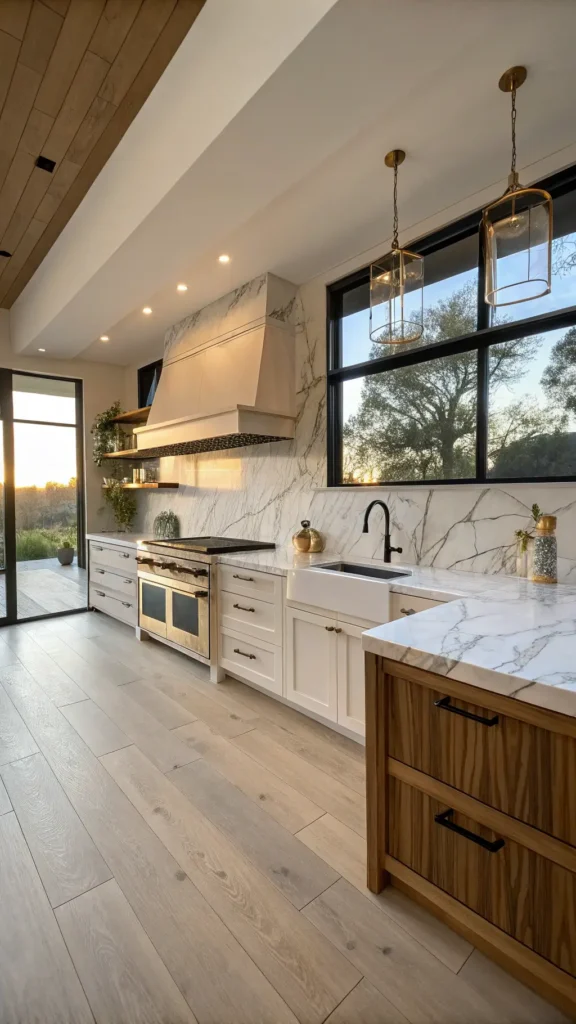
- Light quartz or marble looks stunning against sage cabinets
- Butcher block adds warmth and character
- Cream-colored granite with subtle veining ties everything together
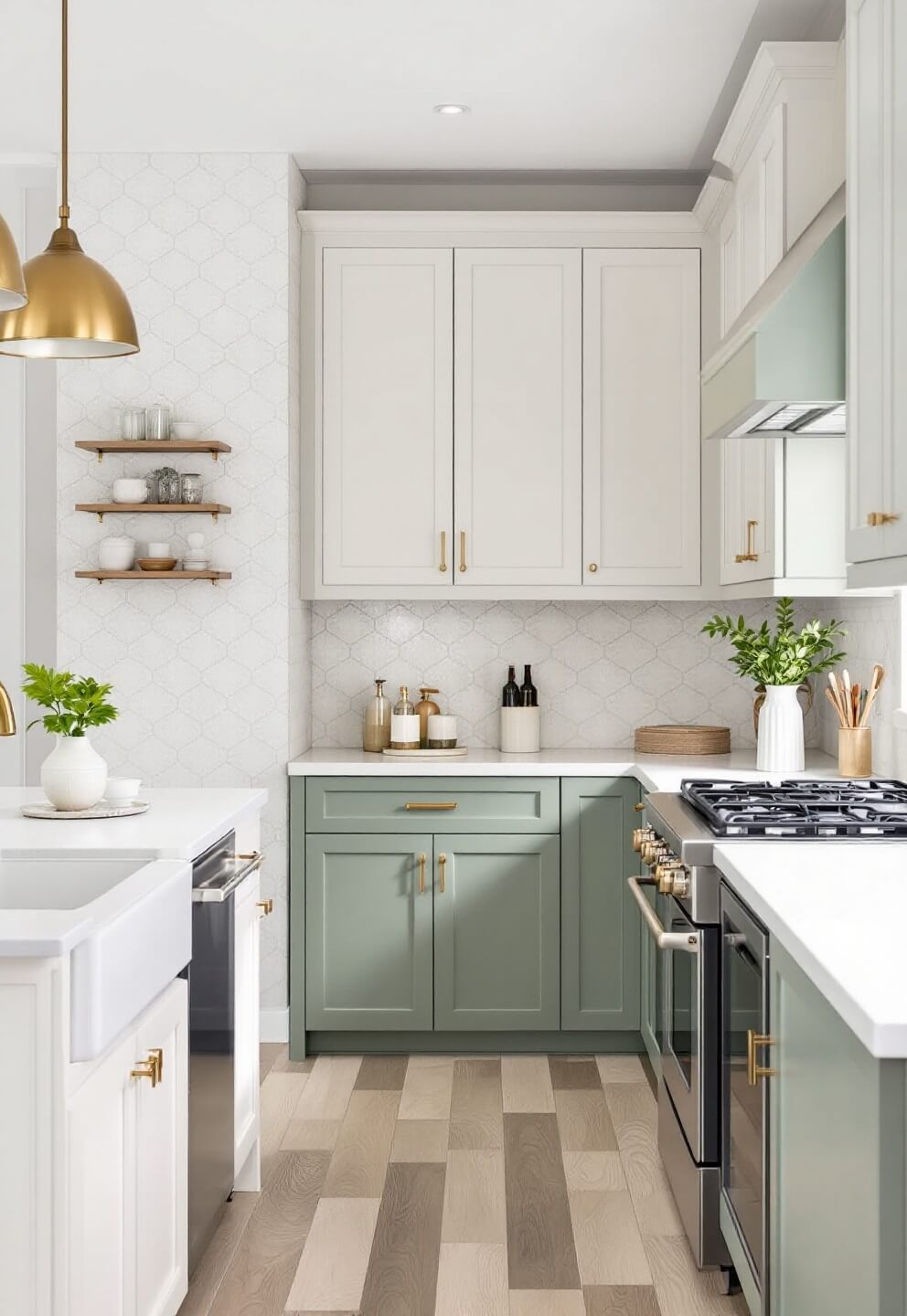
🏠 Steal This Look
- Paint Color: Behr Sage Green N510-4
- Furniture: Cream-painted kitchen cabinets with soft-close hinges and brushed brass hardware
- Lighting: Pendant lights with warm brass or bronze fixtures over island countertop
- Materials: Quartz or marble countertops in white/cream with subtle gray veining; butcher block cutting board accents; natural wood open shelving
The beauty of cream and sage is how it whispers rather than shouts. The right countertop choice is your chance to let that palette breathe — quartz catches light like silk, while butcher block grounds everything with honest texture.
Bringing It All Together: The Details Matter
Let’s talk about those finishing touches that make all the difference:
- Brass hardware = instant elegance
- Copper light fixtures create warm reflections
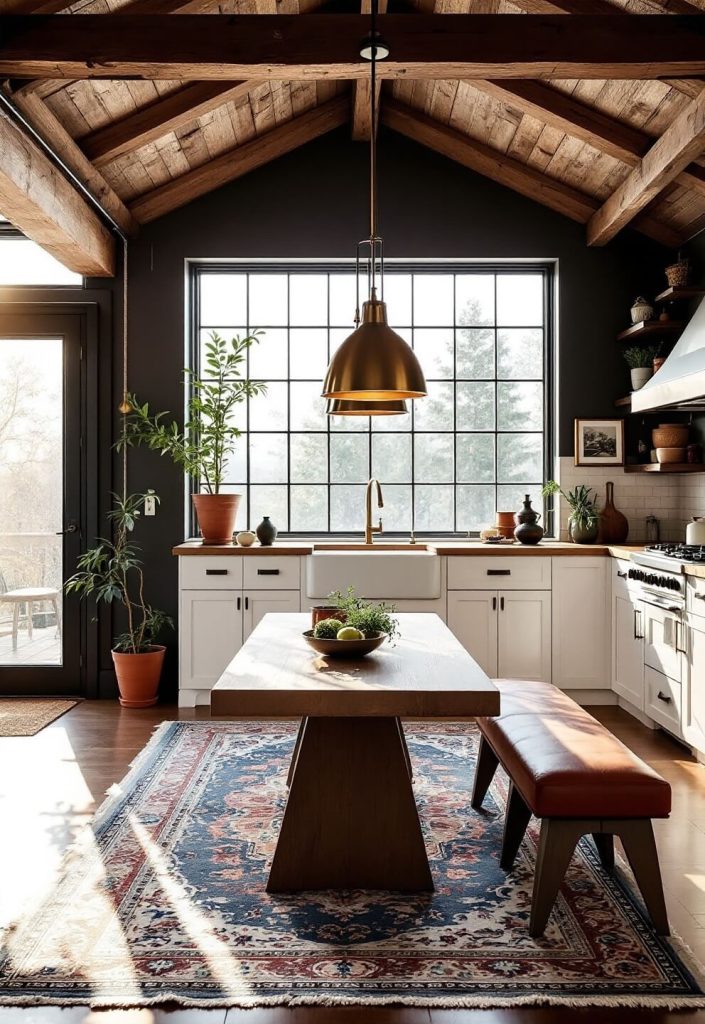
- Natural wood elements add texture
- White subway tiles keep it classic
- Woven baskets bring in that organic feel
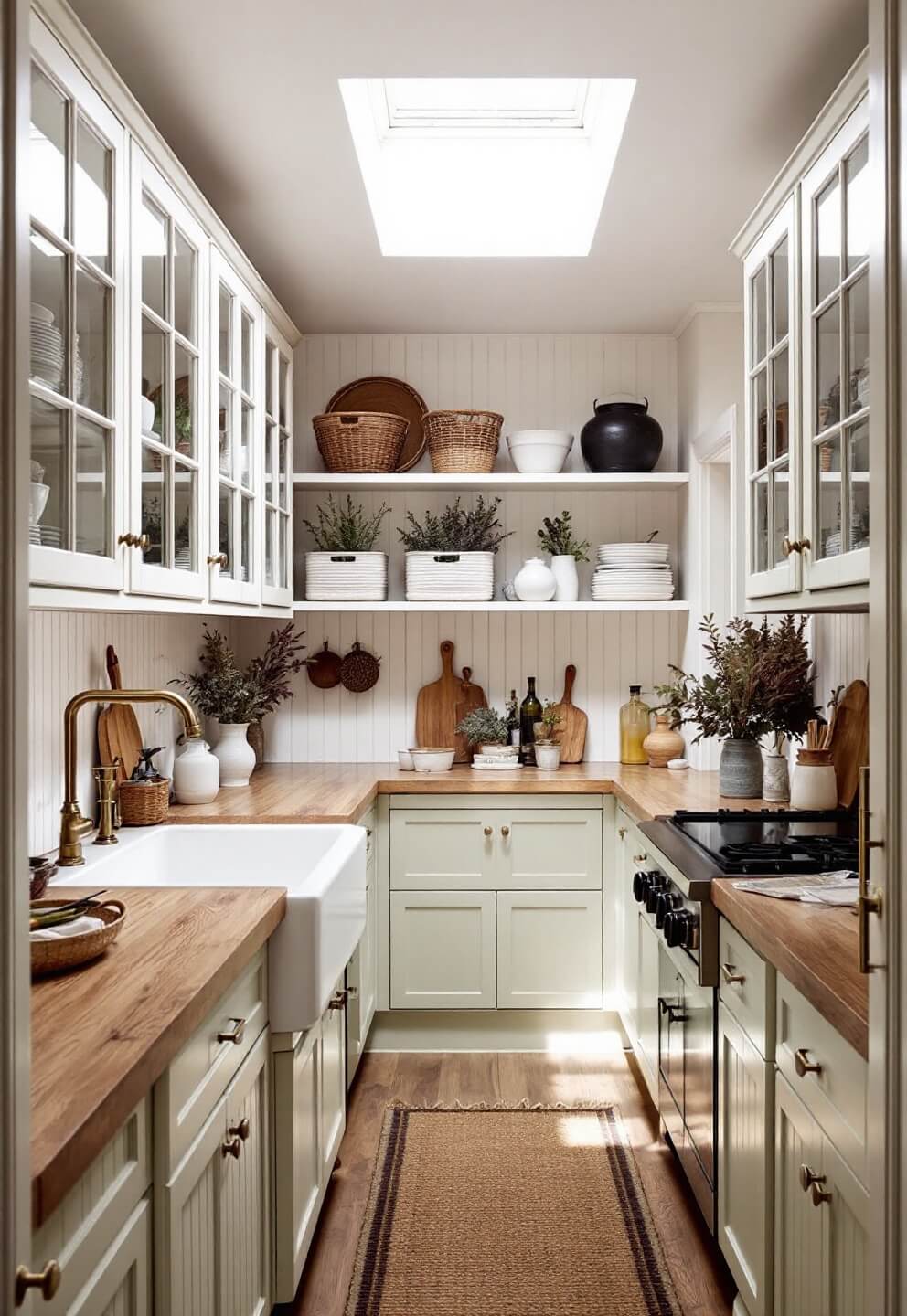
★ Steal This Look
- Paint Color: Valspar Creamy Custard 7002-5
- Furniture: Open shelving with natural wood frames, woven rattan baskets for storage, white subway tile backsplash with brass-trimmed edges
- Lighting: Copper pendant lights with warm Edison bulbs suspended over island or sink area
- Materials: Brushed brass hardware on cabinetry, natural wood open shelving, woven water hyacinth baskets, ceramic subway tiles with warm grout
These finishing touches transform a cream and sage kitchen from feeling spare to feeling curated. The warmth of brass and copper against cool-toned sage creates that perfect balance of modern and inviting that makes people actually want to cook in this space.
The Practical Stuff (Because We Actually Cook Here)
Keep it looking fresh:
- Use cabinet protectors under sink areas
- Install under-cabinet lighting (makes a HUGE difference)
- Choose easy-clean surfaces for high-traffic zones
- Consider semi-gloss paint for easier wipe-downs
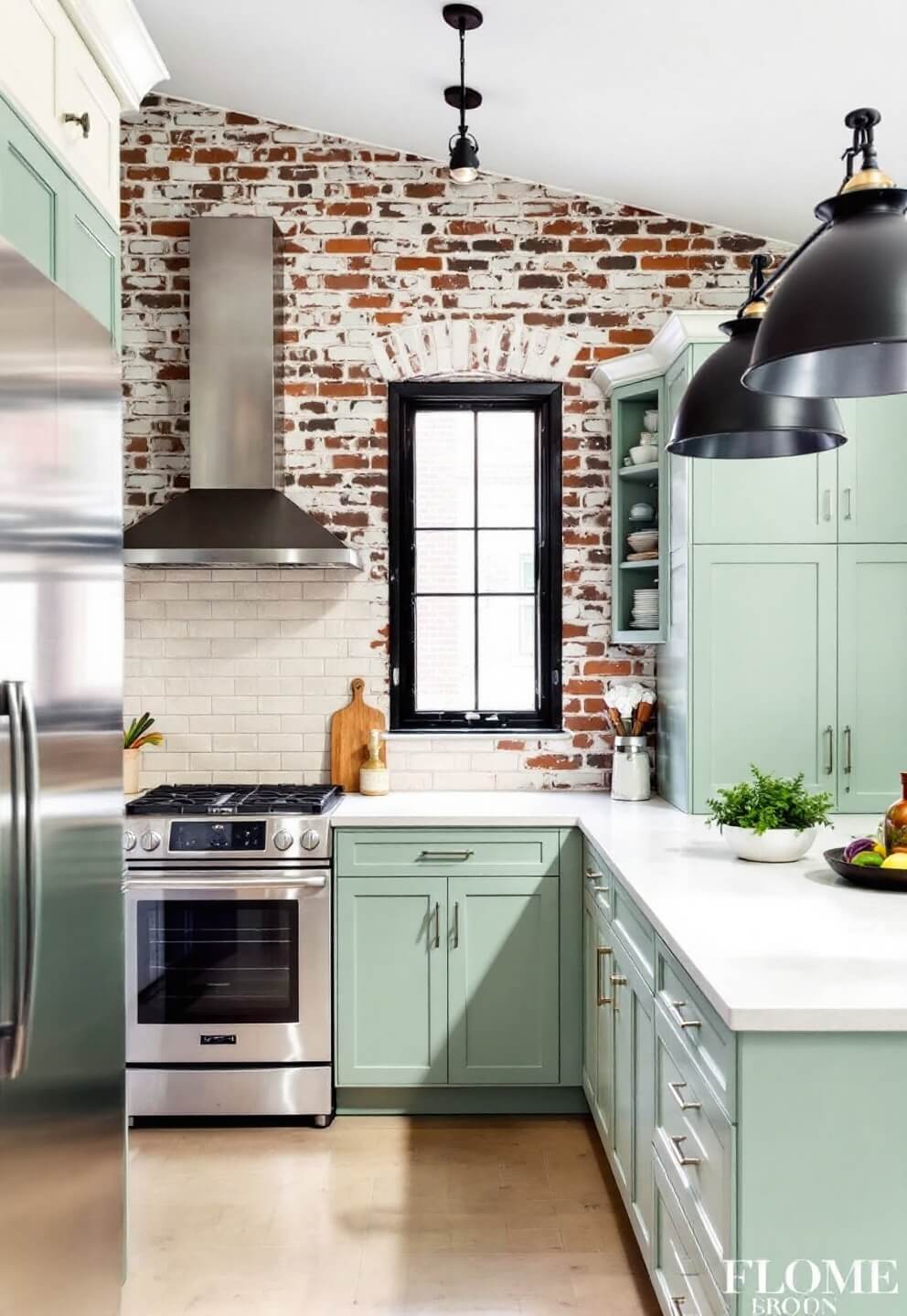
🏠 Steal This Look
- Paint Color: PPG Aesthetic White PPG1022-1 – a soft, warm white that complements cream and sage without showing fingerprints or smudges as easily as pure whites, ideal for semi-gloss kitchen finishes
- Furniture: Cream-colored kitchen cabinetry with sage green accent island or open shelving; stainless steel or brushed brass hardware for durability
- Lighting: Under-cabinet LED strip lighting in warm white (3000K) mounted on cabinet bottoms to illuminate work surfaces and reduce shadows during food prep
- Materials: Semi-gloss cabinet paint for wipeable, durable finish; brushed stainless steel sink fixtures; quartz or sealed granite countertops for easy cleaning; polished concrete or light wood flooring for high-traffic zones
A cream and sage kitchen that actually functions is one you’ll love cooking in for years. Practical details like protective cabinet liners and task lighting aren’t glamorous, but they’re what separate a beautiful kitchen from one you actually use daily.
My Personal Touch
In my own kitchen, I added vintage cream enamelware displays on open shelving against a sage green wall – it’s become everyone’s favorite conversation starter!
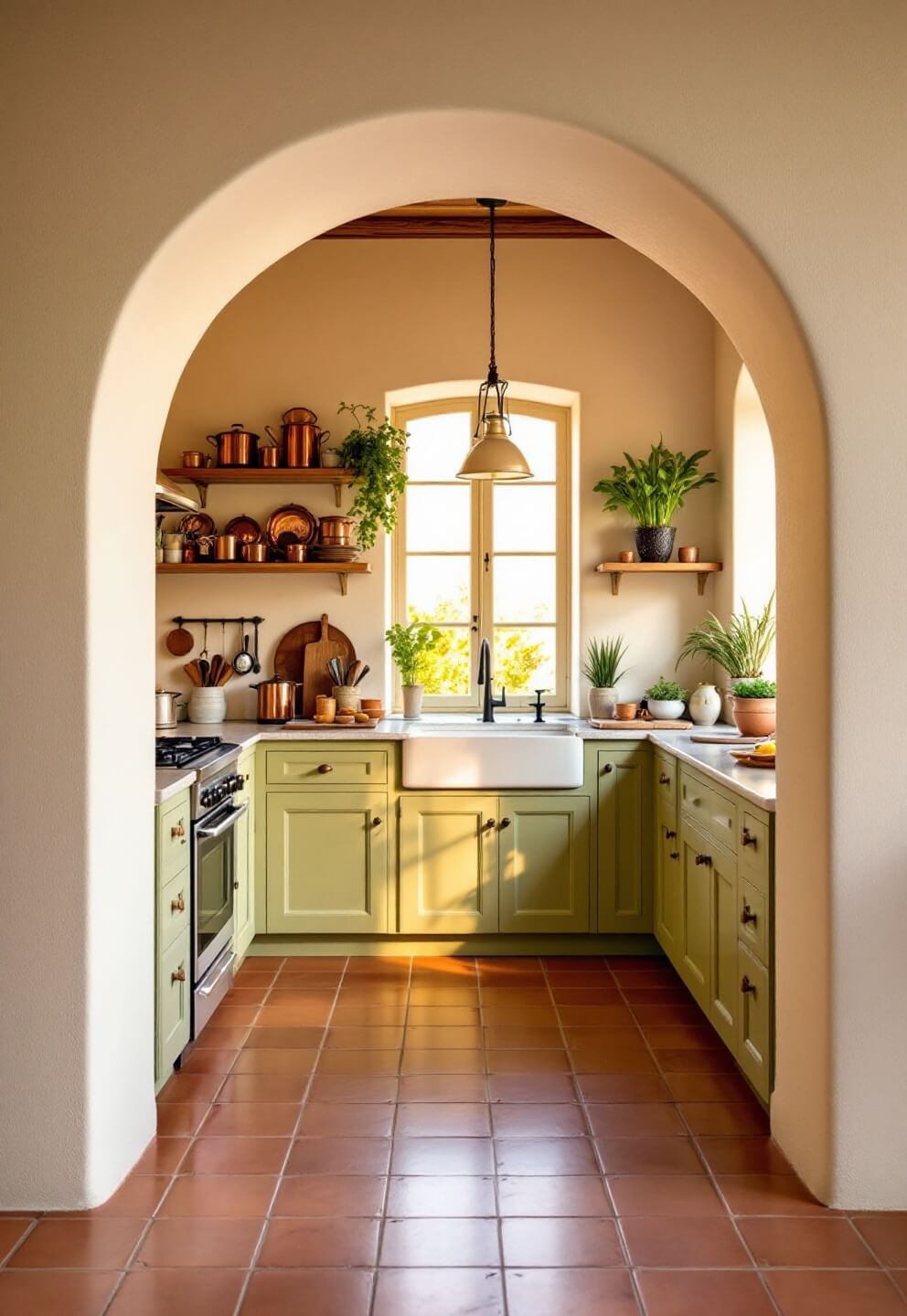
✎ Steal This Look
- Paint Color: Dunn-Edwards Sage Whisper DEW 380
- Furniture: Open shelving units in natural wood or white-painted wood to display vintage enamelware
- Lighting: Warm brass or bronze pendant lights positioned above open shelving to highlight displayed pieces
- Materials: Vintage cream enamelware, natural wood shelving, soft matte finish paint for a lived-in vintage aesthetic
Personal touches like vintage collections transform a kitchen from functional to meaningful – when your everyday items tell a story, cooking becomes part of a larger narrative. This sage green backdrop gives your cream enamelware the perfect stage to shine.
Design Don’ts (Learn From My Mistakes)
Avoid these pitfalls:
- Don’t go too dark with the sage – keep it light and airy
- Skip the yellow-toned creams – they can look dated
- Don’t forget about lighting – natural light is crucial
- Avoid mixing too many patterns
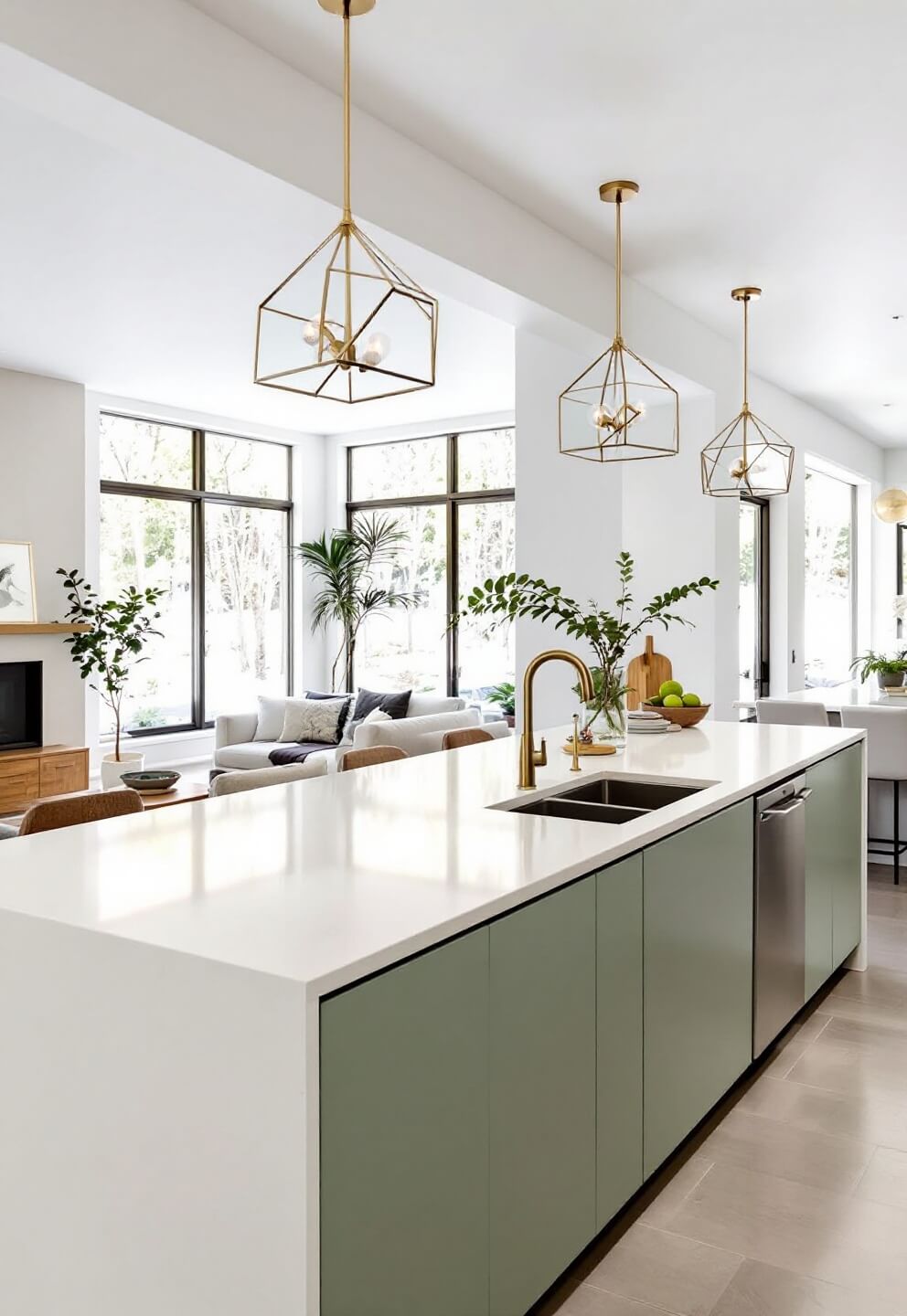
Cream and sage is forgiving through the day. Keep the split simple and the room stays soft as the light moves.
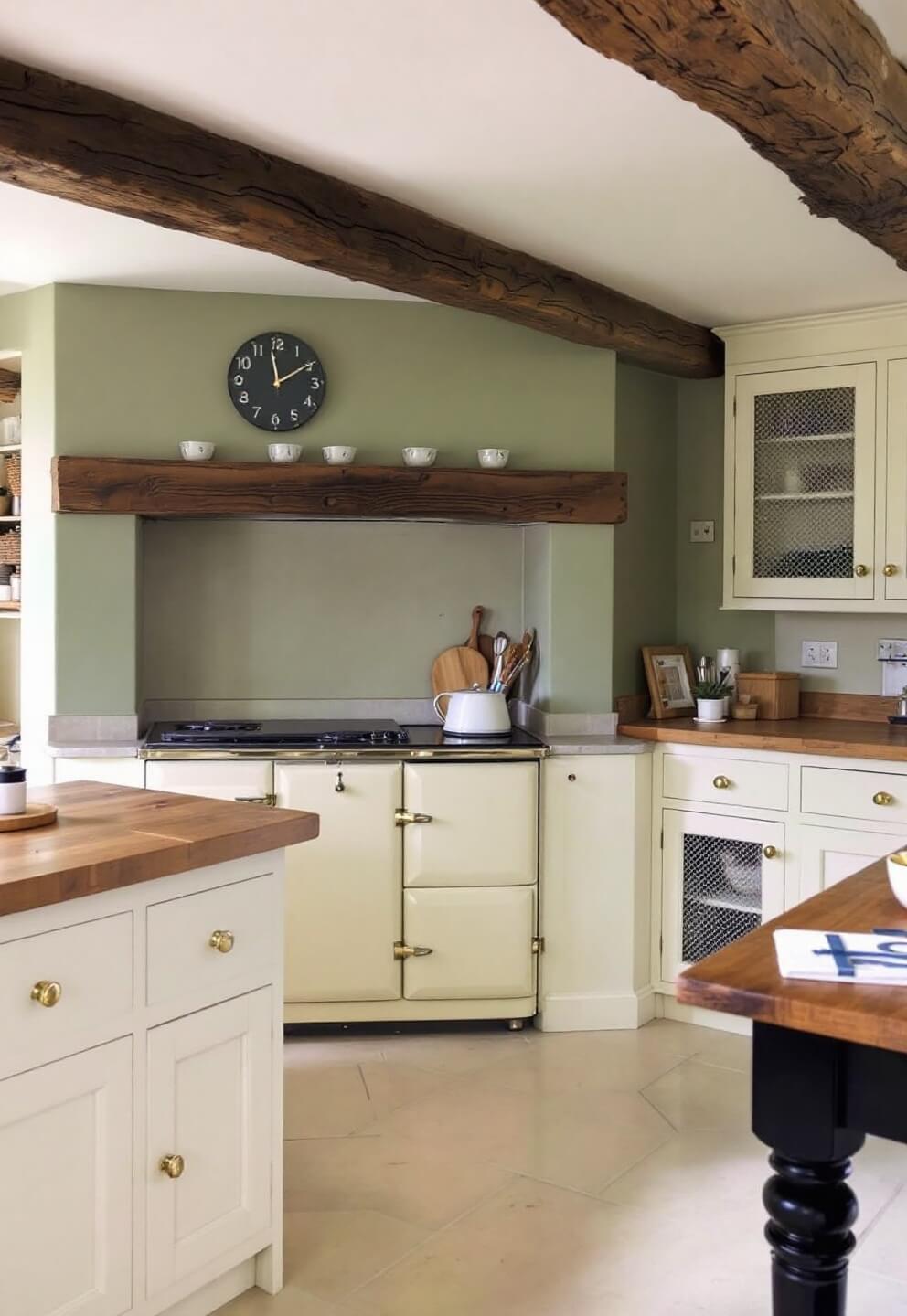
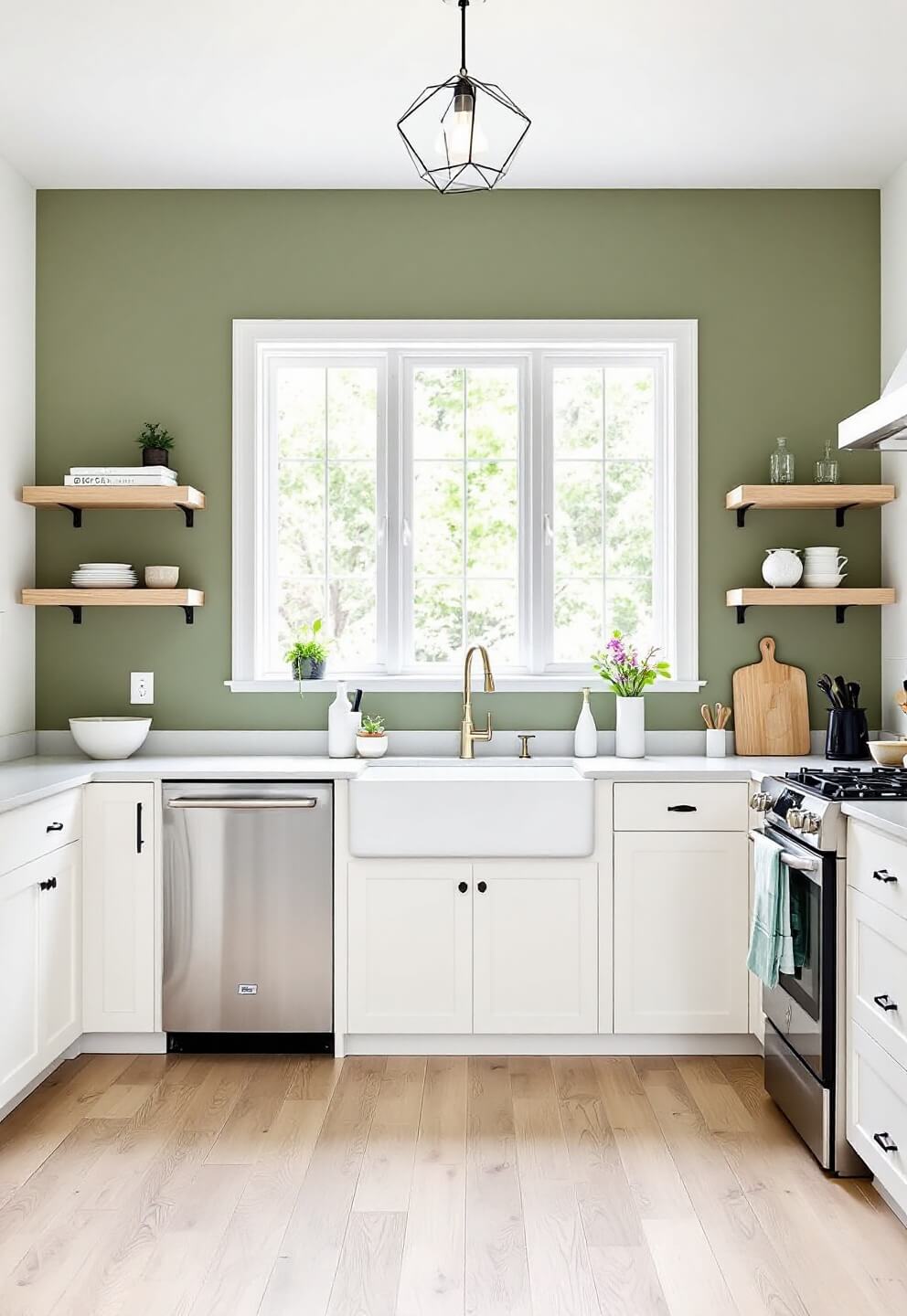
★ Steal This Look
- Paint Color: Clare Paint Sage Creek SAG 05 for walls, Clare Paint Ivory Cream CRM 02 for cabinetry or accent wall
- Furniture: Light wood kitchen island with cream or natural oak finish, open shelving in light sage, cream-colored bar stools with turned legs
- Lighting: Warm brass or brushed gold pendant lights over kitchen island (2700K color temperature), recessed ceiling lights for even natural light distribution
- Materials: Matte ceramic subway tile backsplash, soft linen window treatments, brushed brass hardware, light marble or quartz countertops
This color combination thrives when you resist the urge to go bold – restraint is what makes cream and sage feel timeless rather than trendy. A kitchen done in these tones becomes the heart of your home because it’s genuinely restful to cook and gather in, not just Instagram-worthy.