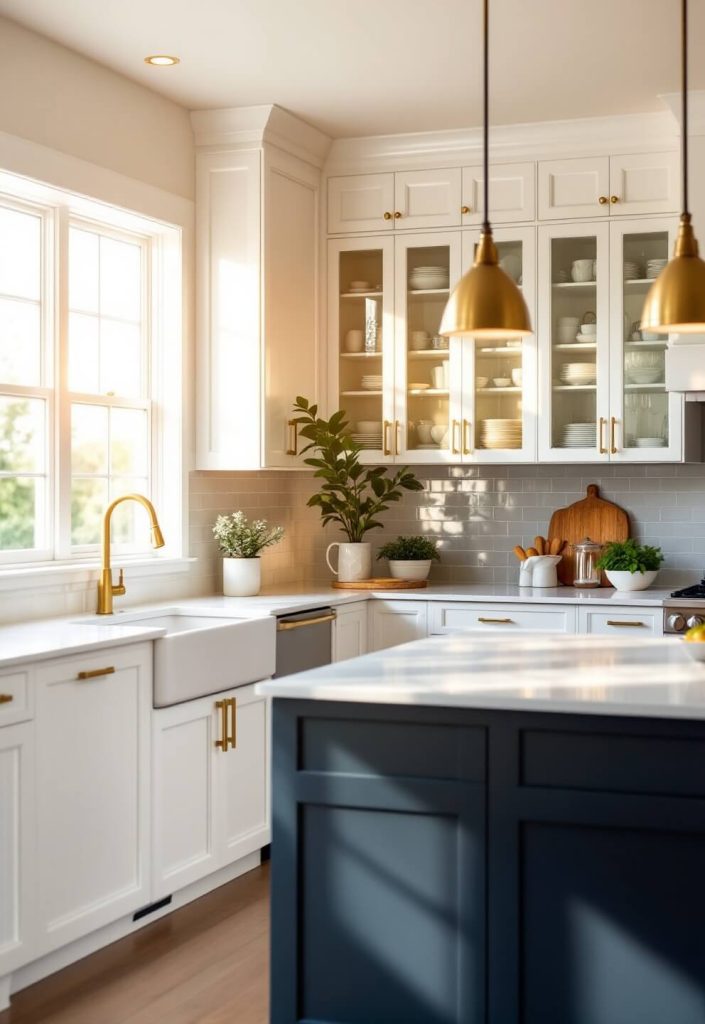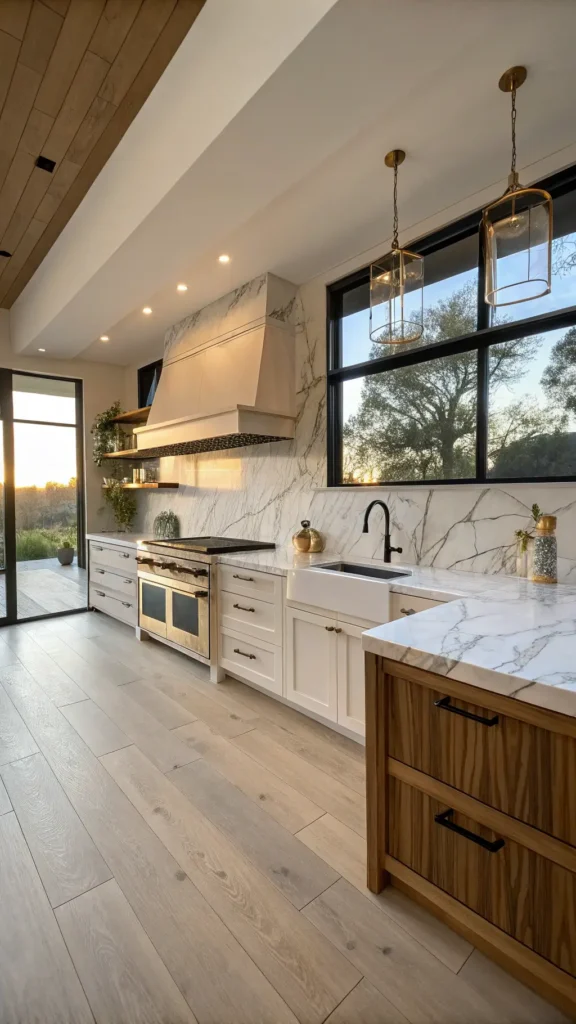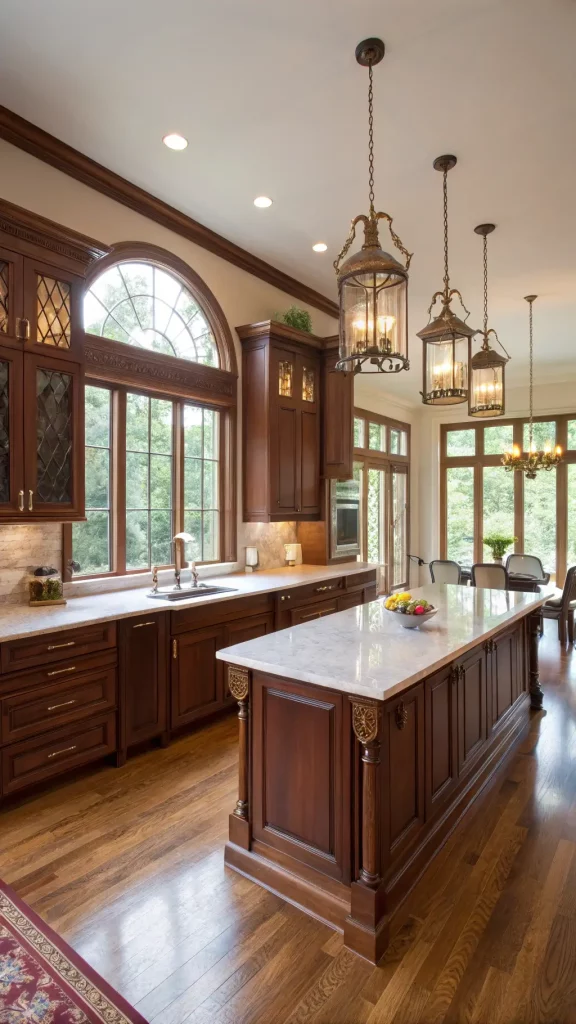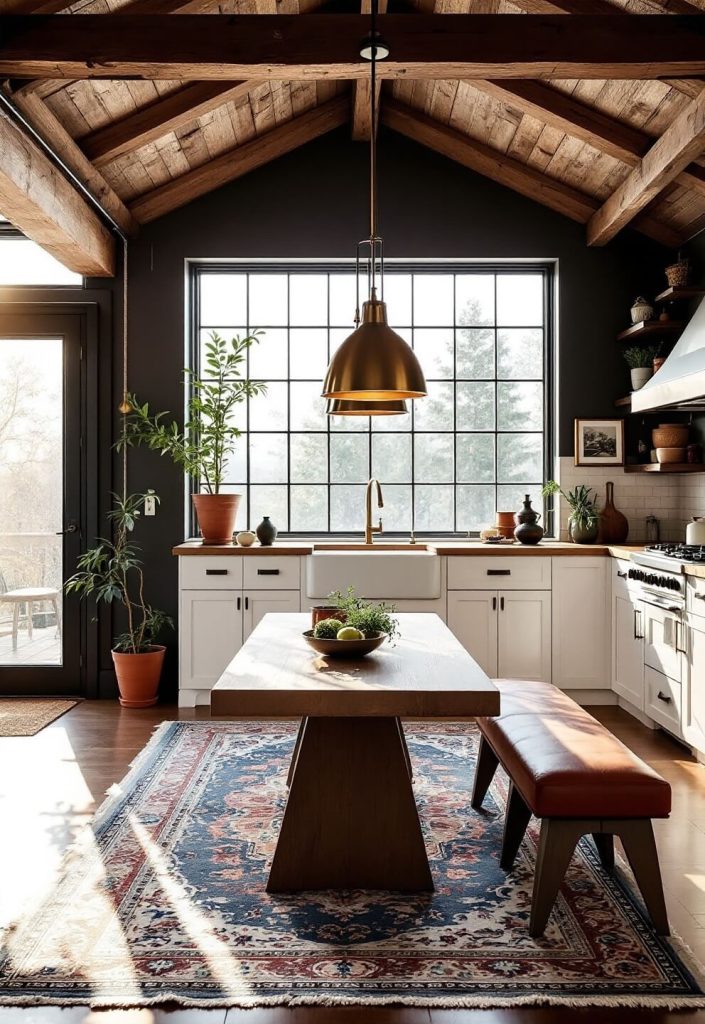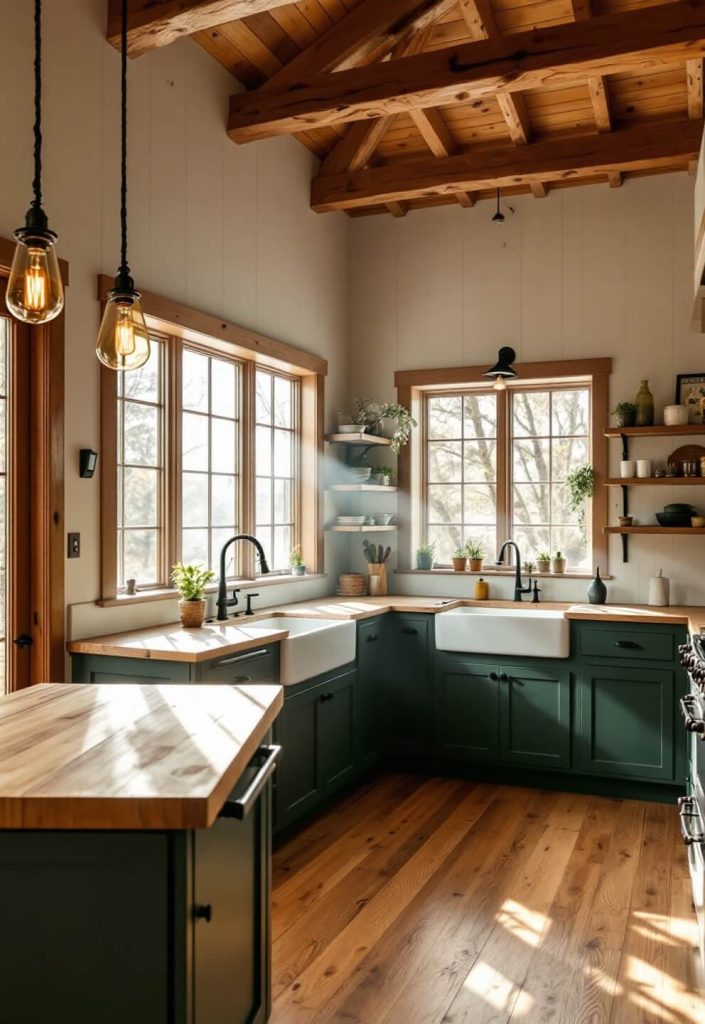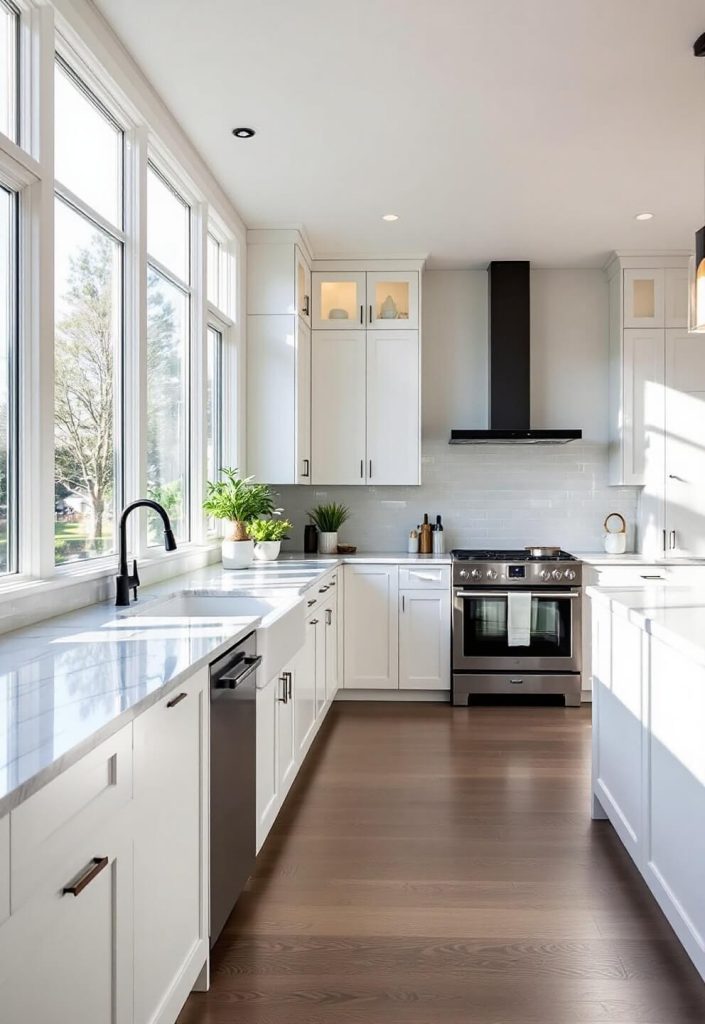
Espresso cabinets are darker than most browns, so the light plan matters. I pair them with a pale counter and strong task lighting so the room stays crisp.
Finding the perfect kitchen cabinets can feel like searching for a needle in a design haystack. But what if I told you espresso kitchen cabinets might just be your ultimate style solution?
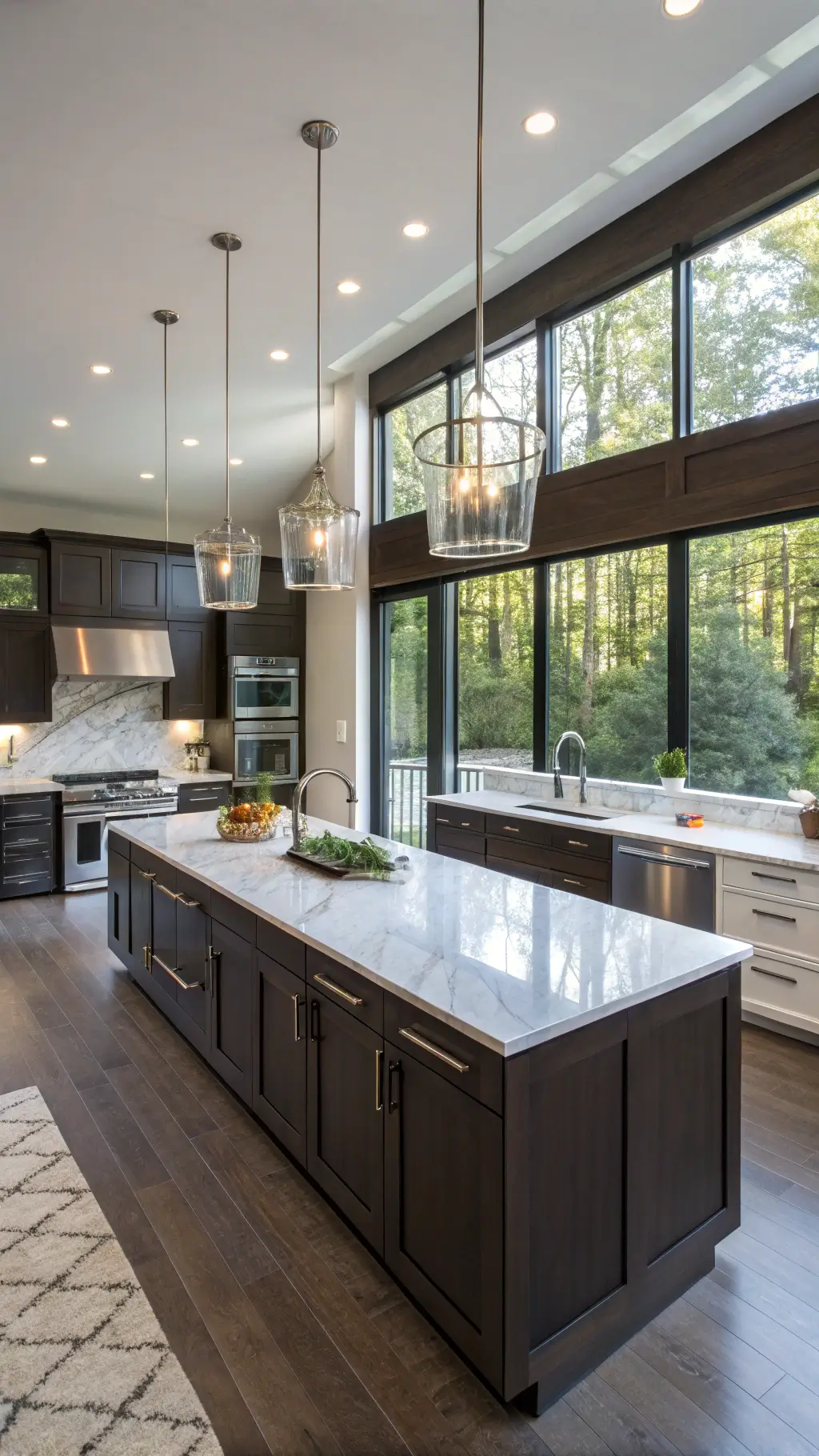
★ Steal This Look
- Paint Color: Sherwin-Williams Urbane Bronze SW 7048
- Furniture: Kitchen island with espresso finish, matching espresso bar stools with upholstered seats, open shelving in espresso wood
- Lighting: Pendant lights with brushed brass or oil-rubbed bronze finishes, recessed lighting in warm white (2700K) to balance dark cabinets
- Materials: Espresso-stained wood or painted cabinetry, quartz or granite countertops in light gray or white, stainless steel hardware and appliances, light wood or white subway tile backsplash
Espresso cabinets are the sophisticated power move that transforms a kitchen from ordinary to magazine-worthy. They ground a space with timeless elegance while providing the perfect backdrop for both modern minimalism and warm traditional design.
What Exactly Are Espresso Kitchen Cabinets?
Picture a rich, deep brown that’s so luxurious it’s almost black. That’s the magic of espresso cabinets. These aren’t just dark wood – they’re a statement piece with subtle chocolate undertones that make your kitchen whisper sophistication.
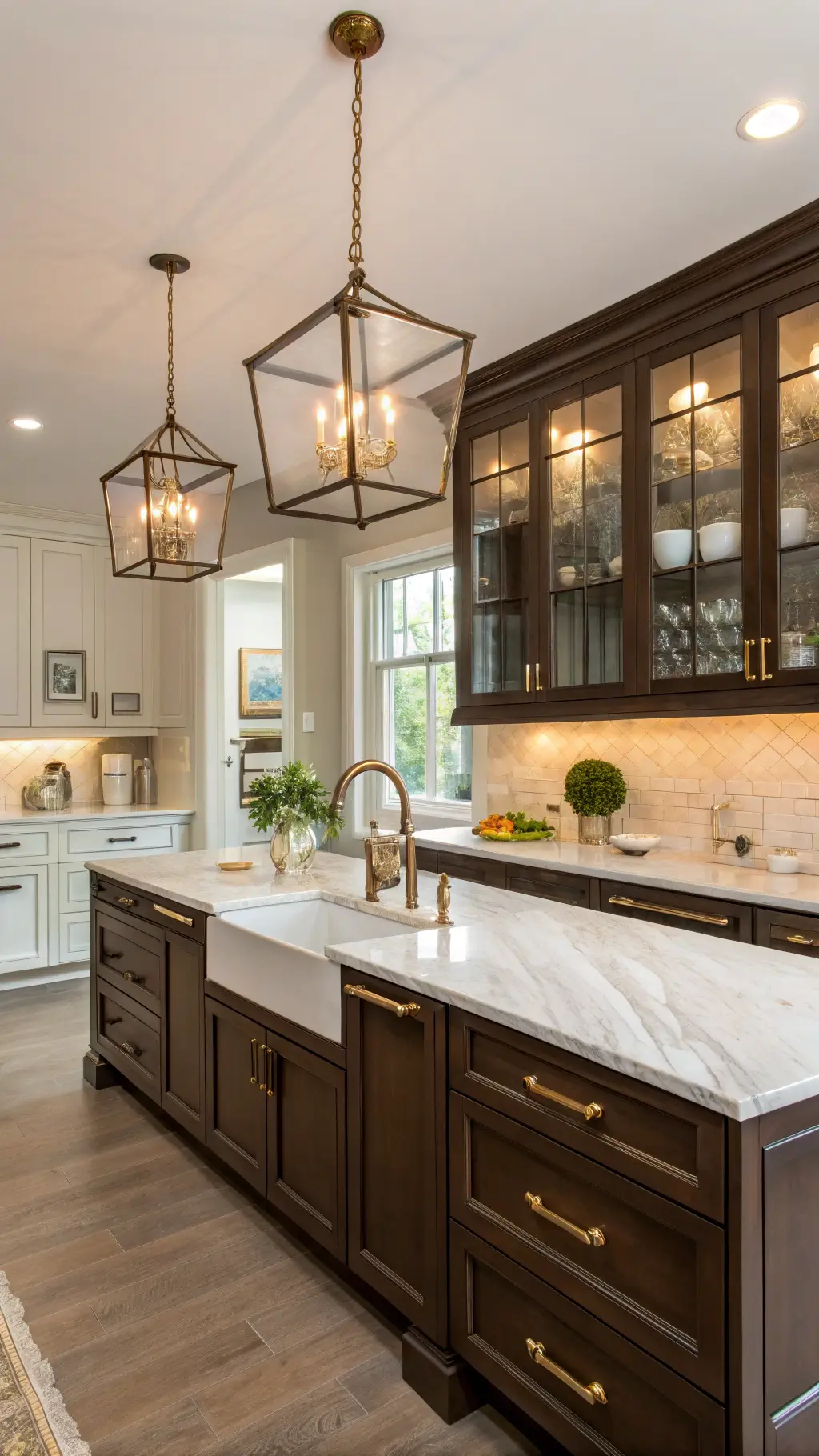
🎨 Steal This Look
- Paint Color: Benjamin Moore Hale Navy HC-189
- Furniture: Deep espresso wood island with waterfall countertop edge, paired with warm brass or oil-rubbed bronze hardware
- Lighting: Pendant lights with warm brass accents or Edison-style bulbs to complement chocolate undertones
- Materials: Rich espresso stained wood, brushed brass hardware, marble or quartz countertops, soft matte cabinet finish
Espresso cabinets are for homeowners who want kitchen elegance that reads timeless rather than trendy – they’re the culinary equivalent of a perfectly tailored blazer. This deep brown philosophy says you’re confident enough to embrace drama without apology.
Why Espresso Cabinets Are a Game-Changer
Design Versatility That Blows Your Mind
- Fits seamlessly from ultra-modern to classic traditional styles
- Works with nearly every color palette imaginable
- Adds immediate warmth without feeling overwhelming
Visual Drama Without The Drama
Espresso cabinets do something magical: they create depth without darkness. Unlike stark white kitchens that can feel clinical, these cabinets invite you in, creating an atmosphere that’s both bold and welcoming.
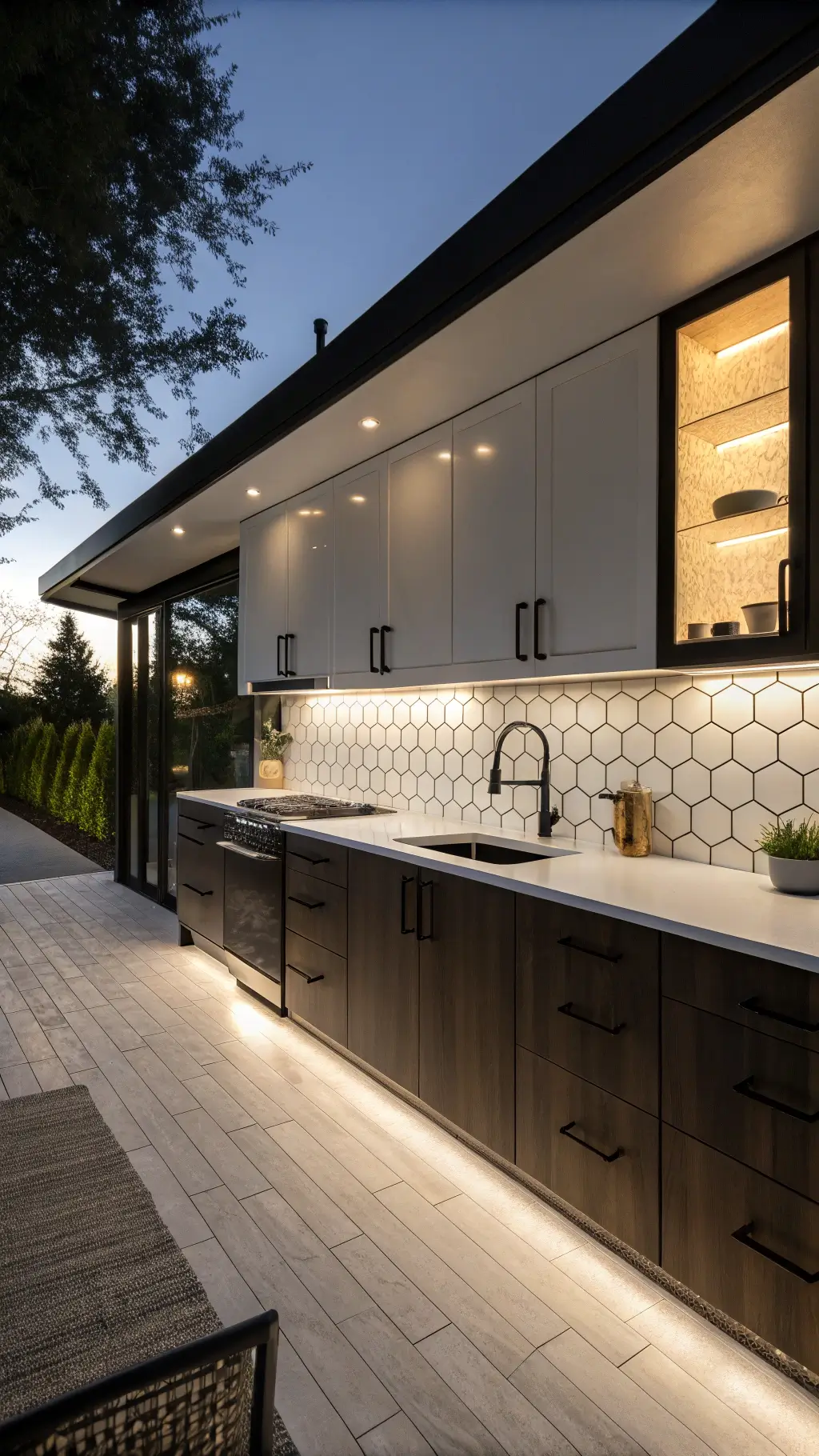
🌟 Steal This Look
- Paint Color: Farrow & Ball Railings #31 – a sophisticated warm charcoal that complements espresso cabinets without competing for visual dominance
- Furniture: Warm wood or natural oak kitchen island with espresso base cabinets; bar stools with upholstered seats in cream or soft gray linen
- Lighting: Pendant lights with brushed brass or warm bronze fixtures suspended above the kitchen island to echo the warmth of espresso wood
- Materials: Warm stone or marble countertops (cream, soft gray, or warm white); matte subway tile or textured backsplash in soft white or warm gray; natural wood open shelving accents
Espresso kitchens bridge that tricky gap between modern edge and timeless comfort—they feel intentional without being trendy. This is the cabinet color that actually gets better looking over time as your kitchen develops its own character.
Pro Styling Secrets
Hardware Matchmaking
- Brushed nickel for sleek modernism
- Bronze for rustic charm
- Stainless steel for industrial edge
Color Companion Strategy
Pair your espresso cabinets with:
- Light marble countertops
- Soft pastel wall colors
- Cool-toned backsplashes
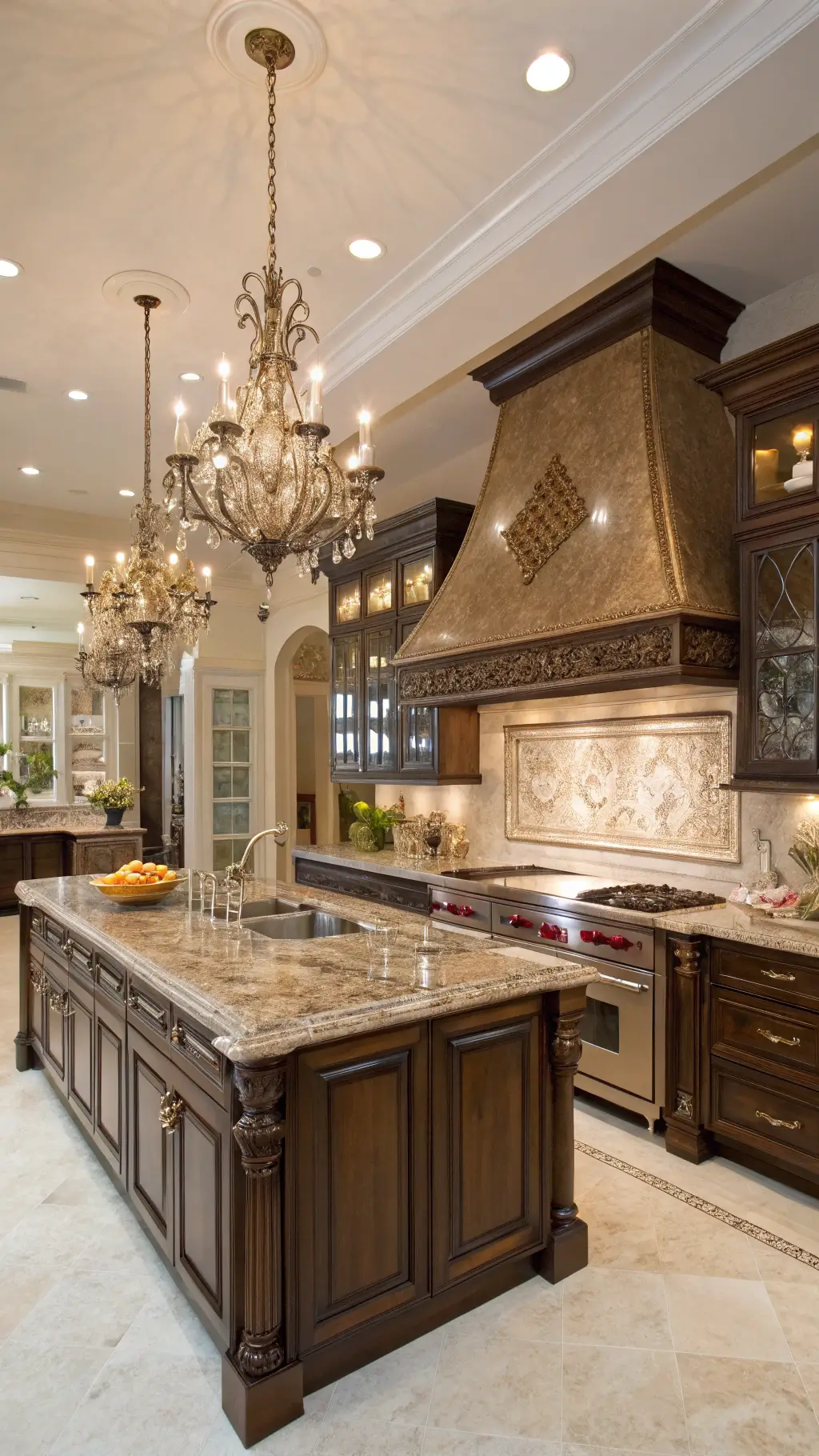
🖼 Steal This Look
- Paint Color: Behr Pale Oak PPU5-2 or Behr Whisper White PPU18-1 for soft pastel walls that complement espresso cabinets
- Furniture: Stainless steel bar stools with brushed nickel footrests, marble-top kitchen island with espresso base, white or cream upholstered dining chairs
- Lighting: Brushed nickel pendant lights over kitchen island, recessed lighting with cool color temperature (4000K)
- Materials: Polished light marble countertops, cool-toned subway tile or geometric backsplash, brushed nickel hardware pulls and knobs
Espresso cabinets are sophisticated and grounding—they deserve hardware and styling that plays up their refined edge rather than fighting against it. The secret is balancing that moody cabinet depth with brightness elsewhere: light marble, cool metallics, and airy wall colors create the contrast that makes espresso truly shine.
The Practical Nitty-Gritty
Space Considerations
Warning: Espresso cabinets in tiny kitchens can feel cramped. Pro tip? Maximize lighting to create an expansive feel.
Maintenance Made Easy
Cleaning is a breeze:
- Regular wipe-downs with mild vinegar solution
- Occasional wood soap for that glossy finish
- Avoid harsh chemicals that might strip the beautiful stain
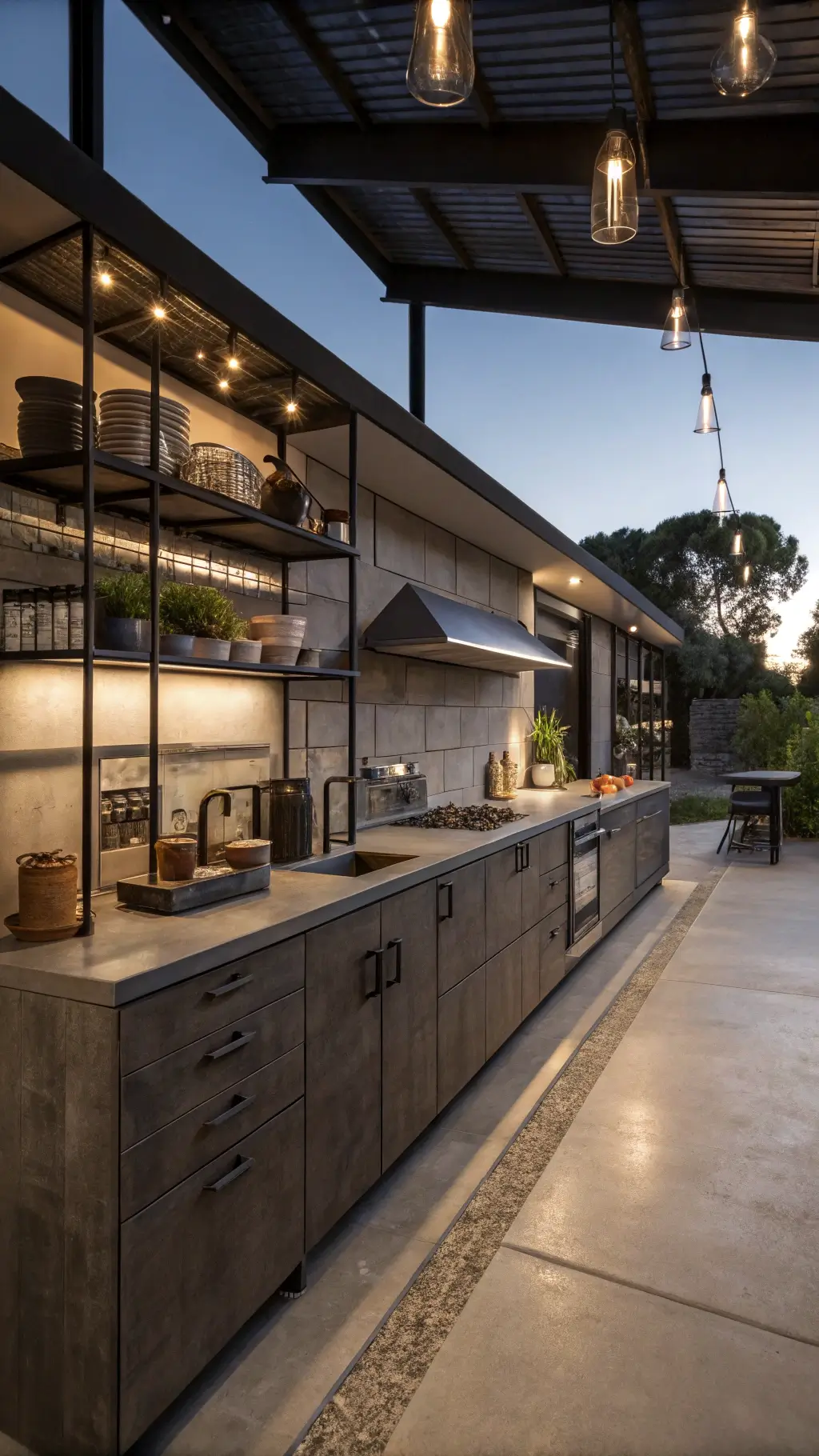
🖼 Steal This Look
- Paint Color: Valspar Creamy Custard 7002-10 — a soft, warm neutral that brightens small kitchens with espresso cabinets without competing for visual weight
- Furniture: Minimalist kitchen island with light wood or white countertop to contrast dark espresso cabinetry; open shelving above to reduce visual density in compact layouts
- Lighting: Recessed LED ceiling lights (4000K bright white) paired with under-cabinet task lighting to eliminate shadows cast by dark cabinetry
- Materials: Polished or semi-gloss espresso wood finish; stainless steel or brushed nickel hardware; light marble or quartz countertops for visual lift
Espresso kitchens demand respect for maintenance, but that glossy finish is worth it. The key to making them feel spacious rather than heavy is treating lighting like a design element—not an afterthought.
Popular Espresso Cabinet Styles
- Shaker Style: Clean lines, minimalist perfection
- Traditional Ornate: Intricate details for classic lovers
- Contemporary Flat-Panel: Sleek, no-nonsense design
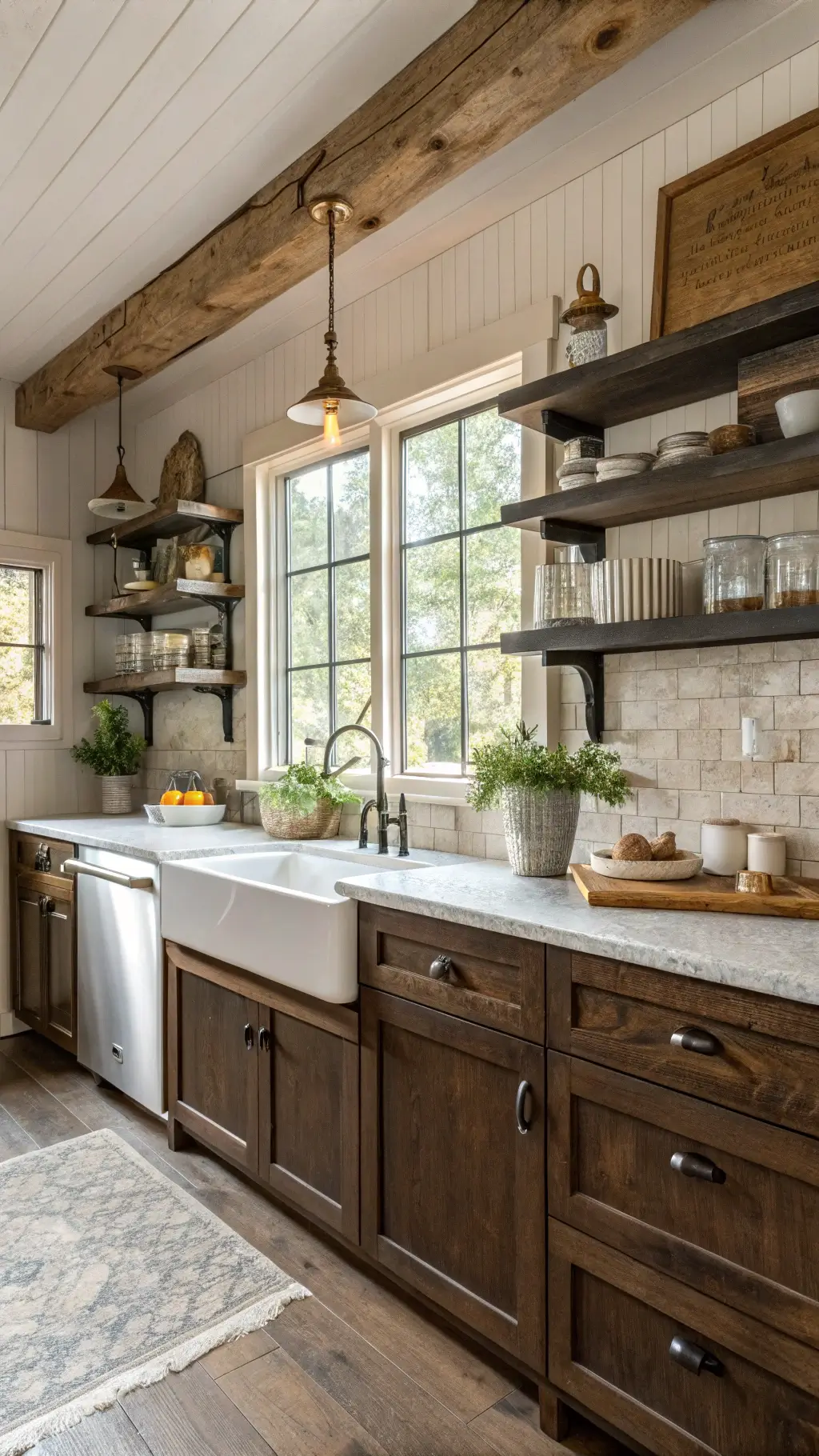
🏠 Steal This Look
- Paint Color: PPG Urbane Bronze PPG1002-7. Deep, sophisticated neutral that complements espresso cabinetry without competing for visual attention in kitchen spaces.
- Furniture: Espresso-stained kitchen island with contrasting white marble or quartz countertop; bar stools with upholstered seats in cream or soft gray linen
- Lighting: Brushed bronze or oil-rubbed bronze pendant lights suspended 12-15 inches above island countertop; recessed ceiling lights with warm 2700K color temperature
- Materials: Espresso-finished wood cabinetry, polished chrome or bronze hardware pulls, white subway tile or light stone backsplash, warm brass or bronze fixtures against espresso wood
Espresso cabinets are a bold, timeless choice that instantly elevate kitchen presence. They demand intentional styling through countertops, lighting, and wall colors—this is where your kitchen personality truly emerges.
Custom Features to Look For
- Soft-close hinges
- Adjustable shelving
- Dovetailed drawer construction
- Solid wood or high-quality plywood materials
🌟 Steal This Look
- Paint Color: Dunn-Edwards Architectural Gray DE6369
- Furniture: Kitchen island with espresso cabinetry, stainless steel countertop, and bar seating for 2-3
- Lighting: Pendant lights with brushed nickel or oil-rubbed bronze fixtures positioned over island
- Materials: Espresso stained wood, brushed nickel hardware, solid plywood drawer boxes, stainless steel counters
Custom cabinet features are invisible until they’re missing—soft-close hinges become a luxury you never want to live without. Solid construction in espresso finishes feels premium because it *is*, backing your investment with durability.
The Design Psychology
Espresso cabinets aren’t just a trend – they’re a design philosophy. They communicate sophistication, depth, and a nuanced understanding of aesthetic balance.
Pro Designer Insight: These cabinets adapt. Whether you’re creating an urban loft kitchen or a warm farmhouse space, espresso cabinets are your chameleon.
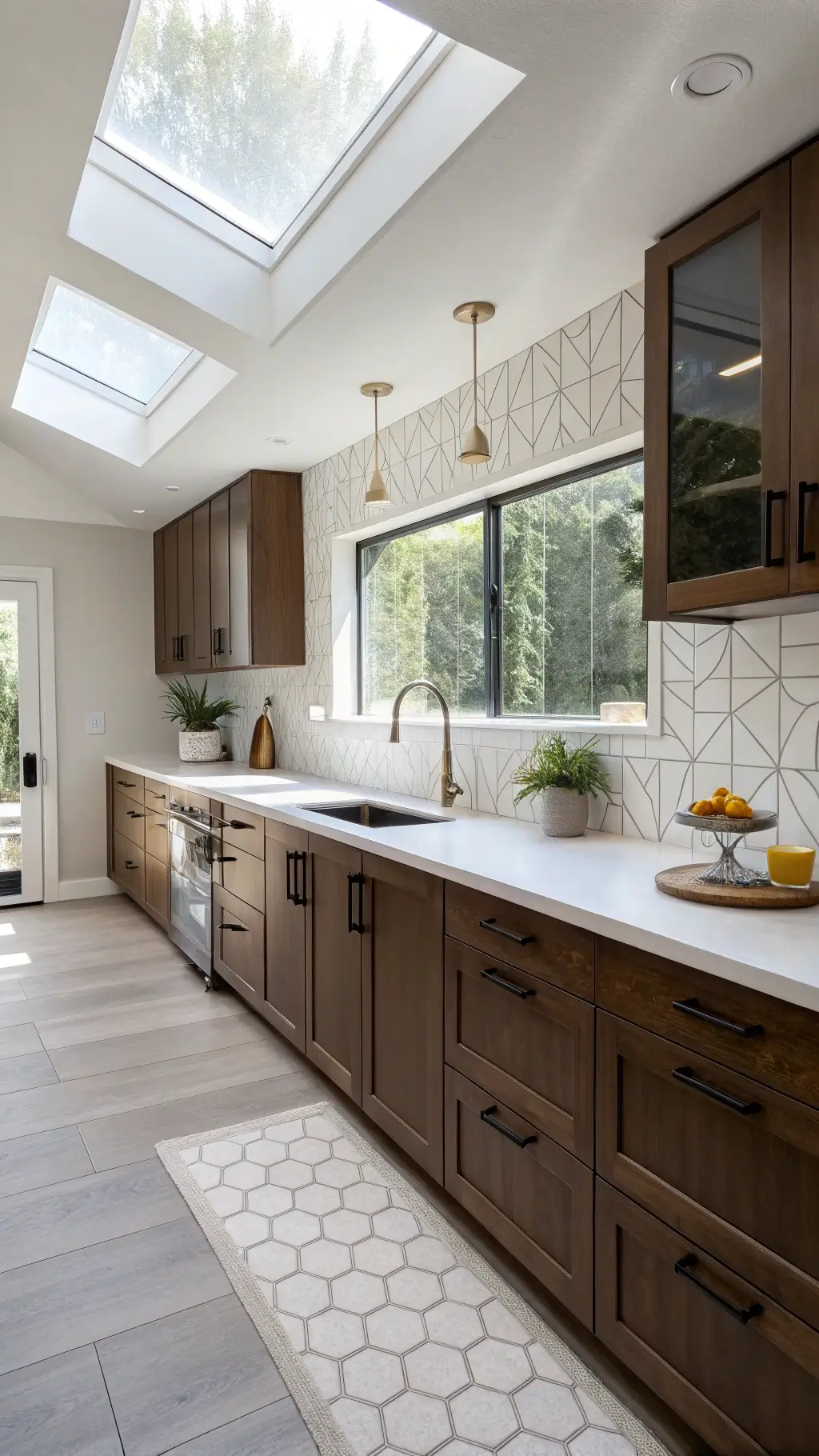
💡 Steal This Look
- Paint Color: Clare Paint Espresso ES-12
- Furniture: Mixed-material kitchen island with waterfall edge in natural wood or marble paired with espresso base cabinetry; open shelving in matching espresso for visual continuity
- Lighting: Modern pendant lights with warm brass or matte black finishes to complement espresso’s depth without competing for visual attention
- Materials: Espresso cabinetry with matte or satin finish for sophistication; contrasting countertops in marble, butcher block, or light quartz; brushed metal hardware in brass or nickel
Espresso kitchens work because they’re inherently flexible—they whisper sophistication in a minimalist urban space and anchor a cozy farmhouse kitchen with equal ease. It’s the design equivalent of a perfect little black dress.
Final Thoughts
Choosing kitchen cabinets isn’t just about storage. It’s about creating a space that reflects your personality, tells your story, and makes you smile every time you walk in.
Espresso stays crisp with pale counters and strong light. Get those right and the kitchen reads sharp.