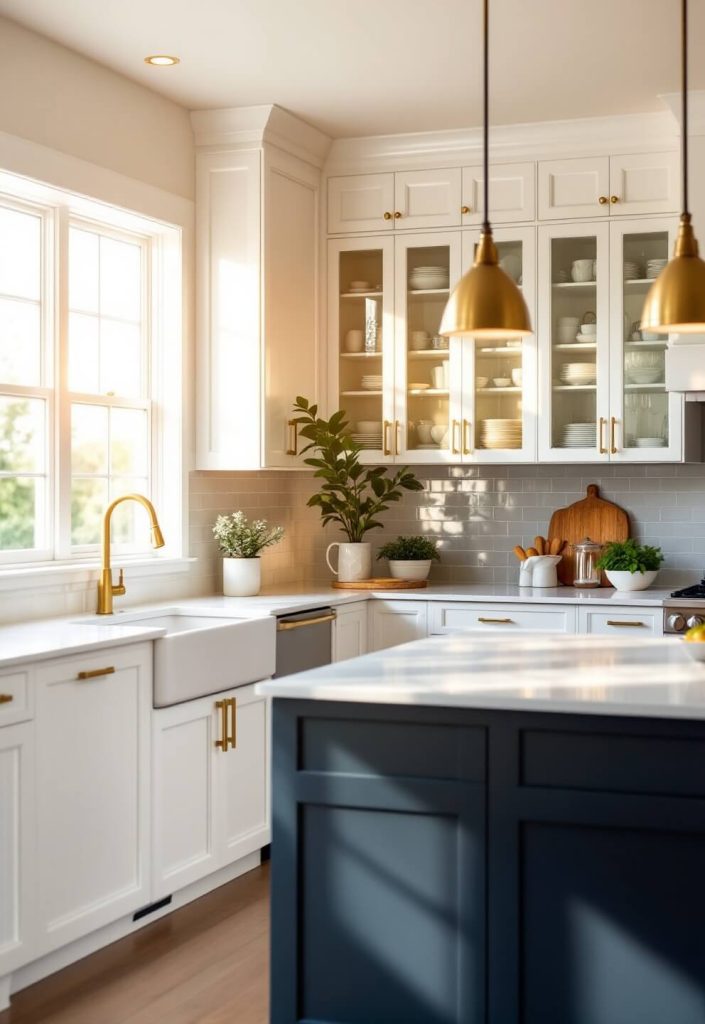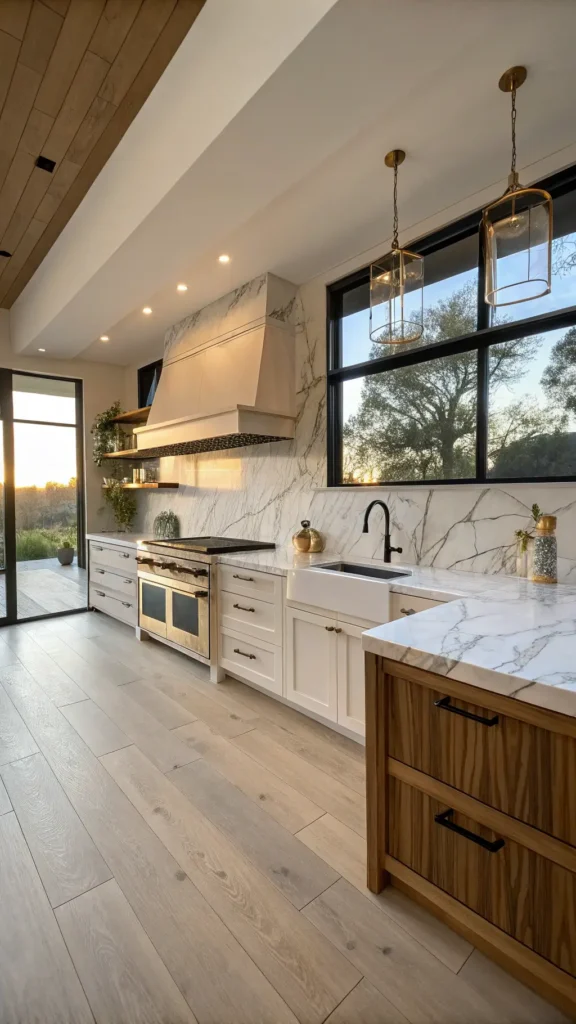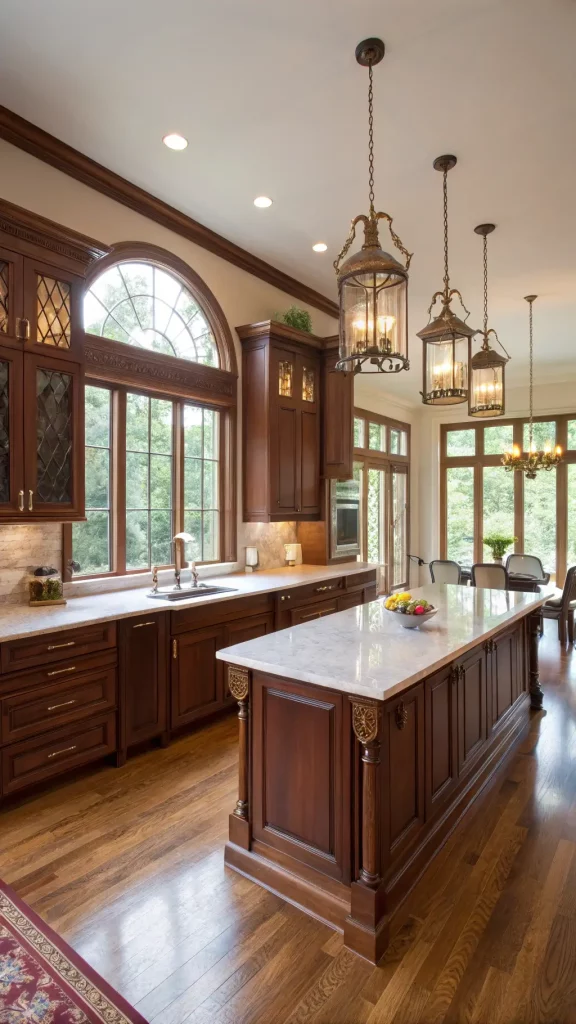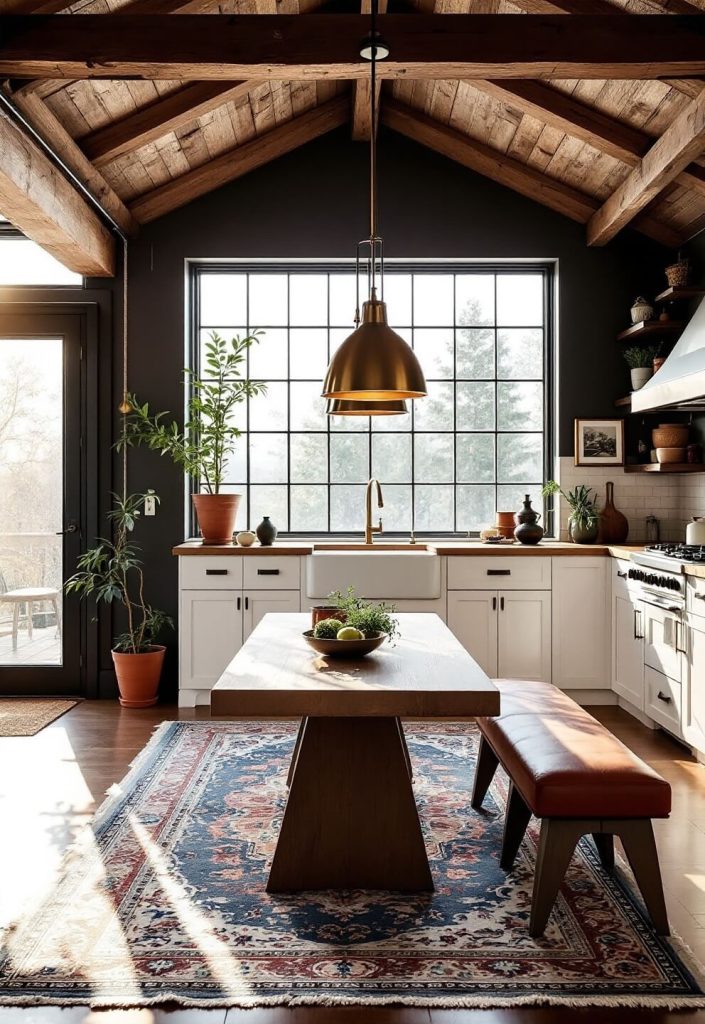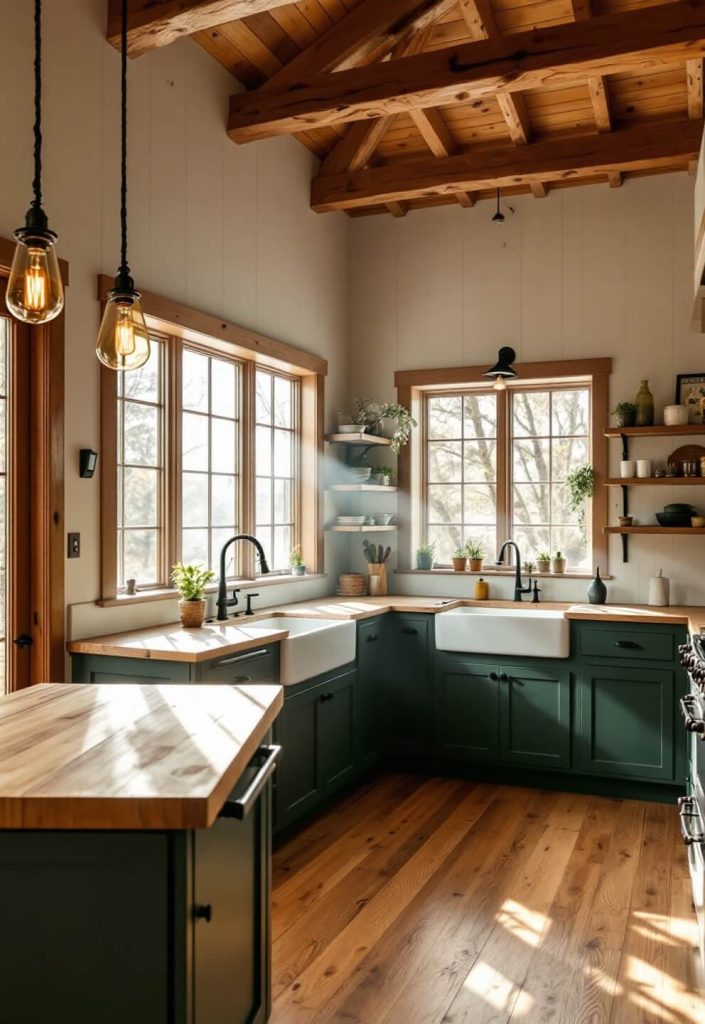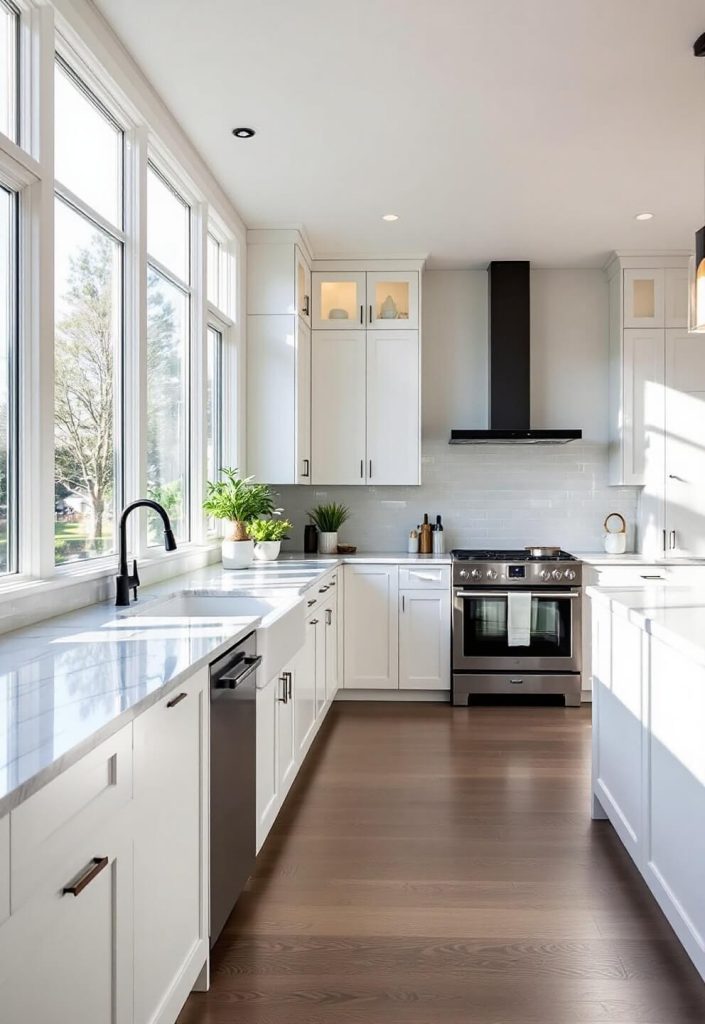
Charcoal cabinets set the tone for the whole kitchen, so the shade and finish decide everything. I read the color in the room’s actual light before committing, because the same tone shifts from morning to evening.
Elevate your kitchen’s aesthetic with the dramatic yet sophisticated charm of charcoal kitchen cabinets – the design trend that’s transforming modern homes.
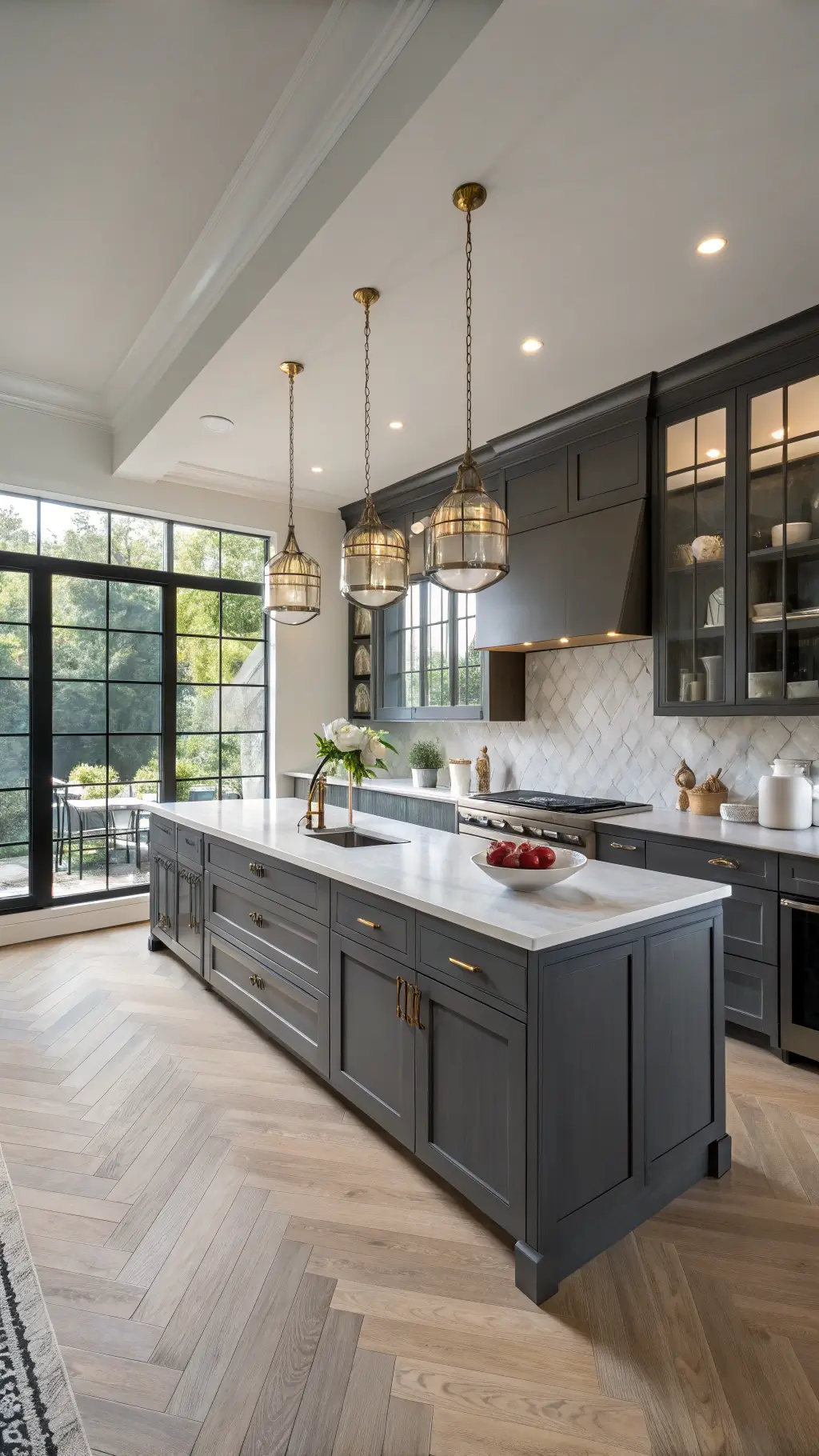
🎨 Steal This Look
- Paint Color: Sherwin-Williams Urbane Bronze SW 7048
- Furniture: Stainless steel kitchen island with waterfall countertop edge, paired with charcoal or black bar stools featuring upholstered seats
- Lighting: Pendant lights with brushed brass or matte black fixtures suspended over kitchen island at 30-36 inches above countertop
- Materials: Charcoal painted cabinet doors with brushed nickel hardware, quartz or marble countertops, stainless steel appliances, light gray or white subway tile backsplash
Charcoal cabinets strike that perfect balance between bold statement-making and timeless elegance. They’re moody enough to feel contemporary and designer-approved, yet neutral enough to pair with nearly any countertop or backsplash style without feeling trendy.
Why Charcoal Cabinets Are Your Design Secret Weapon
Let’s cut to the chase: charcoal kitchen cabinets aren’t just a color choice. They’re a bold design statement that transforms ordinary spaces into extraordinary experiences.
The Visual Magic of Charcoal
Key Advantages:
- Dramatic depth and sophistication
- Incredible versatility across design styles
- Hides kitchen wear and tear like a pro
- Creates instant visual interest without overwhelming the space

🖼 Steal This Look
- Paint Color: Benjamin Moore Charcoal HC-166
- Furniture: Stainless steel kitchen island with waterfall edge countertop, open shelving with black metal frames, dark wood or matte black bar stools with cushioned seating
- Lighting: Pendant lights with matte black or brushed metal fixtures, recessed lighting for task areas, under-cabinet LED strip lighting in warm white (3000K)
- Materials: Matte or satin-finish cabinet doors, quartz or granite countertops in white, gray, or black, subway tile or stone backsplash, stainless steel hardware and appliances
Charcoal cabinets deliver that premium, design-forward kitchen aesthetic while being brutally practical—they genuinely hide fingerprints, spills, and daily wear better than light colors. It’s the rare design choice that’s both beautiful and functional.
Design Flexibility: From Modern to Farmhouse
Charcoal cabinets aren’t confined to one design language. They’re chameleons of the kitchen design world.
Compatible Design Styles:
- Modern minimalist
- Contemporary chic
- Rustic farmhouse
- Industrial edge
- Transitional elegance

Color Companions That Sing
Charcoal plays beautifully with:
- Crisp white
- Warm wood tones
- Metallic accents (gold, brass, silver)
- Navy blue
- Soft blush tones

✎ Steal This Look
- Paint Color: Farrow & Ball Downpipe 26
- Furniture: Open shelving with warm wood tones, white subway tile backsplash, mixed metal hardware (brass and brushed nickel), white countertops or warm wood butcher block
- Lighting: Pendant lights with mixed metal finishes—brass or gold paired with matte black or chrome
- Materials: Charcoal cabinetry as anchor, white ceramics, warm wood open shelving, brushed brass or bronze hardware, subway tile or shiplap, soft blush textiles for stools or runner rugs
Charcoal cabinets are the kitchen’s version of a well-cut black blazer—they anchor every aesthetic from farmhouse comfort to sleek modernism. The real magic is in what you pair them with, not the cabinets themselves.
Pro Styling Strategies
Creating Visual Balance
Lighting Matters:
- Use strategic lighting to prevent dark spaces feeling closed
- Incorporate under-cabinet lighting
- Choose reflective surfaces like marble or quartz countertops
Texture is Your Friend:
- Mix matte and glossy finishes
- Layer different materials: wood, metal, stone
- Use open shelving to break visual heaviness

🌟 Steal This Look
- Paint Color: Behr Premium Plus Ultra N510-7 Charcoal Smoke – coordinates with charcoal cabinets while staying lighter on walls to maximize light reflection
- Furniture: Light wood open shelving units, white or cream kitchen island with waterfall countertop in marble or quartz, natural wood bar stools with metal legs
- Lighting: Recessed LED downlights combined with warm-white under-cabinet LED strip lighting, pendant lights with brushed brass or matte black fixtures over island
- Materials: Polished marble or engineered quartz countertops, matte charcoal cabinet finish paired with glossy subway tile backsplash, natural wood shelving, brushed metal hardware
Charcoal kitchens are sophisticated and timeless, but they demand intentional lighting and texture work to feel inviting rather than sterile. The pro move is layering finishes and reflective surfaces—your charcoal cabinets become the anchor while marble, brass, and natural wood create breathing room.
Photography & Presentation Tips
Capture the Charcoal Magic
Essential Photography Techniques:
- Shoot during morning or early afternoon light
- Use 45-90 degree angle for best texture reveal
- Aperture range: f/2.8 – f/4 for soft depth
- Highlight hardware and cabinet details
Styling Essentials:
- Minimal, intentional props
- Coordinate with complementary colors
- Keep compositions clean and purposeful

💡 Steal This Look
- Paint Color: This section is about photography technique, not room styling. Not applicable.
- Furniture: Not applicable to photography instruction content.
- Lighting: Natural morning/early afternoon light as primary; supplemental studio lighting (5500K color temperature) for consistent detail capture
- Materials: Camera with manual aperture control, tripod for stability, reflectors for fill light on hardware details
Charcoal cabinets photograph beautifully but demand intentional lighting strategy—they’re forgiving in natural light but unforgiving under poor artificial conditions. Mastering these photography angles transforms how your kitchen renovation actually looks online, which is where most design inspiration originates.
Budget Considerations
Price Range Breakdown:
- Budget: RTA (Ready-to-Assemble) options
- Mid-range: Semi-custom cabinets
- Premium: Full custom design
Money-Saving Strategies:
- Consider painting existing cabinets
- Choose standard sizes
- Mix high-end statement pieces with budget-friendly elements

🖼 Steal This Look
- Paint Color: PPG Pro Classic Interior Semi-Gloss 54-651 (Charcoal Smoke) – durable, wipeable finish ideal for kitchen cabinets
- Furniture: RTA charcoal kitchen cabinets with standard 24-30 inch depths, Shaker-style door profiles, adjustable shelving for budget efficiency
- Lighting: Basic under-cabinet LED strip lighting (warm white 3000K) – affordable retrofit option for existing cabinets
- Materials: Thermofoil or laminate cabinet doors, brushed nickel hardware pulls, laminate countertops with matte finish to complement charcoal tones
Smart kitchen design isn’t about spending the most—it’s about strategic choices. A charcoal cabinet refresh paired with one high-impact element like pendant lighting or quality hardware creates designer impact on a realistic budget.
Seasonal Styling Secrets
Year-Round Adaptability:
- Spring: Add pastel accessories
- Summer: Incorporate bright, fresh elements
- Fall: Warm metallics and wood tones
- Winter: Crisp white and silver accents
Common Mistakes to Avoid
Design Pitfalls:
- Overwhelming small spaces
- Neglecting proper lighting
- Ignoring complementary color schemes
- Skipping texture variation
Final Thoughts
Charcoal kitchen cabinets are more than a trend – they’re a design investment. With strategic styling and thoughtful execution, they’ll transform your kitchen into a magazine-worthy space.
Charcoal cabinets feel right when the finish and light agree. Choose the shade for the room you have and the wood does the rest.