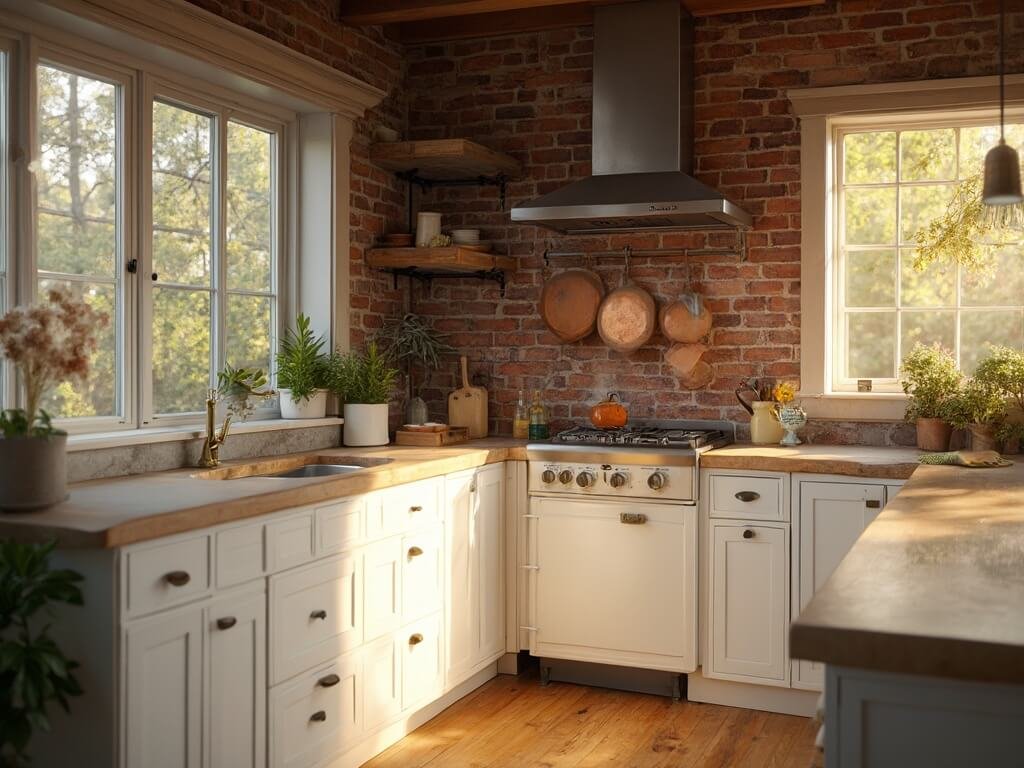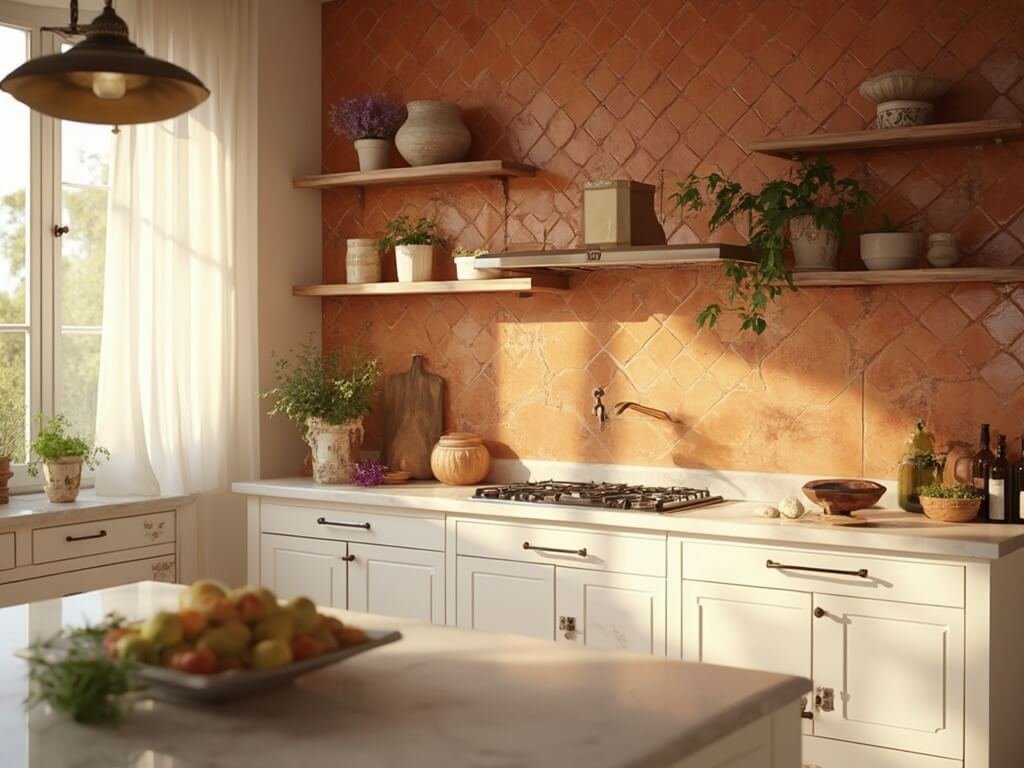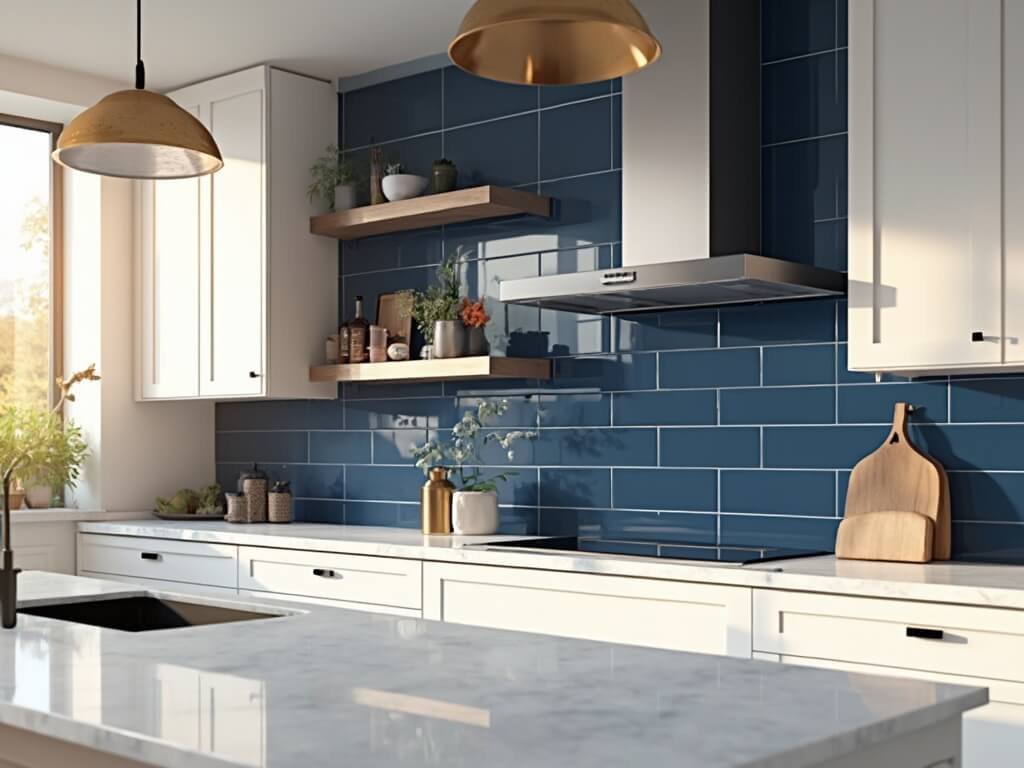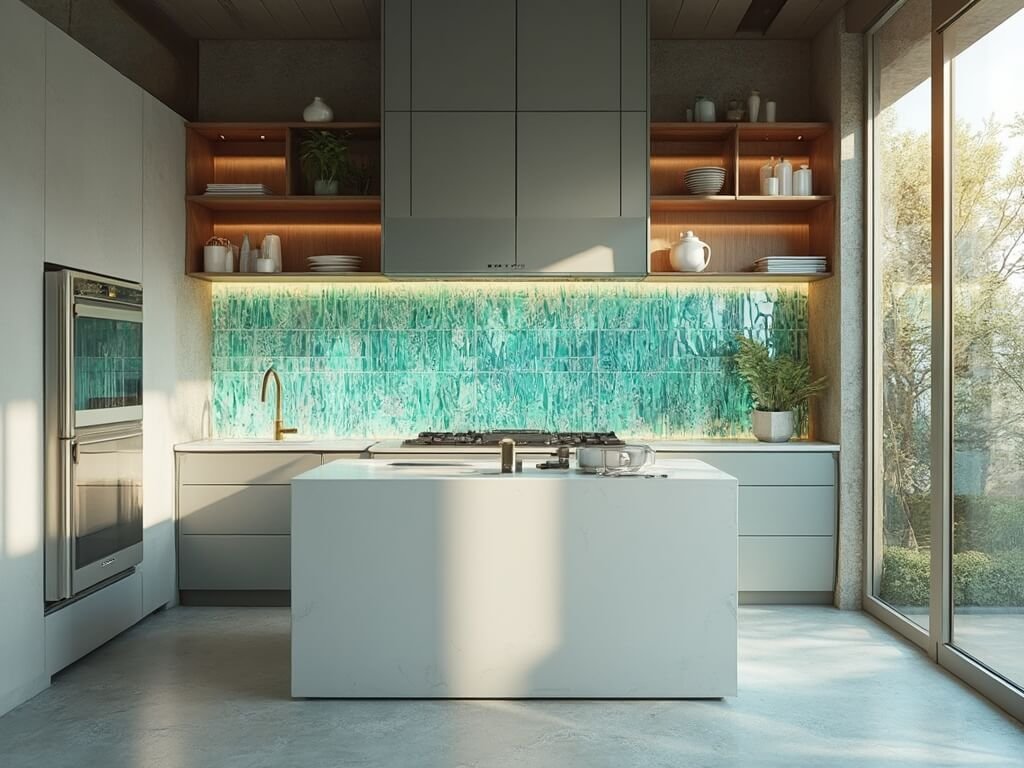
Modern Meets Nostalgia: Creating Your Dream Vintage-Modern Kitchen
I’ve spent years helping homeowners blend old-world charm with contemporary convenience, and I’m excited to share my go-to strategies for creating the perfect vintage-modern kitchen.
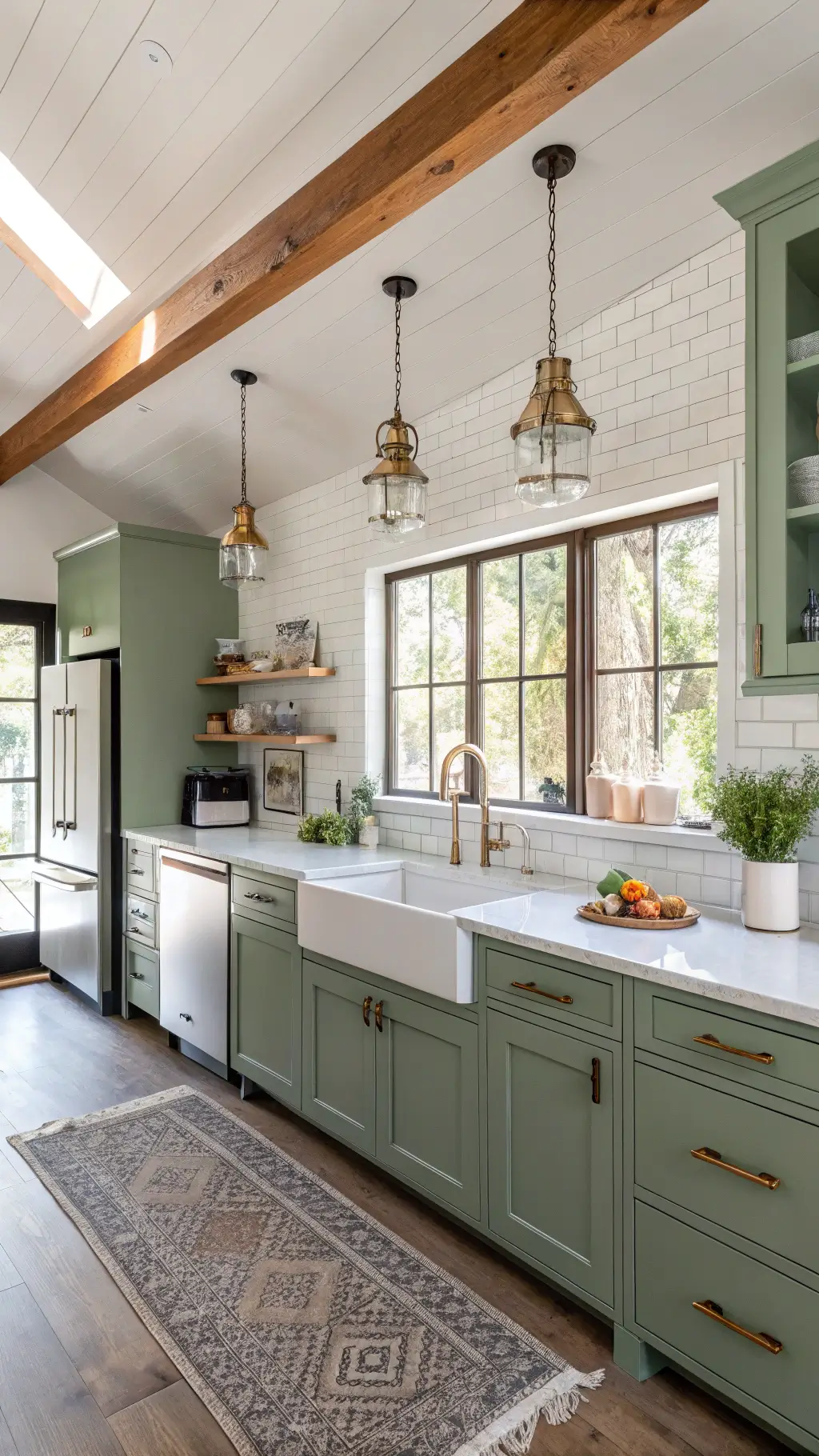
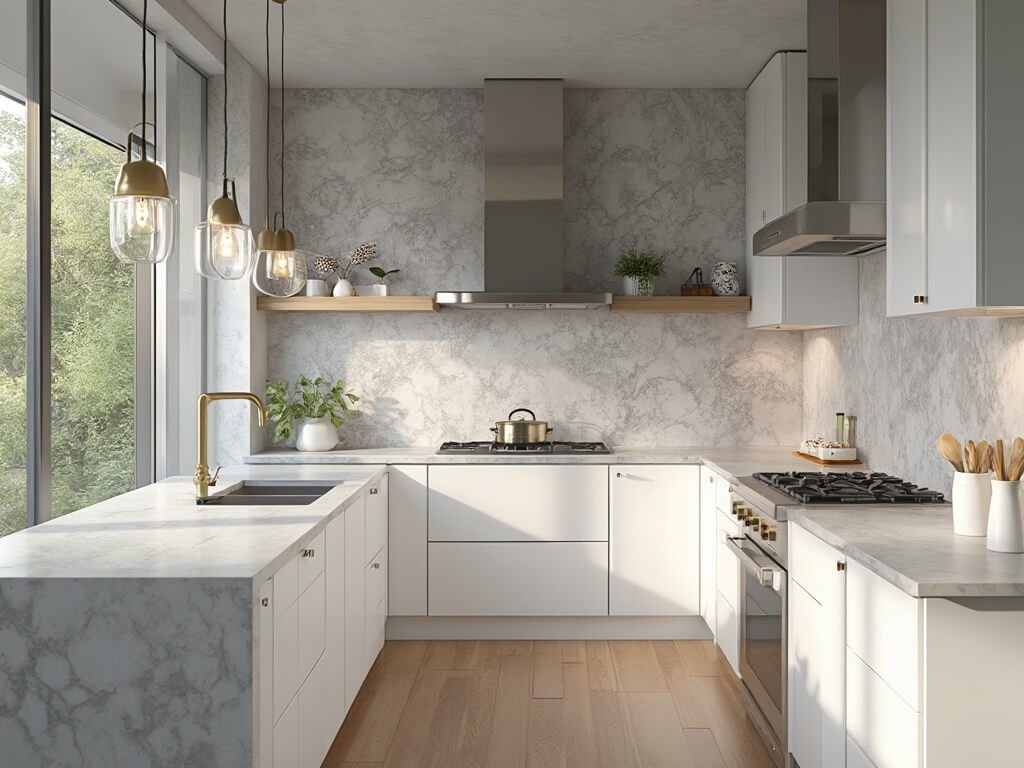
🏠 Steal This Look
- Paint Color: Sherwin-Williams Iron Ore SW 7069 for lower cabinets with Sherwin-Williams Pure White SW 7005 for upper cabinets and walls – creates the perfect vintage-modern contrast
- Furniture: sleek waterfall edge quartz island with vintage-inspired brass bar stools featuring black leather seats
- Lighting: oversized brass pendant lights with clear glass globes over the island paired with under-cabinet LED strips
- Materials: warm brass hardware, subway tile backsplash with dark grout, and reclaimed wood floating shelves
There’s something magical about a kitchen that feels both timeless and totally of-the-moment. I love how vintage-modern design lets you honor the past while embracing today’s functionality.
The Secret Sauce of Vintage-Modern Design
Let me tell you – nailing this style isn’t about throwing random old stuff into a modern kitchen. It’s about creating harmony between eras.
First Things First: Pick Your Vintage Era
- Victorian (1837-1901): Think ornate details and rich woods
- Art Deco (1920s-30s): Bold geometrics and luxe metals
- Mid-Century (1940s-60s): Clean lines and organic shapes
- Retro (1960s-70s): Funky colors and patterns
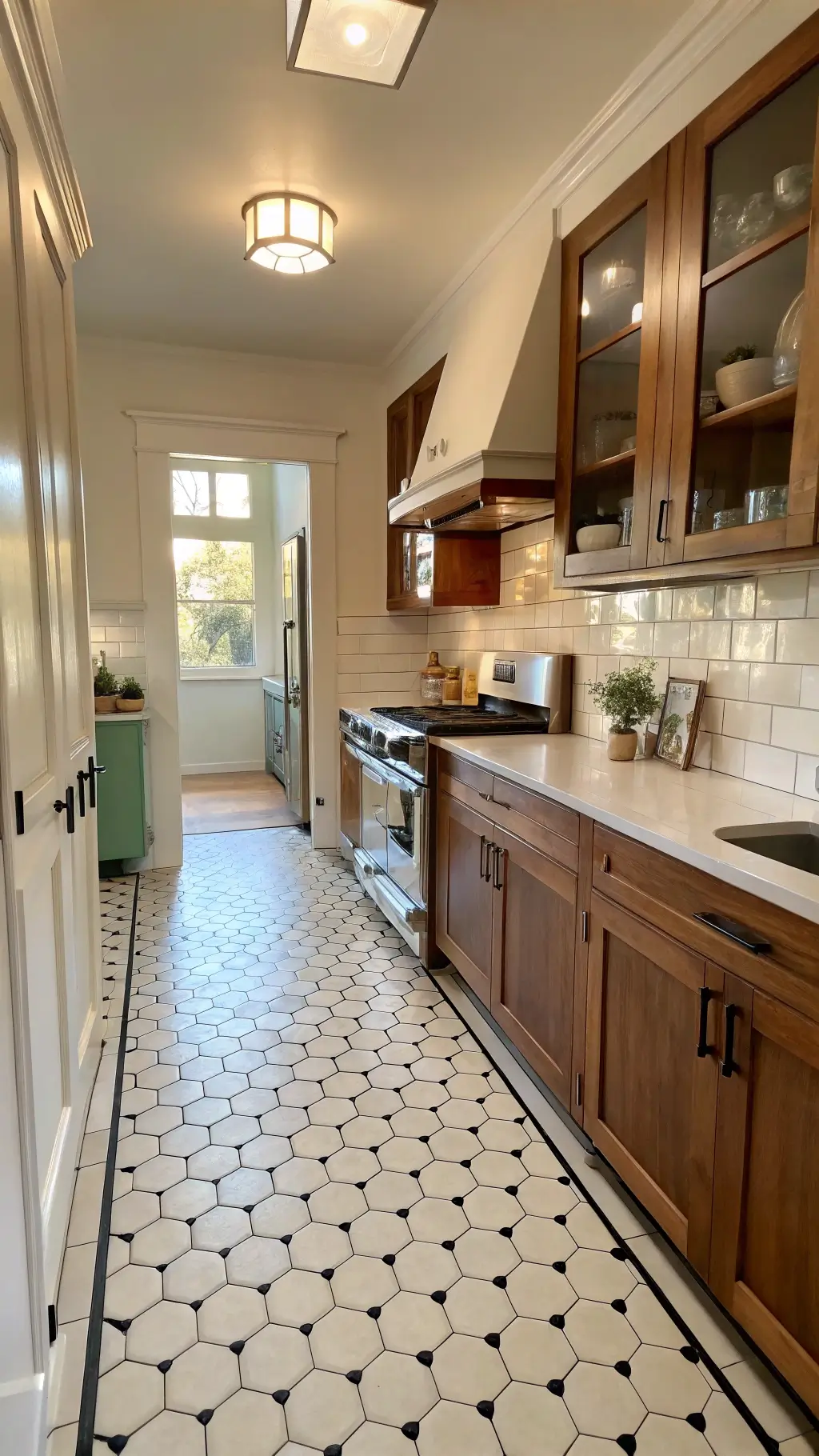
✎ Steal This Look
- Paint Color: Benjamin Moore Wrought Iron 2124-10 for lower cabinets with Benjamin Moore Cloud White OC-130 for upper cabinets to create the era-mixing contrast that defines vintage-modern design
- Furniture: Mid-century modern bar stools with walnut wood seats and brass hairpin legs paired with a vintage-inspired farmhouse island in weathered oak
- Lighting: Brass and black geometric pendant lights with Edison bulbs over the island to bridge Art Deco glamour with industrial modern functionality
- Materials: Mix of reclaimed wood, brushed brass hardware, marble countertops, and subway tile backsplash with dark grout for authentic vintage-modern layering
The magic happens when your grandmother’s Art Deco cabinet pulls meet sleek modern appliances – it’s that unexpected harmony that makes guests stop and stare. I’ve seen homeowners nail this by treating vintage elements like jewelry – purposeful, curated, and never overwhelming.
The 80/20 Rule That Changed Everything
Here’s my golden rule: Keep 80% modern functionality and 20% vintage charm. Trust me, this ratio works every time.
Modern Must-Haves:
- Energy-efficient appliances
- Durable countertops
- Smart storage solutions
- Updated lighting
Vintage Elements That Pop:
- Antique hardware
- Period light fixtures
- Vintage-inspired tile
- Retro small appliances
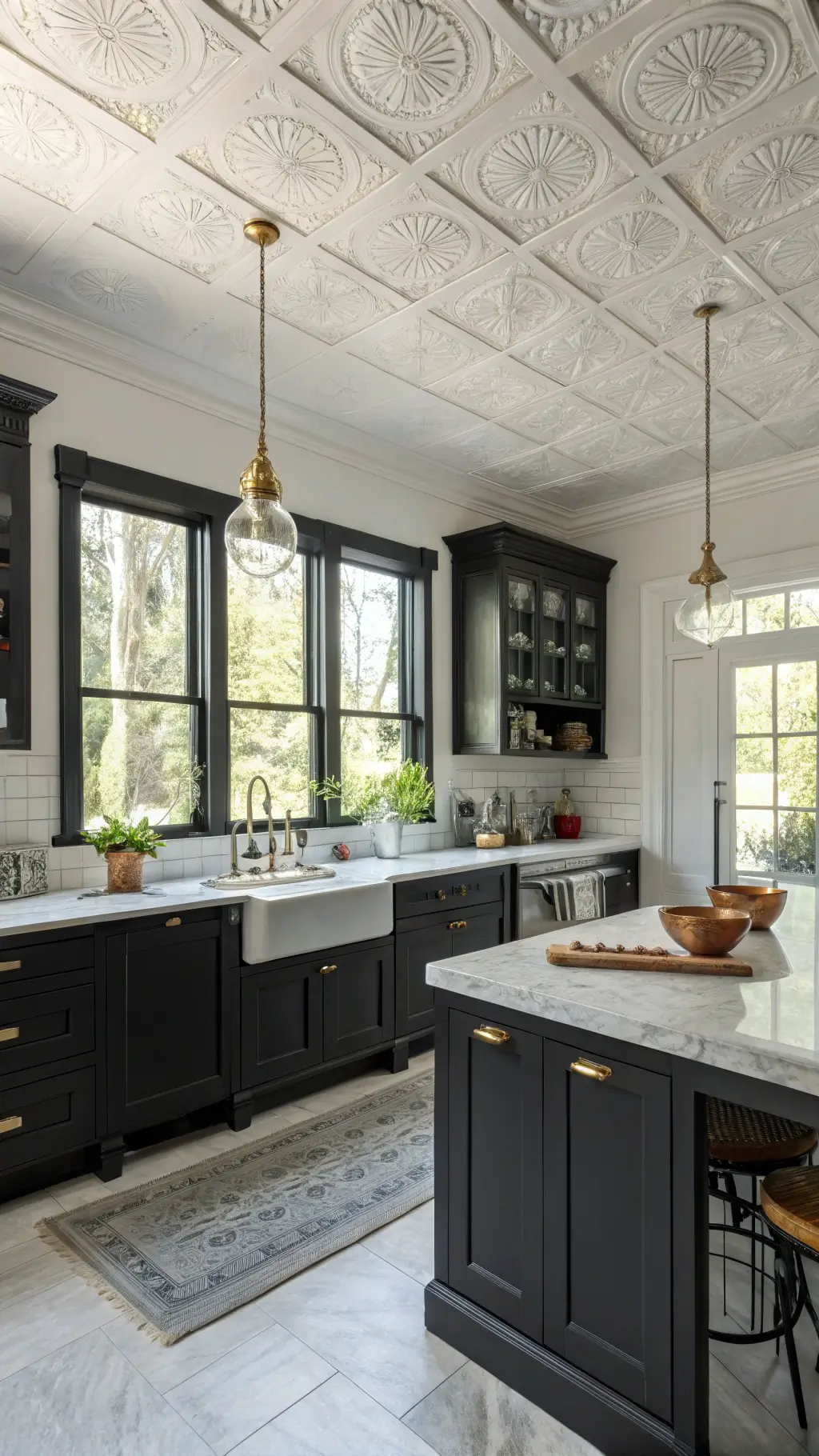
★ Steal This Look
- Paint Color: Farrow & Ball Wimborne White 239 for a crisp modern base that lets vintage elements shine
- Furniture: sleek white shaker cabinets with vintage-inspired brass knobs and modern waterfall quartz countertops
- Lighting: modern pendant lights with vintage Edison bulb filaments over the island
- Materials: mix of smooth quartz, brushed brass hardware, and subway tile with dark grout
This 80/20 formula is what separates amateur vintage kitchens from professional-looking spaces. The secret is using modern bones with vintage jewelry.
Color Magic: Making It Work
I always tell my clients to start with a neutral base and layer in vintage colors:
- Soft sage green
- Butter yellow
- Powder blue
- Warm cream
- Muted coral
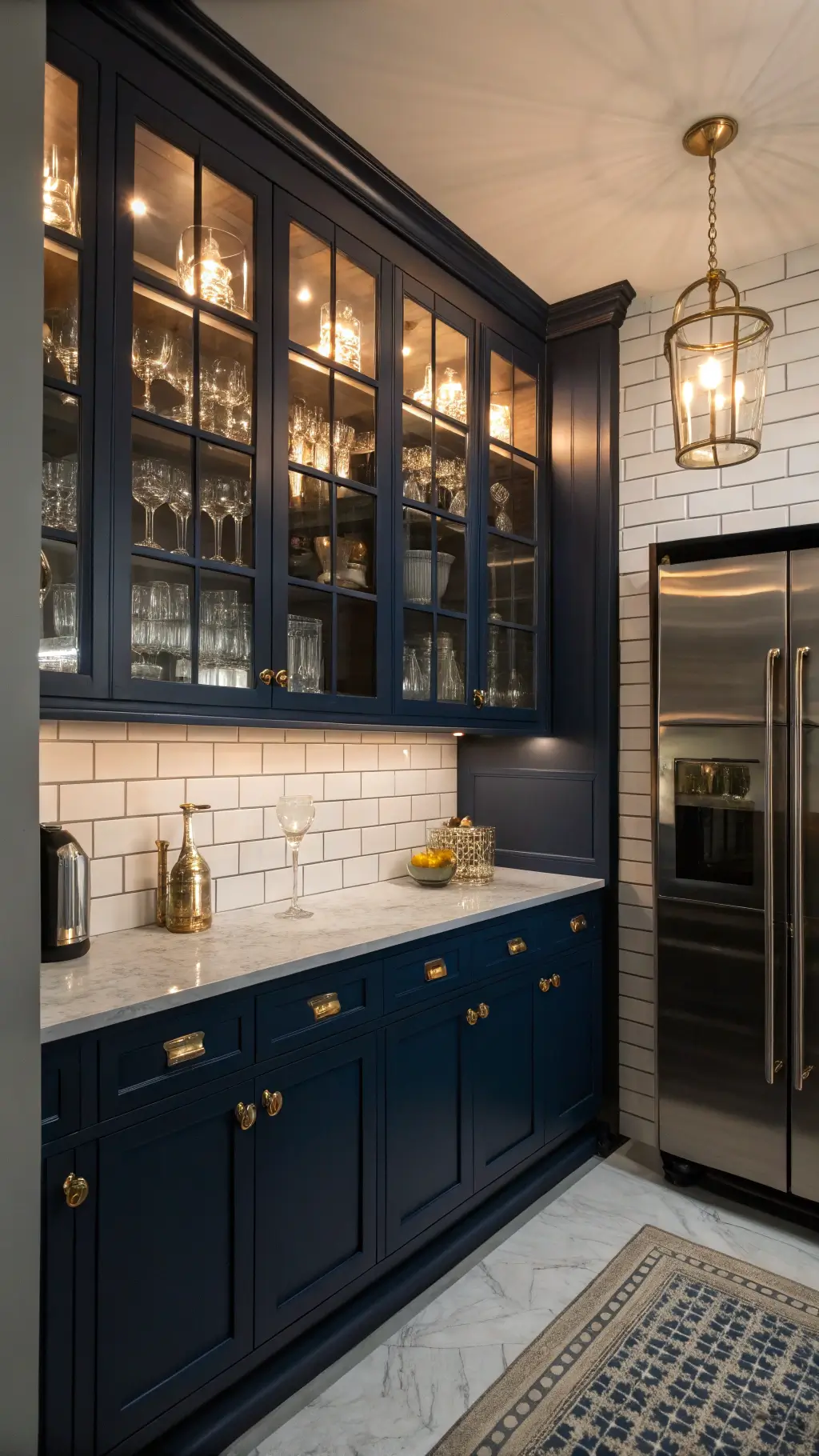
🎨 Steal This Look
- Paint Color: Behr Soft Sage S350-2 for accent cabinets with Behr Vanilla Delight S250-1 for main walls
- Furniture: cream-colored shaker style cabinets with brass hardware and butcher block countertops
- Lighting: warm brass pendant lights with milk glass shades
- Materials: natural wood, matte brass accents, and subway tile backsplash
There’s something magical about vintage colors that instantly transport you to a simpler time while still feeling fresh and current. The key is treating these soft hues like watercolors – diluted and dreamy rather than bold and demanding.
Smart Money-Saving Tips
You don’t need to break the bank! Here’s what I do:
- Hunt flea markets for unique hardware
- Refinish existing cabinets
- Use vintage-inspired wallpaper for accent walls
- Shop second-hand for authentic pieces
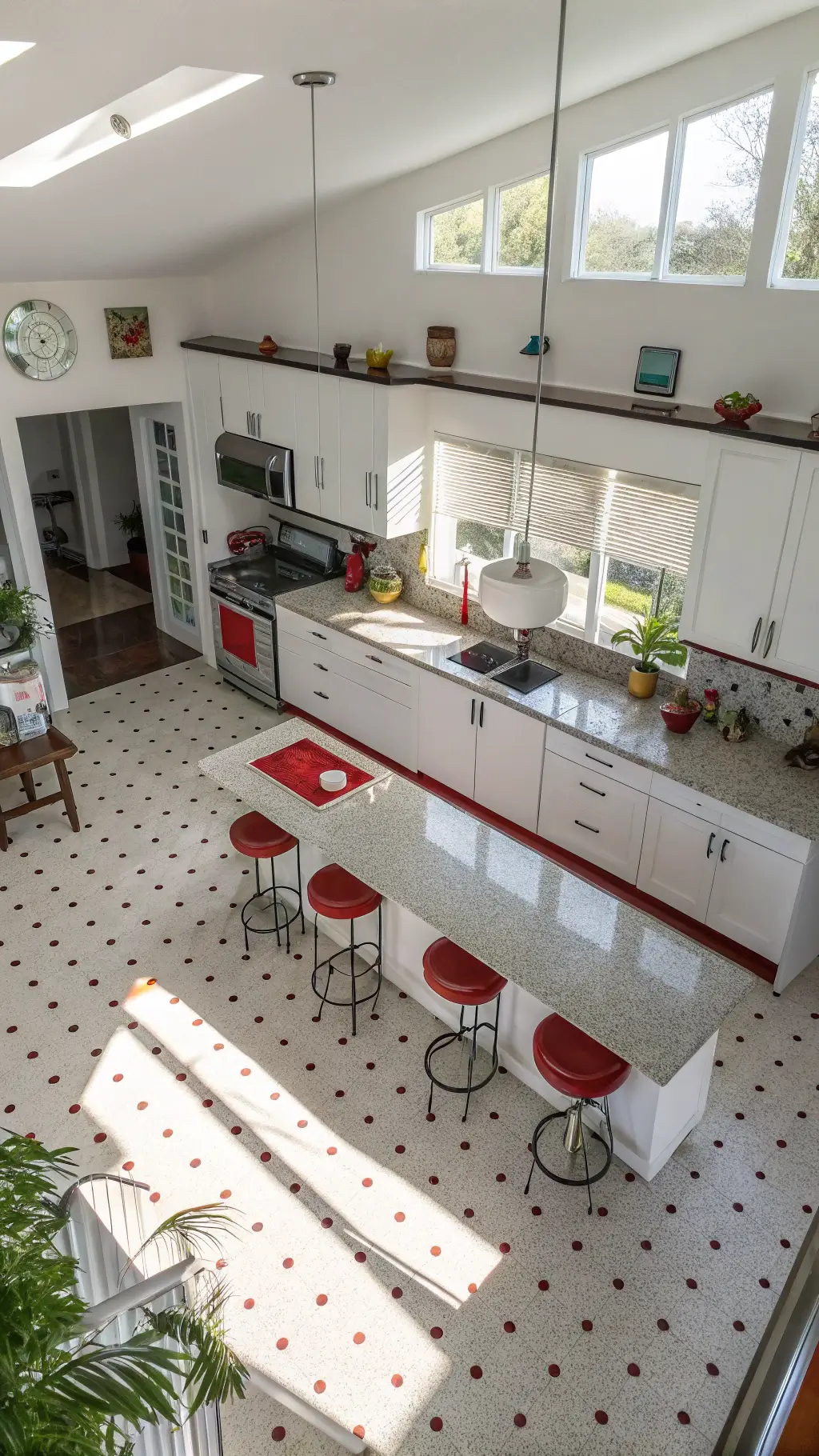
★ Steal This Look
- Paint Color: Valspar Bistro White 7006-18
- Furniture: refinished vintage kitchen cabinets with updated hardware
- Lighting: vintage-inspired pendant lights with brass or copper finishes
- Materials: reclaimed wood, vintage brass hardware, patterned wallpaper accents
I’ve saved thousands by mixing authentic vintage finds with strategic DIY updates, creating a kitchen that looks like it cost twice what I actually spent. The key is knowing where to splurge and where to save.
The Devil’s in the Details
These small touches make all the difference:
- Glass cabinet knobs
- Farmhouse sink
- Open shelving with vintage dishes
- Period-appropriate textiles
- Antique cooking tools as decor
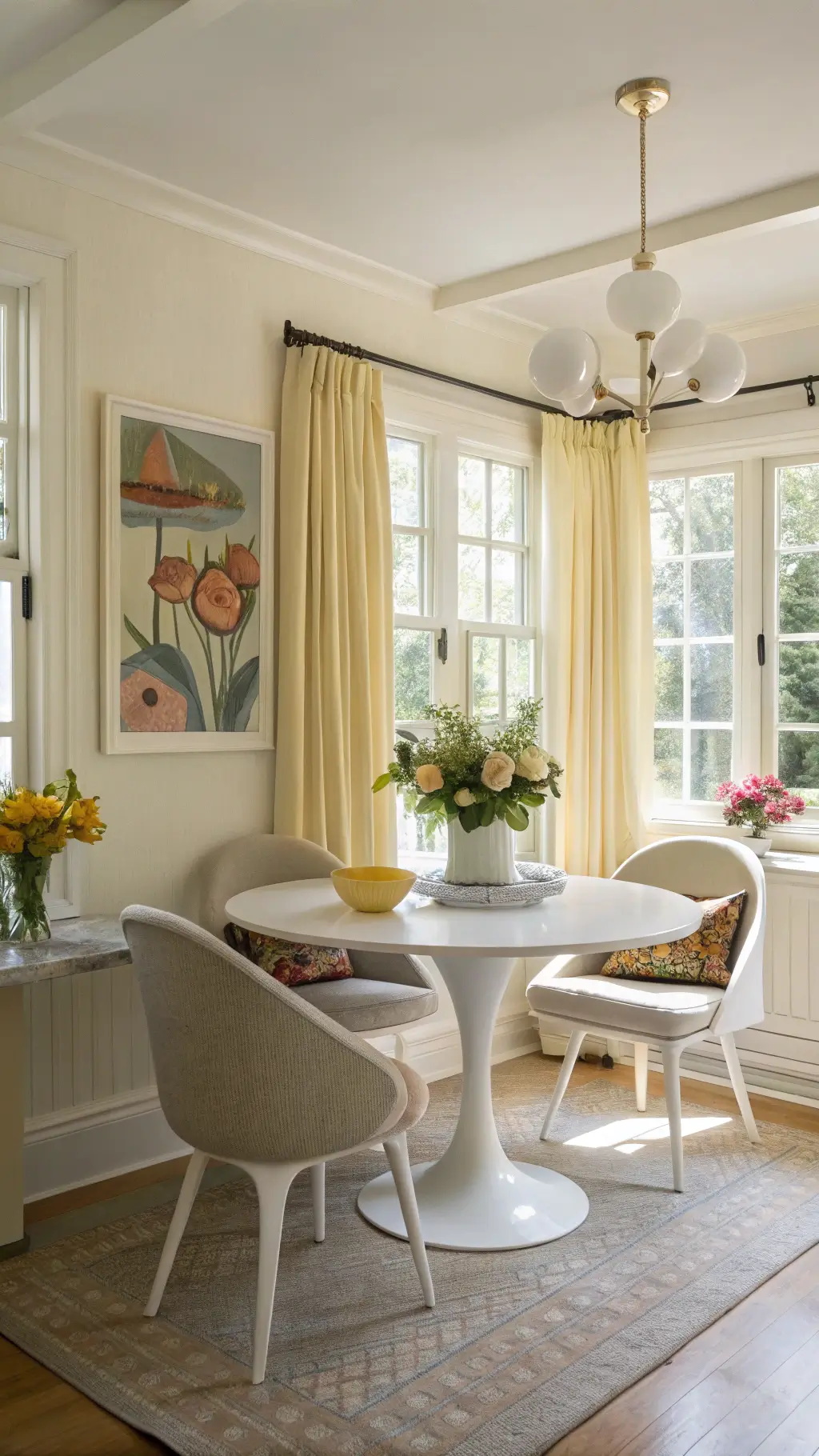
🌟 Steal This Look
- Paint Color: PPG Wrought Iron PPG1023-7 for lower cabinets with PPG Pure White PPG1010-1 for upper cabinets – creates the classic vintage modern contrast
- Furniture: Butcher block island with turned legs, vintage wooden bar stools with metal accents, and a classic farmhouse dining table
- Lighting: Edison bulb pendant lights over the island with brass or black metal fixtures
- Materials: Reclaimed wood shelving, subway tile backsplash, marble or butcher block countertops, and vintage brass hardware
There’s something magical about a kitchen where every detail tells a story – from the glass knobs that catch morning light to the well-worn wooden spoons displayed like treasured heirlooms. These carefully chosen vintage touches transform a functional space into the heart of a home with character.
Avoiding Common Mistakes
I’ve seen these blunders too often:
- ❌ Mixing too many eras
- ❌ Overdoing the vintage elements
- ❌ Sacrificing function for style
- ❌ Ignoring modern safety needs
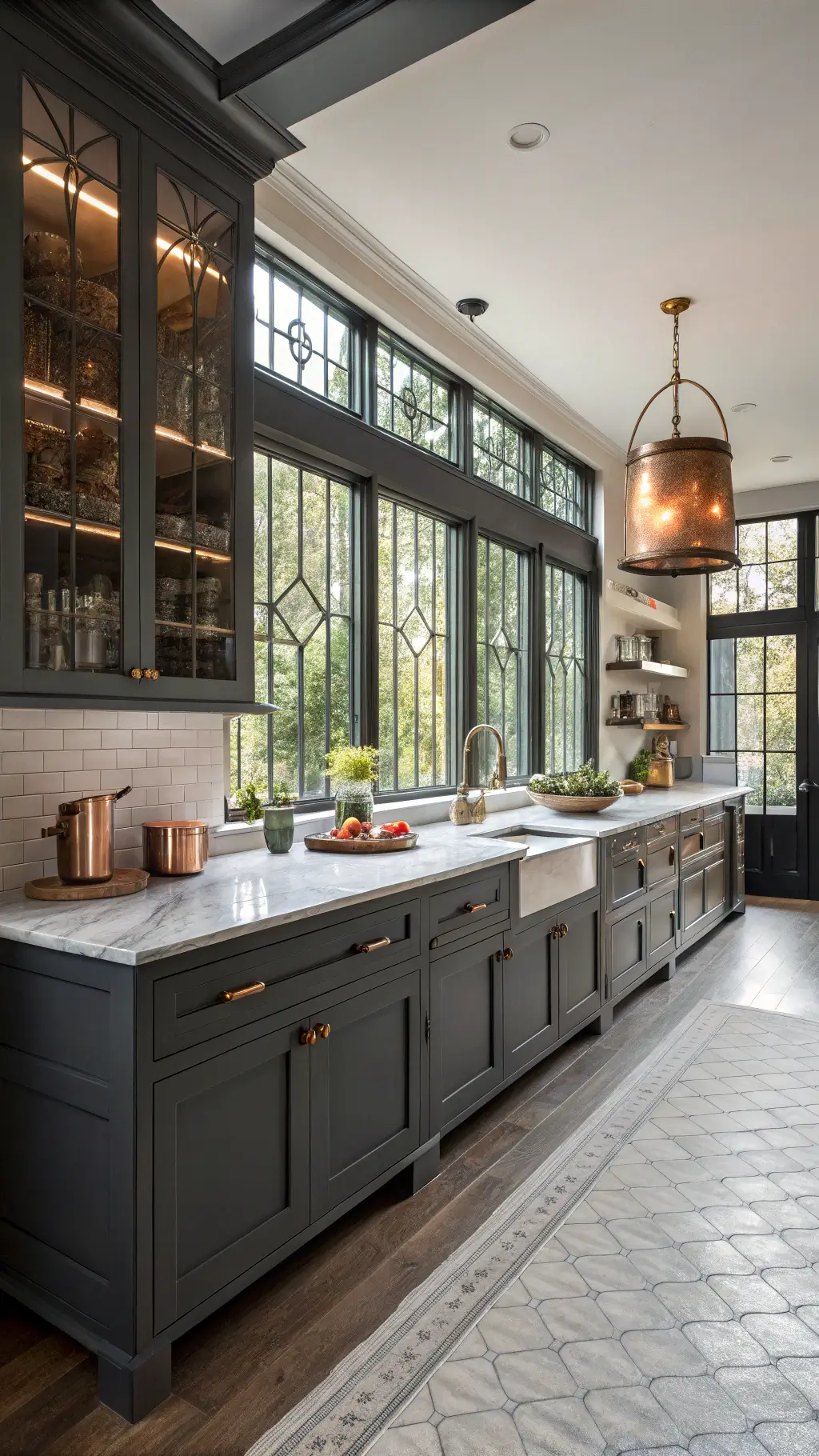
🏠 Steal This Look
- Paint Color: Dunn-Edwards Classic White DET408 for upper cabinets with Charcoal DET697 for lower cabinets to ground vintage elements while maintaining modern brightness
- Furniture: Mid-century modern bar stools with walnut wood legs and black leather seats to bridge vintage and contemporary styling
- Lighting: Single oversized brass pendant light with Edison bulb over kitchen island – one statement piece rather than multiple competing fixtures
- Materials: Subway tile backsplash in classic white, butcher block countertops for warmth, and brushed brass hardware as the unifying vintage accent
The most successful vintage modern kitchens I’ve designed feel intentional, not collected – like someone with great taste curated pieces over time rather than bought everything at once.
Layout Considerations
Remember to maintain modern workflow while incorporating vintage elements:
- Keep the work triangle efficient
- Plan adequate counter space
- Include modern storage solutions
- Ensure proper lighting
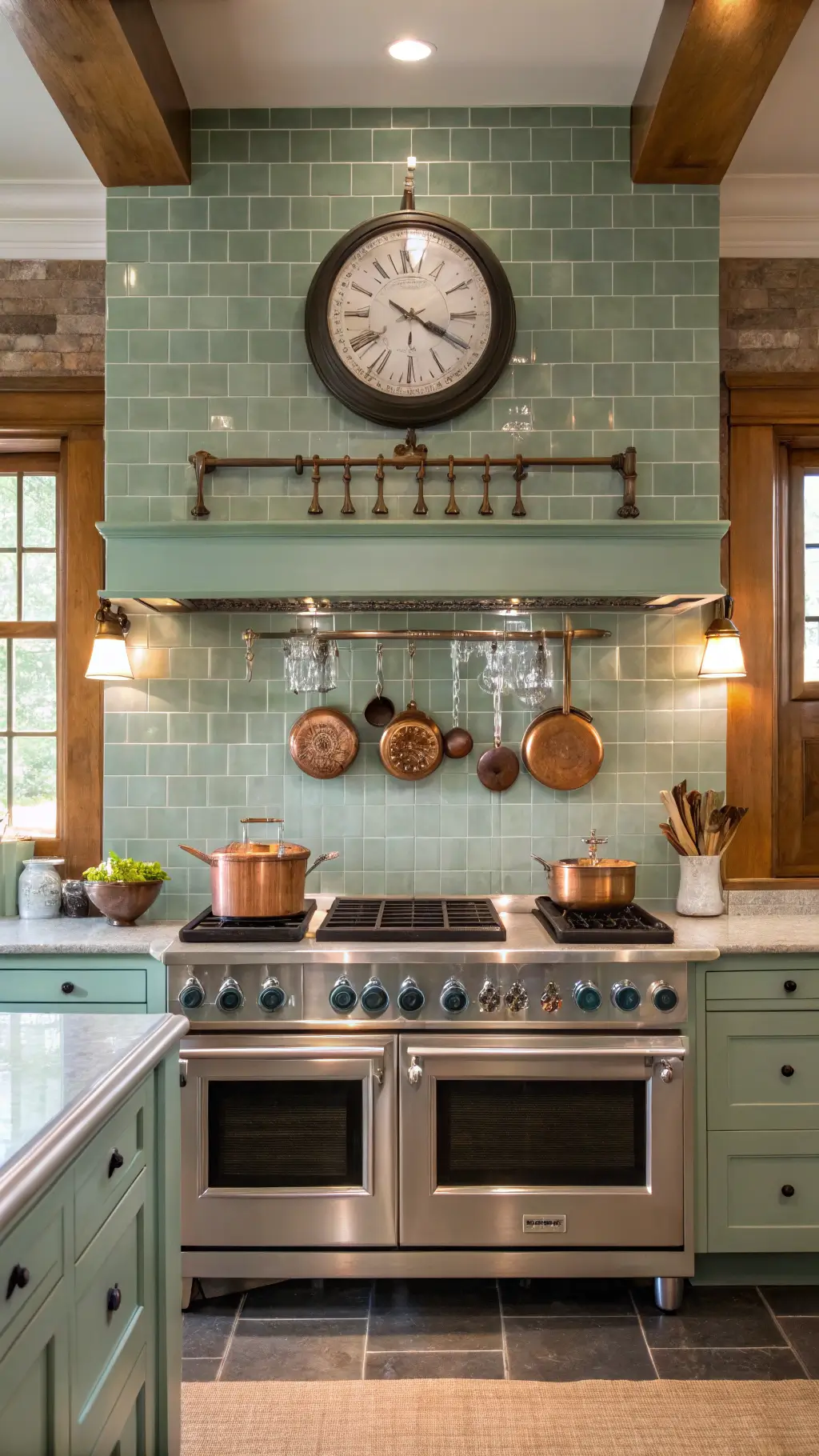
✎ Steal This Look
- Paint Color: Clare Paint Current Mood CC-30 for a sophisticated backdrop that bridges vintage charm with modern efficiency
- Furniture: sleek quartz waterfall island with vintage-inspired brass bar stools and restored mid-century dining chairs
- Lighting: brass pendant lights over the island with under-cabinet LED strips for task lighting
- Materials: warm brass hardware, natural wood grain cabinets, and honed marble countertops
The magic of vintage modern kitchens lies in thoughtful planning that honors both eras. You’re creating a space where grandmother’s mixing bowls feel at home on sleek quartz counters.
Final Thoughts
Creating a vintage-modern kitchen isn’t just about following a formula – it’s about crafting a space that tells your story while meeting today’s needs. Take your time, collect pieces you love, and don’t be afraid to mix and match until it feels just right.
Now go create something beautiful!