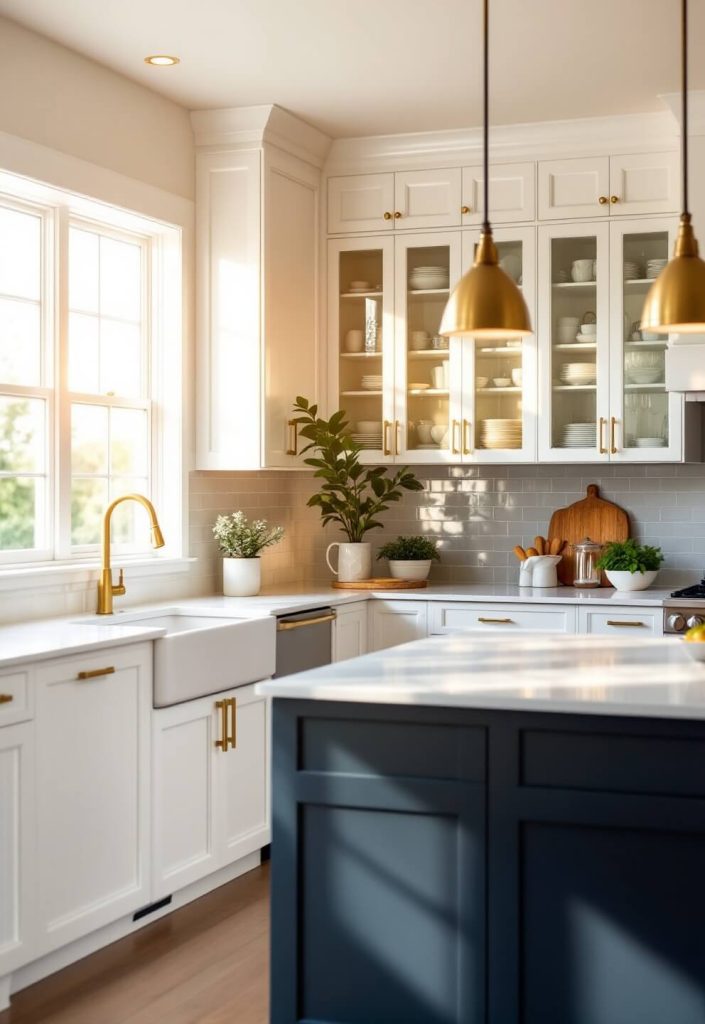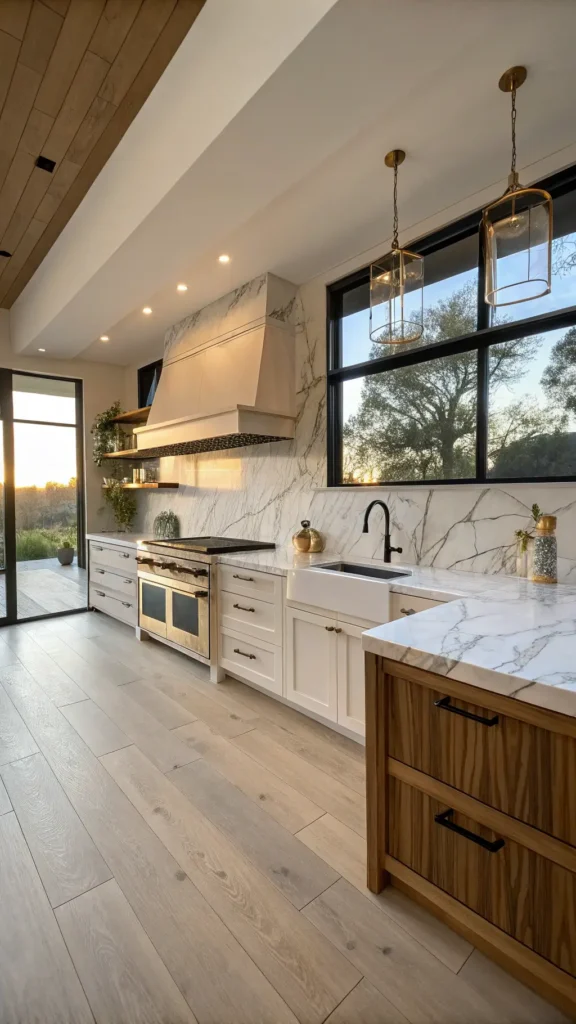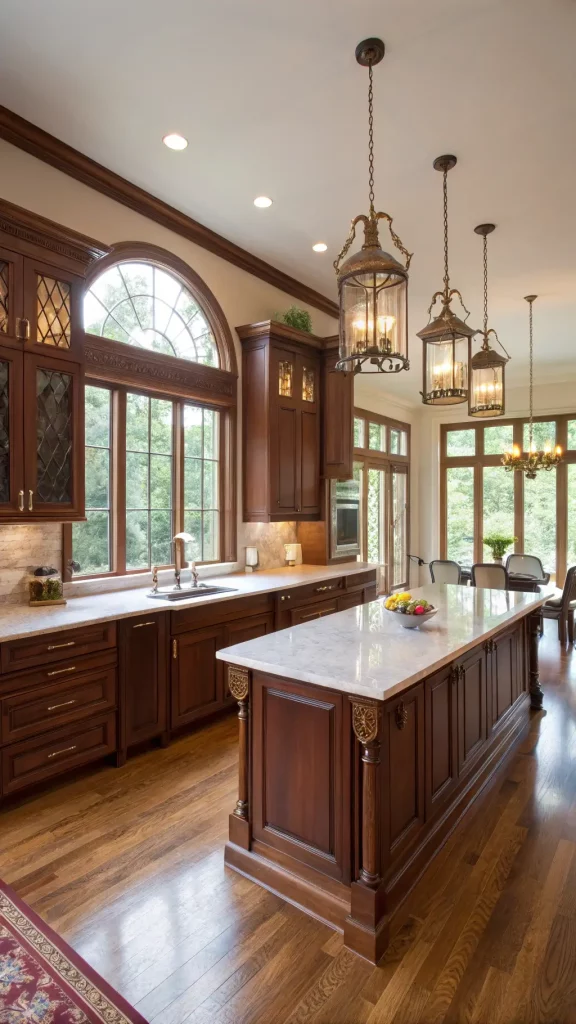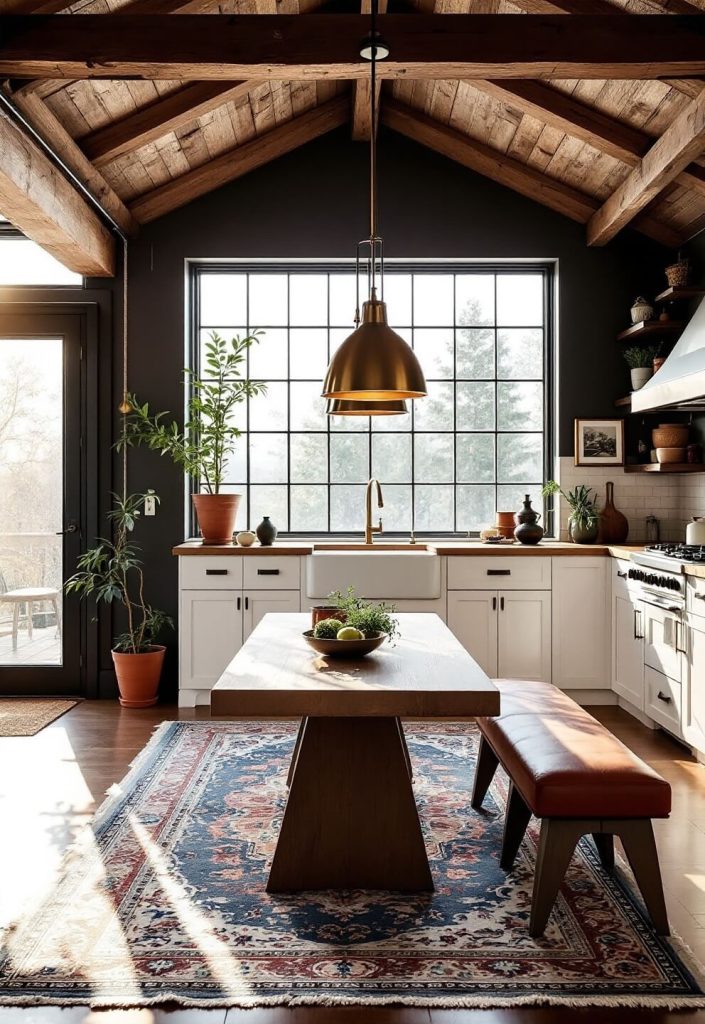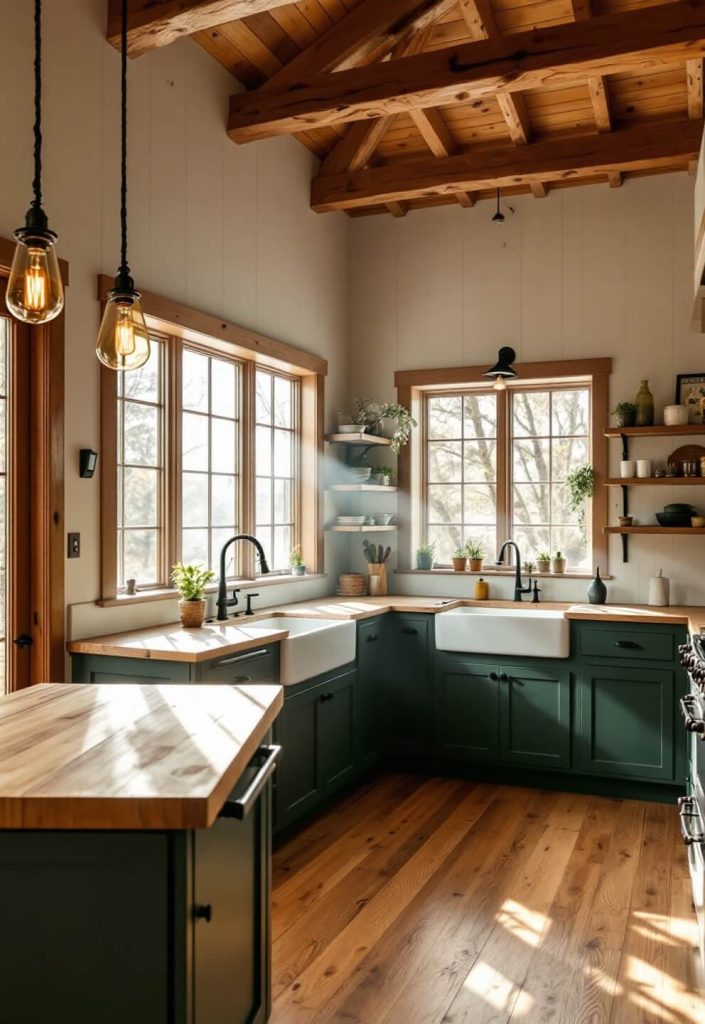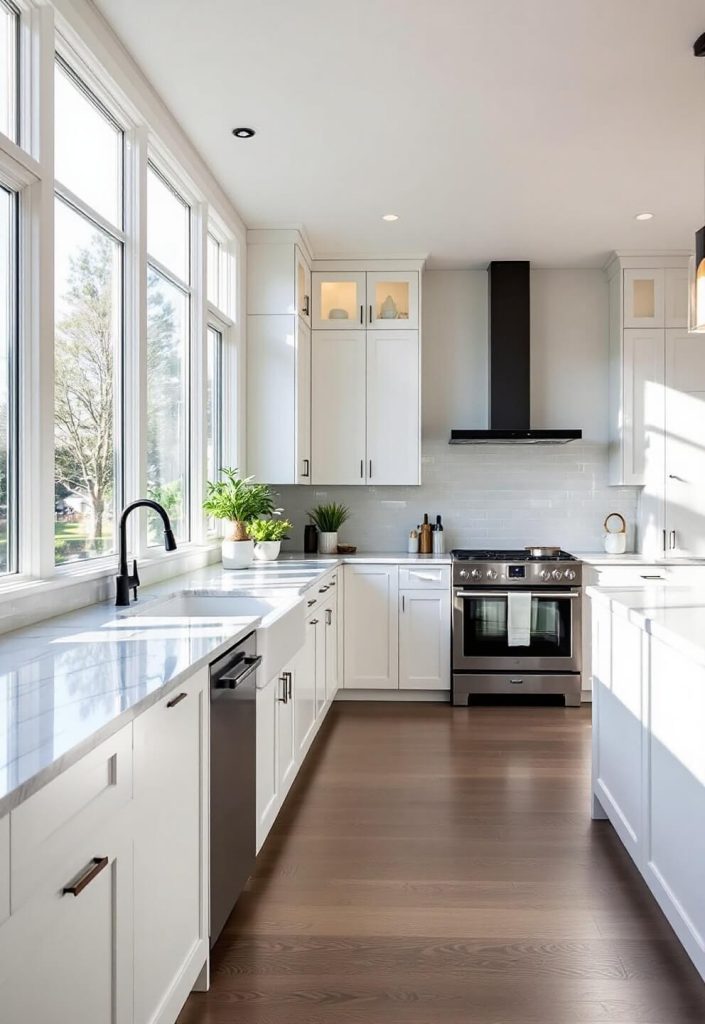
Pale-Oak cabinets set the tone for the whole kitchen, so the shade and finish decide everything. I read the color in the room’s actual light before committing, because the same tone shifts from morning to evening.
Pale Oak isn’t just a paint color—it’s a design lifeline. Here’s why:
The Magic of Greige
- Warm without being overwhelming
- Soft enough to create calm
- Neutral enough to match virtually anything
- Reflects light like a design superhero
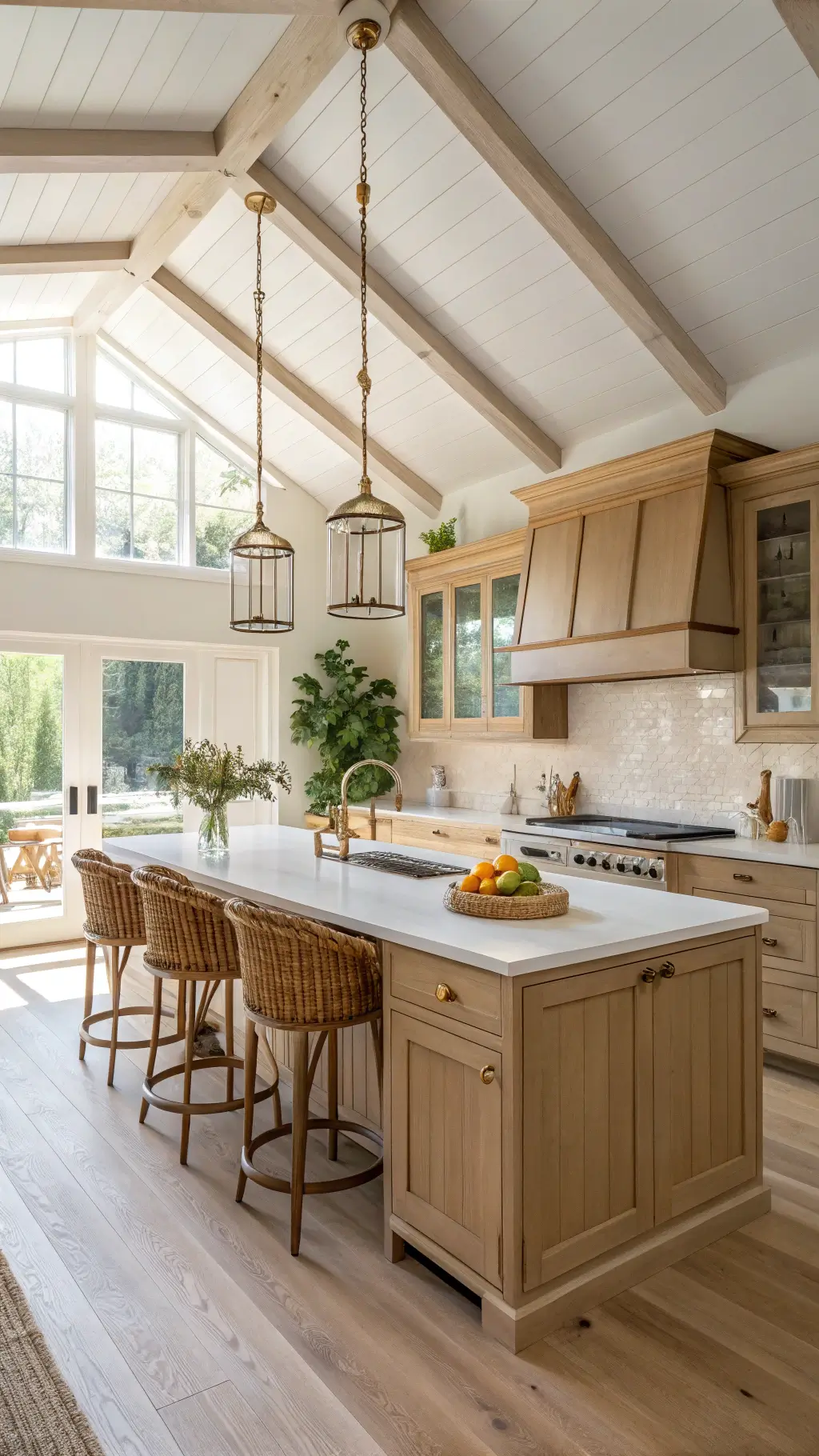
🌟 Steal This Look
- Paint Color: Sherwin-Williams Accessible Beige SW 7036
- Furniture: Light oak or whitewashed wood cabinetry with soft-close hinges, paired with cream or warm white upper cabinets for visual balance
- Lighting: Warm white pendant lights (2700K-3000K color temperature) with brushed brass or warm bronze finishes to complement pale oak’s greige undertones
- Materials: Matte or satin cabinet finishes, light wood grain visible, soft cream tile or light wood countertops, warm metals (brushed brass hardware)
Pale oak is the kitchen workhorse that quietly transforms a space—it’s warm enough to feel inviting but neutral enough to let you change accent colors seasonally without a complete overhaul. This is the cabinet color that grows more beautiful as it ages.
The Science of Color: Why Pale Oak Works
Picture this: A color that adapts to your kitchen’s personality. Pale Oak (Benjamin Moore OC-20) does exactly that. It’s not just gray. It’s not just beige. It’s a chameleon of sophistication.
Lighting Dynamics
- North-Facing Kitchens: Maintains warmth
- South-Facing Spaces: Bright and airy
- Artificial Light: Stays consistently inviting
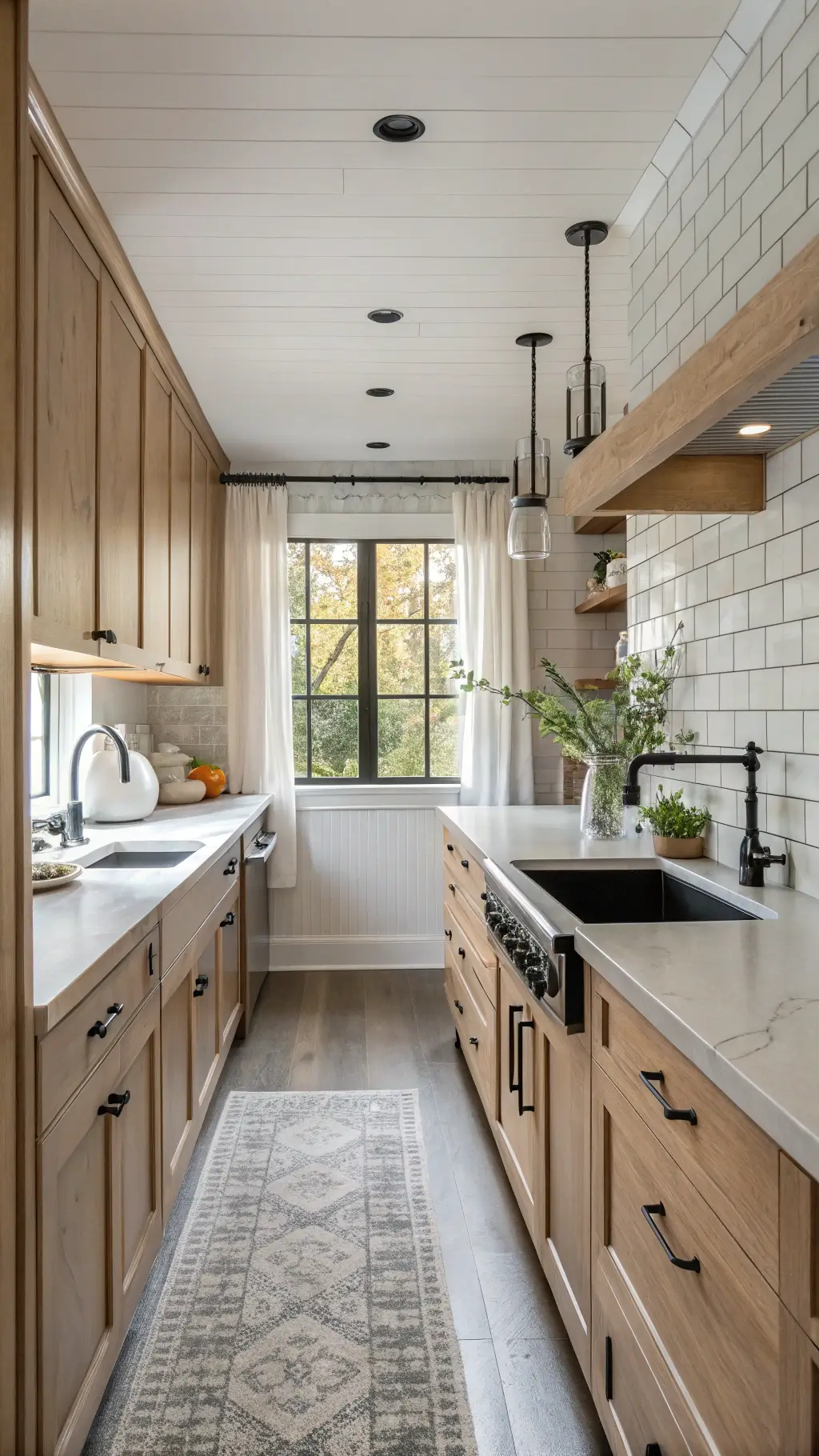
🎨 Steal This Look
- Paint Color: Benjamin Moore Pale Oak OC-20
- Furniture: Light oak or natural wood cabinetry with clean lines; soft-close door hinges for modern appeal; neutral-toned kitchen island in white oak or painted soft white
- Lighting: Adjustable color-temperature LED pendant lights (2700K-4000K) over kitchen island to enhance Pale Oak’s warmth in different lighting conditions
- Materials: Matte or satin cabinet finishes to reduce glare; natural wood grain or light oak veneer; soft brass or brushed nickel hardware; white quartz or light marble countertops
Pale Oak is the thinking person’s neutral—it refuses to be boring by shifting subtly with your kitchen’s light throughout the day. If you’ve hesitated over cabinet color because nothing felt ‘right’ in every lighting scenario, Pale Oak solves that indecision by being thoughtfully versatile.
Design Pairings That Sing
Countertop Companions
- Taj Mahal quartzite
- Creamy quartz
- Soft marble tones
Hardware Heaven
- Brass pulls
- Aged bronze knobs
- Matte black accents
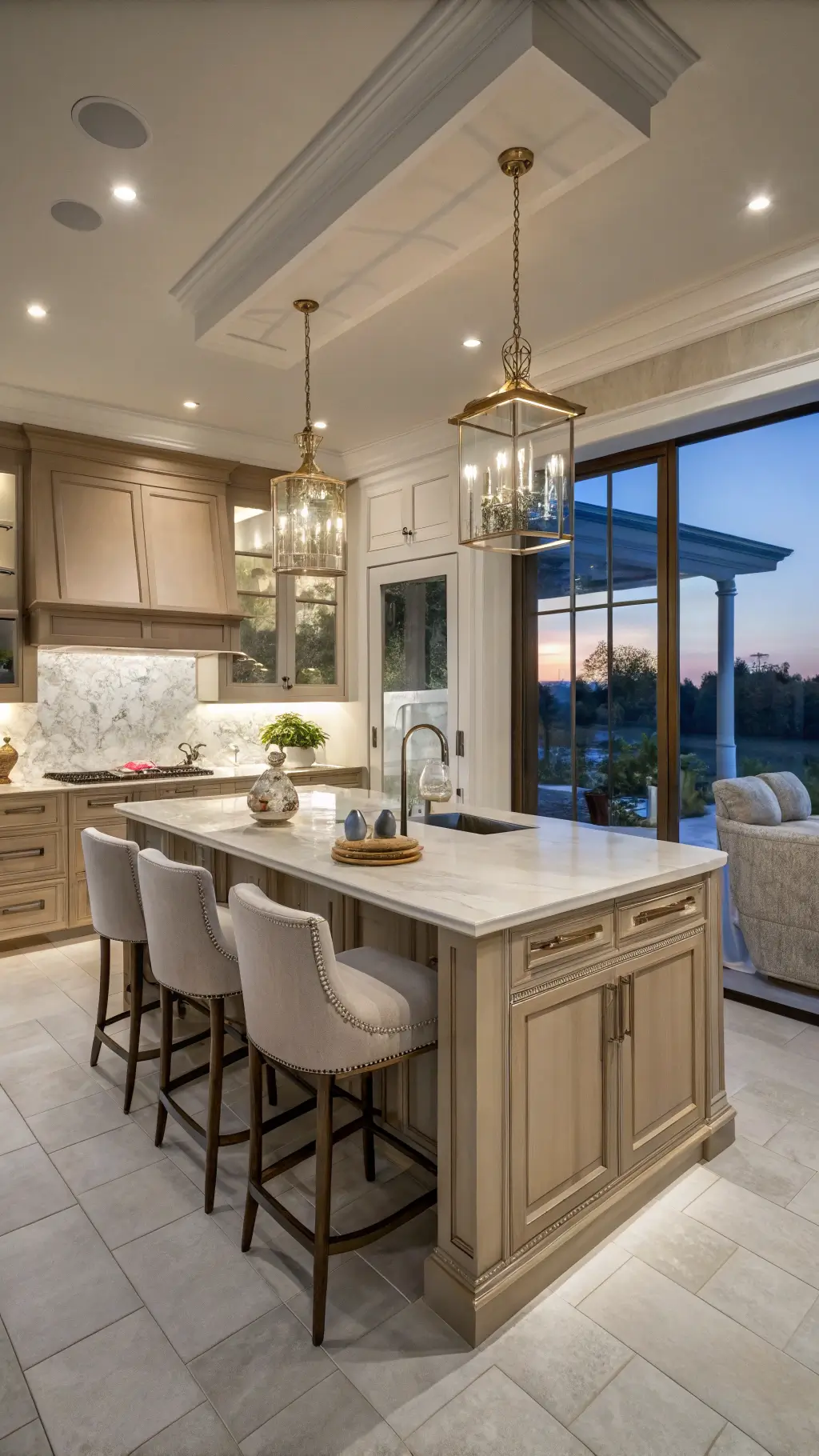
🌟 Steal This Look
- Paint Color: Farrow & Ball Shaded White 201
- Furniture: Light oak or whitewashed wood kitchen island with open shelving; cream or soft beige upholstered bar stools
- Lighting: Brass or aged bronze pendant lights with warm white bulbs (2700K) hung 30-36 inches above countertops
- Materials: Taj Mahal quartzite countertops, creamy quartz or soft marble accents, brass hardware with aged bronze and matte black mixed finishes, light wood cabinetry
Pale oak kitchens thrive on softness and warmth—these companion materials (creamy quartzite, warm metallics, matte accents) create a kitchen that feels both sophisticated and livable, like it was designed by someone who actually cooks there.
Style Flexibility: One Color, Infinite Personalities
| Design Style | Pale Oak Compatibility | Pro Tip |
|---|---|---|
| Modern | ✓ | Minimal hardware |
| Farmhouse | ✓ | Rustic open shelving |
| Transitional | ✓ | Layer textures |
| Bohemian | ✓ | Add organic elements |
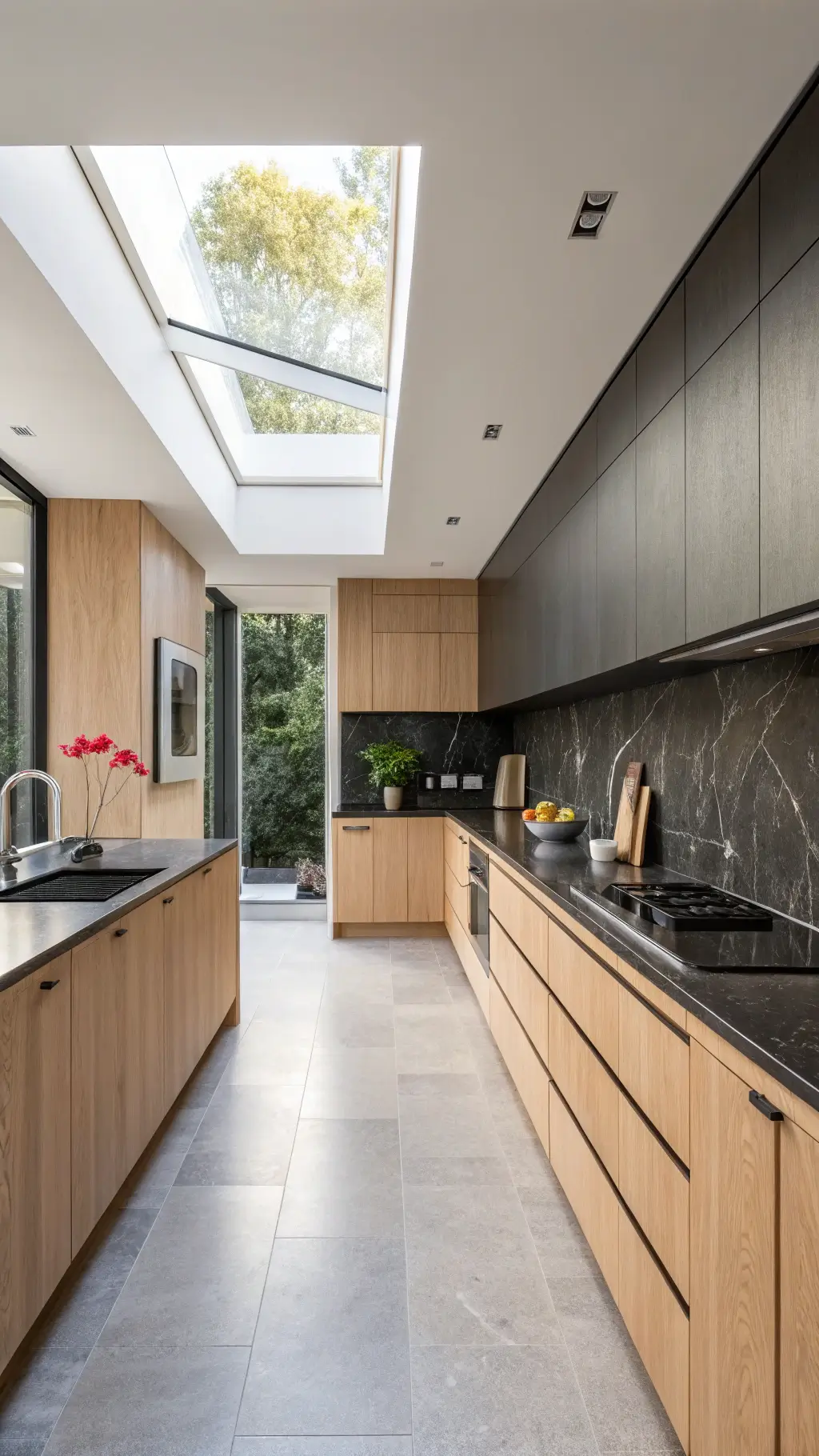
🖼 Steal This Look
- Paint Color: Behr Wheat Bread PPU7-14 – a soft, warm neutral that complements pale oak cabinetry without competing
- Furniture: Open shelving with black metal frames (farmhouse), or sleek white lacquered pieces (modern), or warm wood mixing tables (transitional) – choose based on your chosen style direction
- Lighting: Pendant lights in matte black or brushed brass to anchor the style without overwhelming the pale oak – these work across all four design personalities
- Materials: Natural textures: woven placemats, linen kitchen towels, raw wood open shelving, matte ceramic accessories, and brushed metal hardware to layer depth across any style choice
Pale oak is the ultimate chameleon of kitchen design—it plays beautifully with minimalist restraint or bohemian abundance. This flexibility means you’re not locked into one aesthetic; your kitchen can evolve as your style does.
Real-World Styling Secrets
Quick Wins:
- Add texture with woven trays
- Introduce herb plants
- Use warm white lighting
- Layer subtle textiles
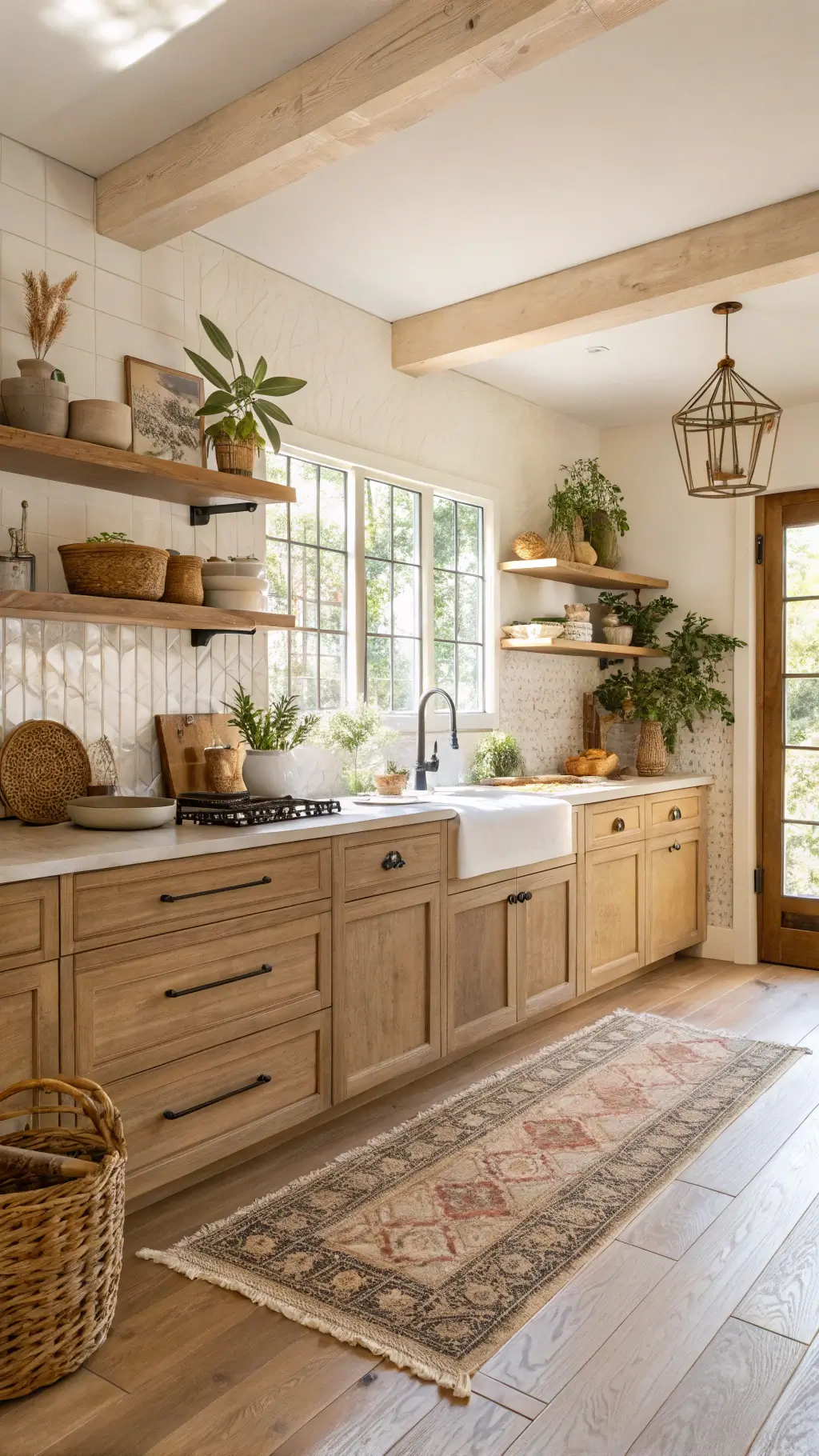
🌟 Steal This Look
- Paint Color: Valspar Woodrow Wilson Cream 7015-6
- Furniture: Open shelving with pale oak cabinets, kitchen island with warm wood base, natural wood cutting boards displayed on counters
- Lighting: Warm white pendant lights (2700K) suspended over kitchen island, under-cabinet warm white LED strips
- Materials: Woven natural fiber storage baskets, linen kitchen towels, ceramic herb planters, wood and rattan accents
Pale oak kitchens come alive when you embrace their natural warmth through layered, organic textures—fresh herbs on a windowsill, woven baskets pulling in earthy tones, soft lighting that mimics golden afternoon light. These aren’t expensive upgrades; they’re the small, genuine details that make a kitchen feel lived-in and loved.
Potential Pitfalls (And How to Avoid Them)
Watch Out For:
- Extreme lighting variations
- Clashing with cool-toned grays
- Forgetting to test paint samples
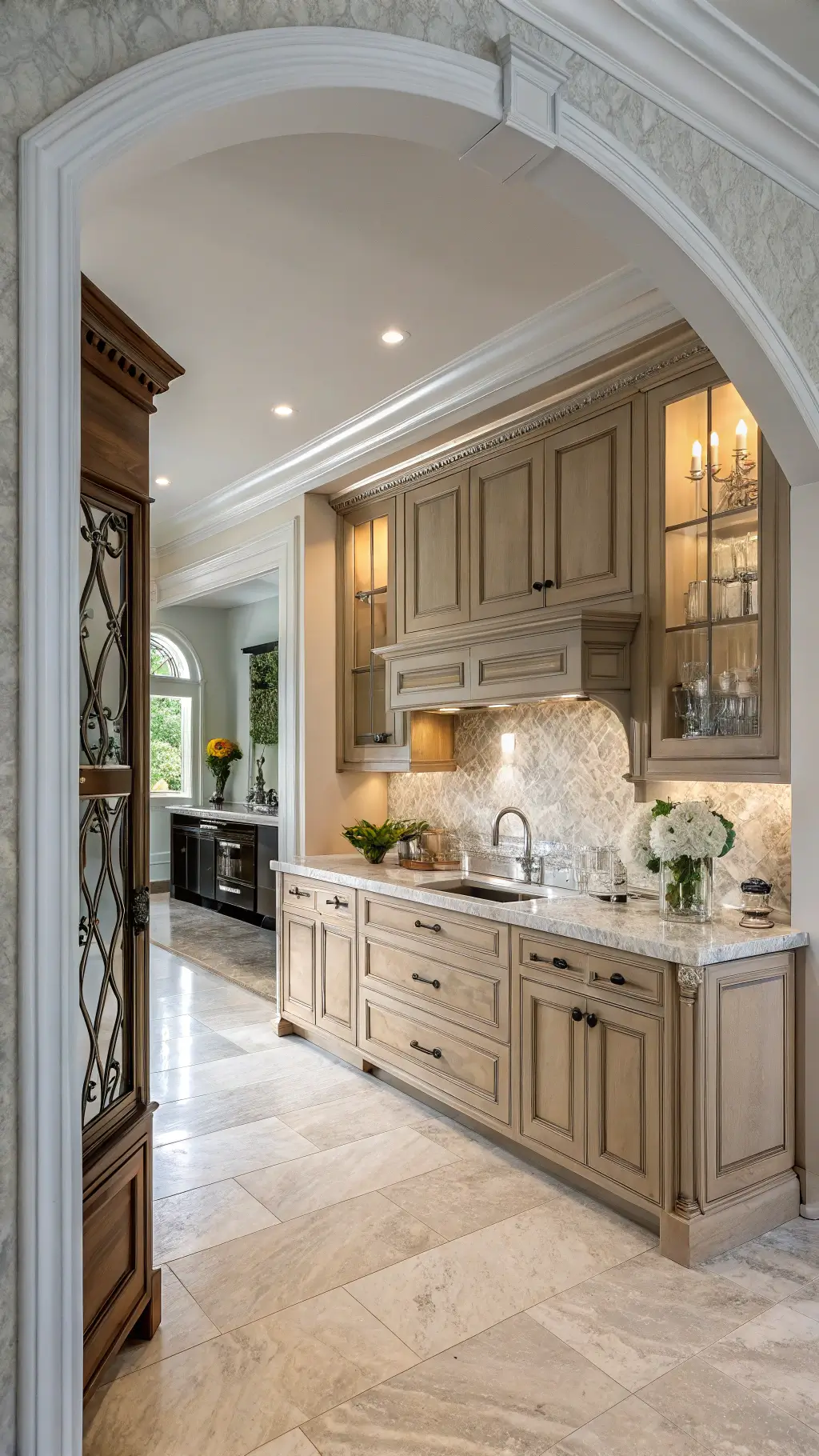
🏠 Steal This Look
- Paint Color: PPG Pale Oak PC-10-2. This matches the article keyword ‘pale oak kitchen cabinets’ and provides the warm, creamy foundation that avoids cool-toned gray clashing mentioned in the pitfalls section.
- Furniture: Warm wood kitchen island with natural grain finish, cream or warm white painted cabinetry, open shelving with warm oak or maple wood tones
- Lighting: Warm white LED under-cabinet lighting (2700K color temperature) paired with pendant lights over island featuring warm brass or warm bronze fixtures to prevent extreme lighting variations
- Materials: Natural wood surfaces with matte or satin finishes, warm cream paint, brass hardware, butcher block or live-edge wood countertops to complement pale oak cabinetry
Pale oak kitchens are experiencing a major revival because they bridge rustic warmth with modern cleanliness—but getting the surrounding palette right is everything. This section helps you avoid the common mistake of overthinking and choosing colors that work against your cabinets rather than with them.
Pro Installation Tips
- Always test vertical paint samples
- Consider professional color consultation
- Use high-quality, durable paint
- Ensure proper kitchen ventilation during painting
★ Steal This Look
- Paint Color: Dunn-Edwards Pale Oak DE6193 (to match article keyword pale oak kitchen cabinets aesthetic)
- Furniture: Not applicable – installation section focuses on prep and process rather than finished room styling
- Lighting: Not applicable – installation section focuses on prep and process rather than finished room styling
- Materials: High-quality kitchen-grade paint with durability rating for moisture-prone areas, primer suitable for wood cabinets, drop cloths and protective coverings for kitchen workspace
Installing pale oak cabinets requires precision planning—this soft, sophisticated tone is unforgiving of application mistakes, so professional consultation and quality materials aren’t luxuries but essentials for long-lasting results. Taking time with sample testing transforms the installation phase from stressful to strategic.
The Financial Perspective
Pale oak isn’t just beautiful—it’s smart:
- Increases home resale value
- Timeless appeal
- Hides minor imperfections
- Works across design trends
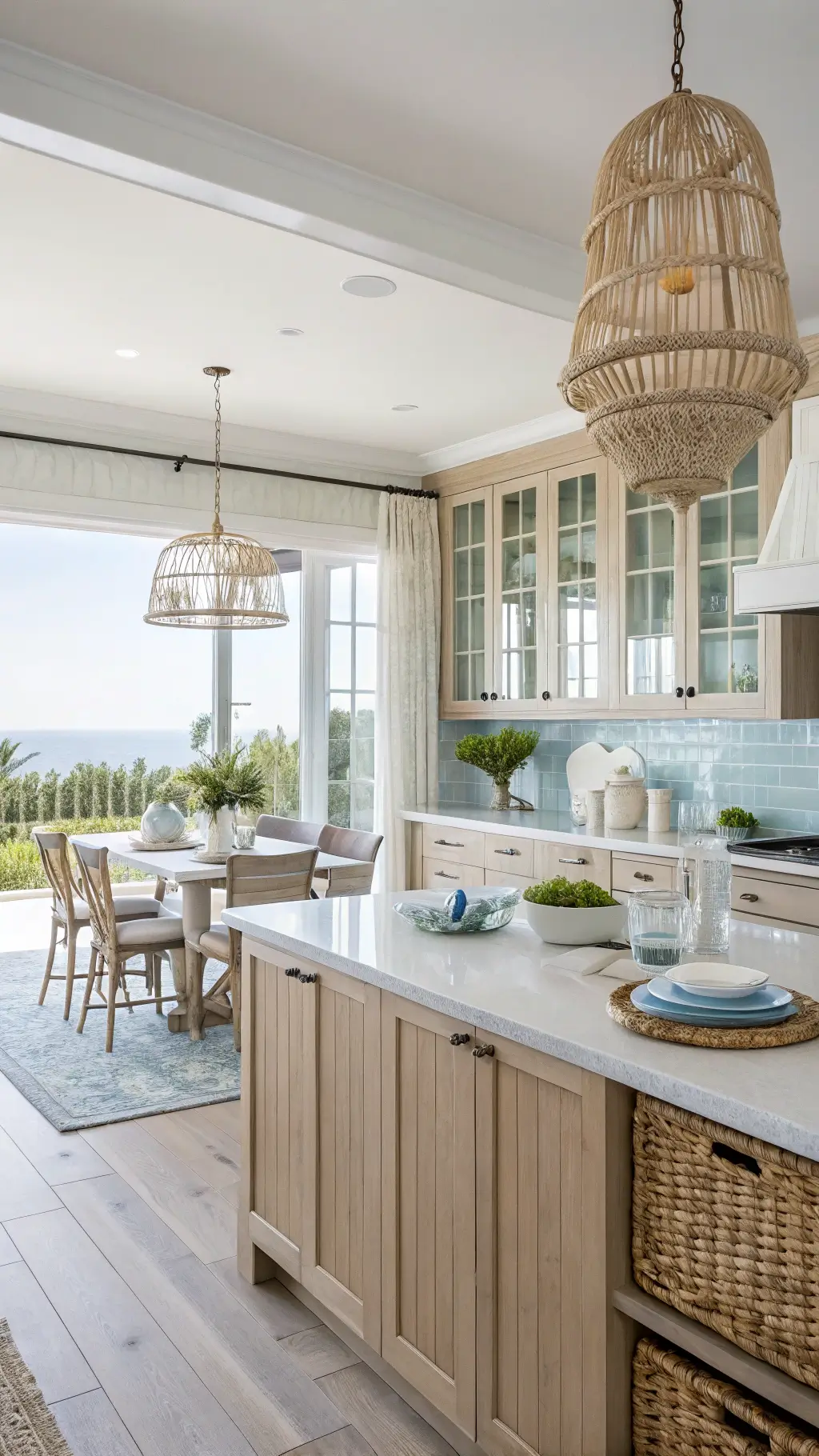
🌟 Steal This Look
- Paint Color: Clare Paint Lark OC-32 for walls complementing pale oak cabinetry
- Furniture: Light wood dining table and chairs in natural oak or similar pale wood tones to coordinate with cabinet investment
- Lighting: Brushed nickel or warm brass pendant lights over kitchen island to highlight cabinet finish without competing
- Materials: Natural wood grain, brushed metal hardware, light neutral countertops in quartz or marble to showcase cabinet quality
Choosing pale oak is the smart homeowner’s move—it’s the quiet luxury that pays for itself. You’re investing in a finish that works across farmhouse, transitional, and even contemporary spaces, which means your kitchen evolves with your style without needing expensive cabinet replacement.
Final Thoughts: More Than Just a Color
Pale oak kitchen cabinets are your design passport. They’re not just a color choice—they’re a lifestyle statement. Warm, adaptable, and endlessly chic.
Pale-Oak cabinets feel right when the finish and light agree. Choose the shade for the room you have and the wood does the rest.